
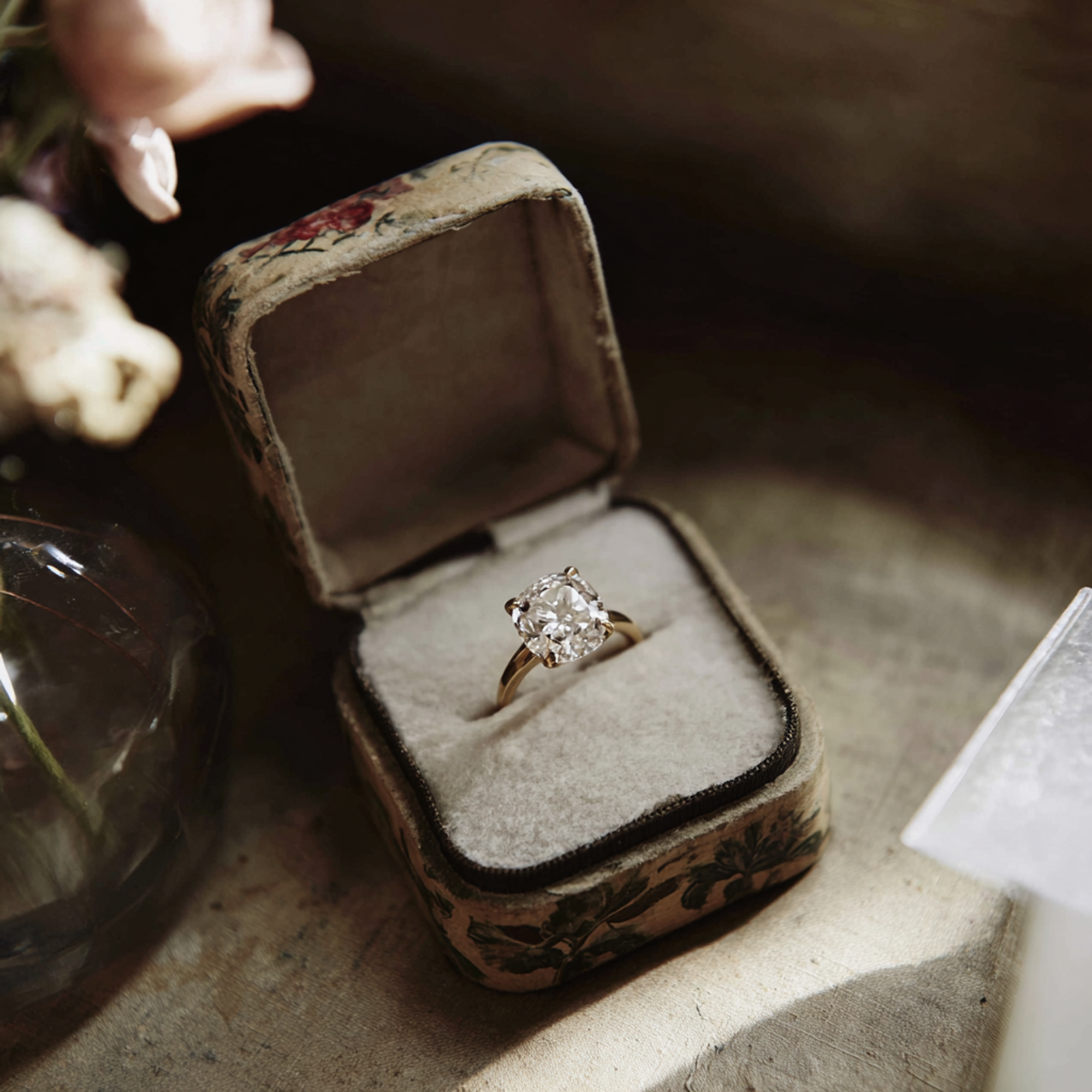
This lesson explains the most common myths about custom rings, and what usually matters more than the label itself
Why this matters
People often talk about custom rings in extremes: either they are imagined as fully one-off, hand-made masterpieces, or as expensive, slow and risky projects. In reality, the process is more varied than that. GIA explains that a true custom ring is a one-of-a-kind design made from scratch, but buyers can also create a personalised ring by choosing from existing components in a semi-mount system.[1]
That difference matters because the label does not tell you everything. In UK consumer guidance, goods made to a customer’s specification are treated differently from goods built by choosing extras from a standard list, so the process and the paperwork matter more than the sales wording.[2]
Learning goals
- Know which common beliefs about custom rings are misleading
- Understand how custom work can vary in cost, timing and method
- Recognise when a ring is truly one-off and when it is a choice from standard options
- Know why written terms matter just as much as design language
Key ideas
Myth 1: Custom always means fully one-off
Not always. GIA says a custom ring is made from scratch to your specifications, but it also explains that many buyers create a personalised ring by selecting a semi-mount, metal and stone from a fixed menu of options.[1] That can still feel personal, but it is not the same as developing a ring from a blank page.
Myth 2: Custom always costs far more
Often, full custom does cost more than using ready-made components, because there is more design work and labour involved. GIA says semi-mount routes can be significantly less expensive than full custom because the parts are already made.[1] But price still depends on the stone, metal and design choices, not just on whether the ring is described as custom. GIA also notes that ring budgets can range from hundreds to hundreds of thousands, so there is no single “custom price”.[3]
Myth 3: Custom always takes months
Not necessarily. GIA says semi-mount rings can take from a few days to a week, while a custom ring can take several weeks.[1][3] So custom is usually slower than choosing a ready-made option, but it is not automatically a months-long process.
Myth 4: A custom ring only counts if it is hand-made
This is also misleading. GIA’s CAD/CAM teaching shows that custom rings may be developed with digital modelling, renderings and additive or subtractive manufacturing tools, alongside jewellery-engineering fundamentals.[4] GIA’s bench training also teaches hands-on fabrication and repair skills.[5] In practice, many custom rings use a mixture of digital design, casting and bench finishing. The important question is not whether every stage was done by hand, but whether the ring is well designed and well made.
Myth 5: A custom order always has the normal 14-day cancellation right
For many online purchases, consumers do get a 14-day cancellation period. But Business Companion says goods made to a customer’s specification are an exception, and it adds an important limit: this does not usually include goods created simply by choosing component parts or extras from a standard list.[2] So buyers should check the written terms instead of assuming that every “custom” order is treated the same way.
Key terms
- Custom — made or designed for a particular customer
- Semi-mount — a partly prepared ring setting that takes a chosen centre stone
- CAD/CAM — digital design and computer-aided manufacturing tools
- Made to a customer’s specification — a legal phrase used in cancellation rules
- Standard options — preset choices taken from an existing list
- Fabrication — making jewellery directly by bench work in metal