
Lesson context
Why this matters
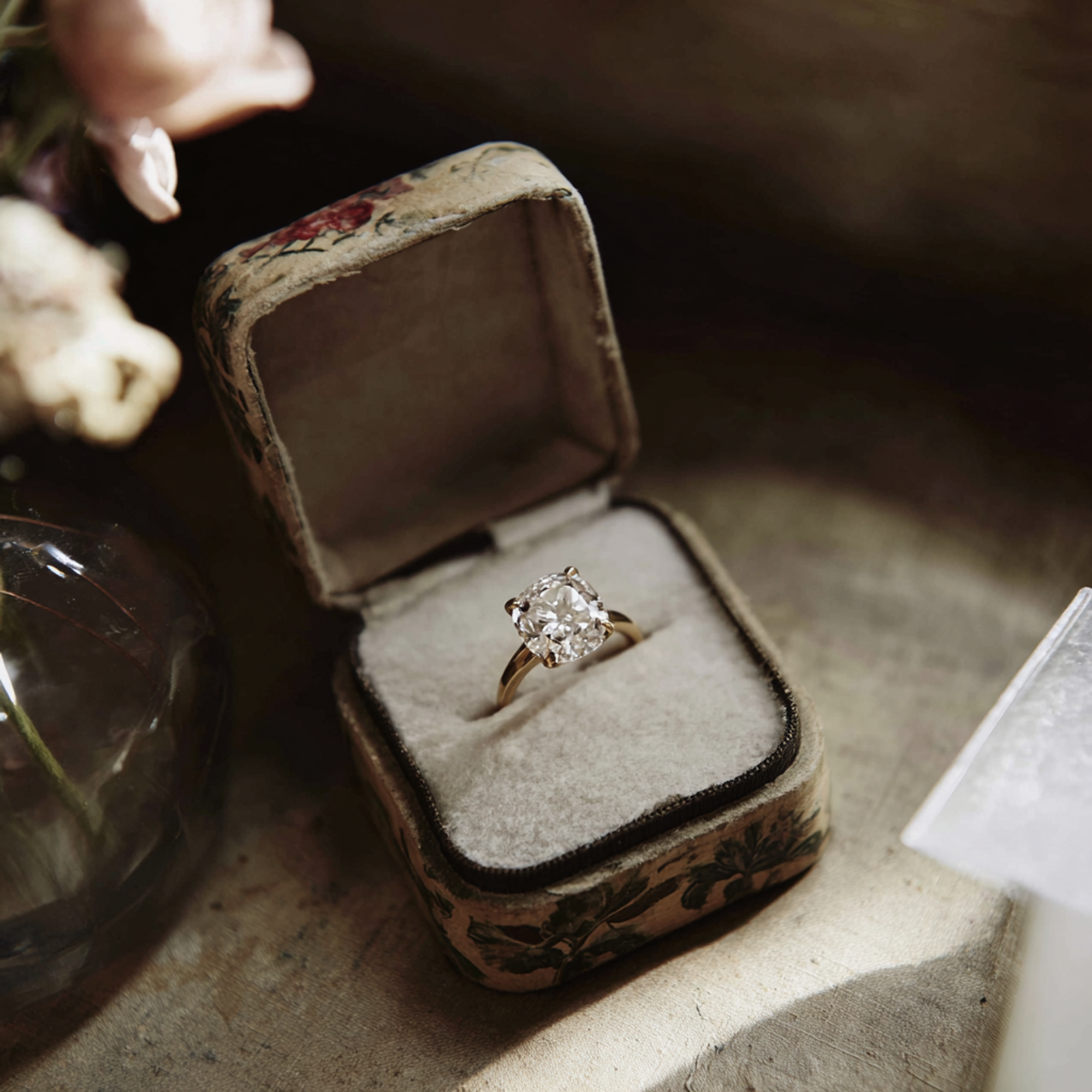
When most people picture an engagement ring, they think of the centre stone and the band. But underneath the visible top of the ring is a small structure of metal that does a great deal of work: holding the stone securely, supporting its weight, and sometimes hiding extra sparkle or personal details. Knowing these hidden parts helps you understand what you are actually paying for in a custom design, and gives you the vocabulary to describe exactly what you want.
Your learning plan
Learning goals
By the end of this lesson, you’ll be able to:
- Identify the gallery, bridge, and basket, and explain what each one does
- Understand what a hidden halo is and why people choose one
- Explain the purpose of milgrain and filigree detailing
- Know where to find a ring's hallmark and why it matters
- Recognise how hidden structural choices affect comfort and durability
The gallery
The gallery is the part of the ring you see when you look at it side-on, rather than from above. It sits between the centre stone and the band, and is essentially the underside of the setting (1). Some galleries are left plain and minimalist; others feature decorative scrollwork, small stones, or open metalwork. Because most people only ever see their own ring from above or from the side when raising a hand, the gallery is often a place for personal detail that only the wearer is fully aware of (2).
The bridge (and undergallery)
Directly beneath the gallery sits the bridge, sometimes called the undergallery. This is the section of metal that connects the setting to the rest of the ring and is the part that actually rests against the top of the finger (3). The bridge has a structural job: it helps stop the setting from twisting or leaning under the weight of the stone. A bridge that is too thin can allow a heavy stone to tilt sideways over time, so its design is a genuine engineering decision, not just a cosmetic one (4).
The basket
A basket is a type of setting structure that uses horizontal bars of metal connecting the prongs beneath the stone, creating a supportive "cage" shape (5). Baskets give extra stability to the centre stone and are commonly used for larger or heavier stones that need more support than prongs alone can provide.
Hidden halo
A hidden halo is a ring of small diamonds set into the gallery, directly beneath the centre stone, where they are not visible from a straight top-down view. From the side, or when the hand moves, the hidden stones catch the light and peek out (6). It offers extra sparkle and a personal surprise element without changing the classic, simple look of the ring from above. This differs from a standard halo, which sits visibly around the stone and is seen immediately from above.
Milgrain and filigree
Two decorative techniques are often used on the gallery and shoulders. Milgrain is a row of tiny raised beads pressed into the edge of the metal, giving a delicate, textured border often associated with vintage styles. Filigree refers to fine, lace-like metalwork, sometimes twisted or scrolled, used to add intricate detail without adding bulk (3). Both techniques are most visible from the side profile and are popular choices for adding character to an otherwise simple design.
Hallmarks
On the inside of the shank, usually near the bridge, you will find the ring's hallmark – a series of small stamped marks confirming the metal type and purity, applied by an official UK Assay Office. This is a legal requirement for most precious metal items sold in the UK and is one of the few hidden parts of a ring that exists for consumer protection rather than design (6).
Lesson glossary
Key terms
- Gallery
- The side-profile section of a ring between the centre stone and the band, often featuring decorative detail
- Bridge (undergallery)
- The structural section beneath the gallery that connects the setting to the band and rests against the finger
- Basket
- A setting structure using horizontal metal bars between the prongs to support and stabilise the centre stone
- Hidden halo
- A ring of small diamonds set beneath the centre stone, visible from the side or in movement but not from directly above
- Milgrain
- A decorative border of tiny raised metal beads, often used on vintage-style rings
- Filigree
- Fine, lace-like metalwork, often twisted or scrolled, used for delicate decorative detail
- Shank
- The band of the ring that circles the finger