
Lesson context
Why this matters
The setting is the metal framework that holds a stone in place and gives a ring most of its character. It determines how much light reaches the stone, how secure the stone is, how the ring wears over time, and how it looks alongside a wedding band. Understanding the main setting types helps you make a choice that suits both your style and your lifestyle – not just how a ring looks in a photograph.
Your learning plan
Learning goals
By the end of this lesson, you’ll be able to:
- Name and describe at least five common engagement ring settings
- Explain the difference between a prong (claw) setting and a bezel setting
- Understand how a halo setting affects the appearance of a centre stone
- Identify which settings are most practical for active lifestyles
- Recognise how a setting choice can affect sparkle and maintenance needs
What is a setting?
A setting is the part of a ring that holds the stone. It is separate from the stone itself and from the band (the part that circles the finger). The setting style you choose affects almost everything: how bright the stone looks, how safe it is, how comfortable the ring is to wear, and how easy it is to keep clean (1).
Claw (prong) setting
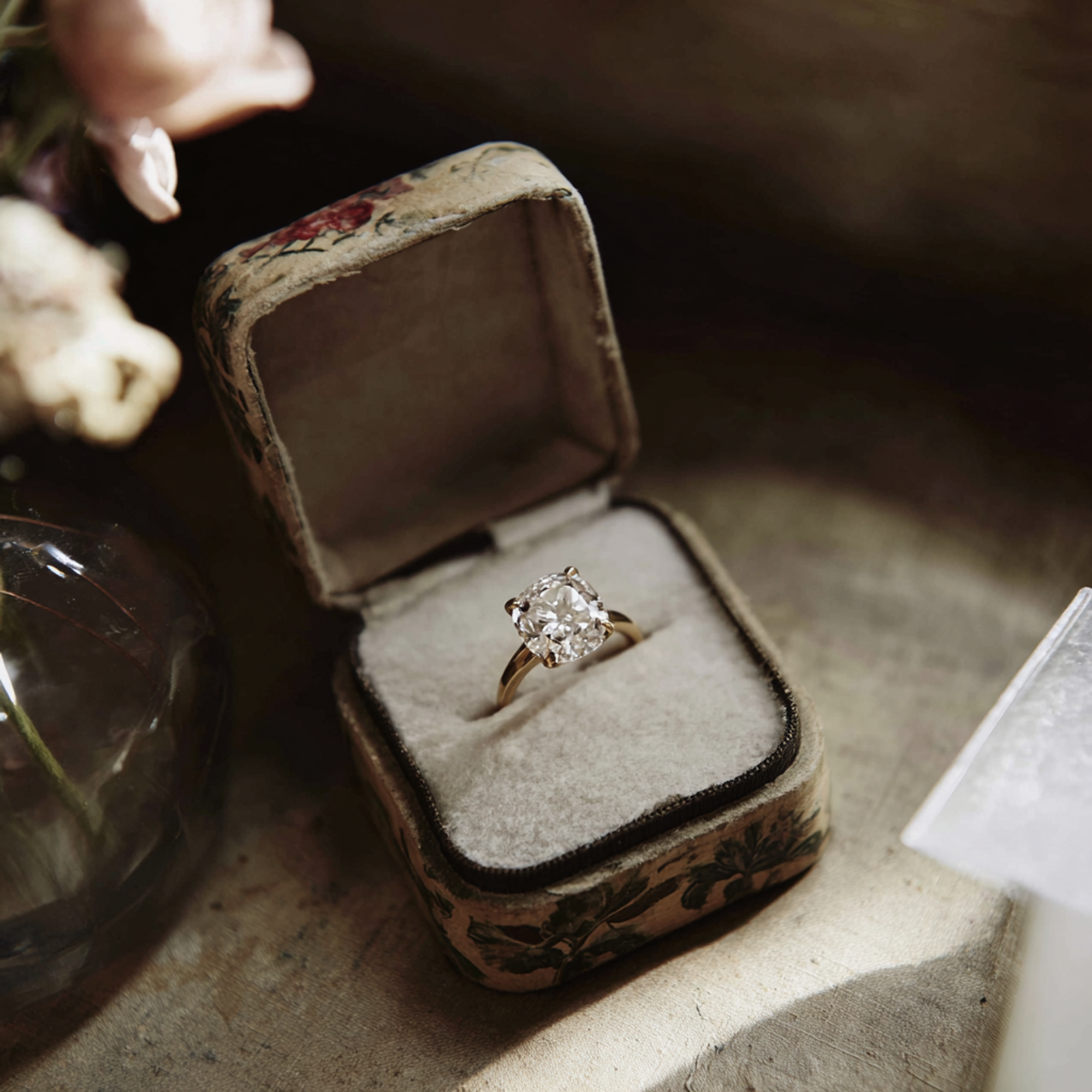
The claw setting – called a prong setting in the US – is the most widely used style for engagement rings (2). Small metal claws, usually four or six, grip the stone around its edge and lift it above the band. This open structure allows light to enter the stone from almost every angle, producing maximum sparkle (3).
Four claws expose more of the stone and give a slightly lighter, more delicate look. Six claws offer slightly more security – if one claw catches and bends, the other five still hold the stone in place – and suit rounder stone shapes particularly well (4). In the UK, the words "claw" and "prong" are used interchangeably; both mean the same thing (2).
The main trade-off: claws can catch on fabric or hair over time and should be checked by a jeweller every year or so to make sure none have loosened (1).
Bezel setting
A bezel setting wraps a continuous rim of metal around the full circumference of the stone, holding it flat against the band. It is the most secure of all setting types and protects the stone's edges from knocks (5). Because the metal surrounds the stone, it can slightly reduce the amount of light entering from the sides, giving a softer rather than sparkling look. Bezel settings tend to look clean and modern, and are a practical choice for people who use their hands a great deal at work (1).
Halo setting
A halo setting surrounds the centre stone with a ring of smaller accent stones, usually diamonds. The effect is to increase the overall visual size of the ring and add extra sparkle without changing the centre stone itself (6). A double halo adds a second ring of stones outside the first. Halo settings require more maintenance than simpler styles, as the many small stones need to be checked regularly to ensure none have loosened (1).
Pavé setting
Pavé (pronounced "pa-vay," from the French word for paved) describes a technique where small diamonds are set closely along the band, held by tiny beads or claws, creating a continuous surface of sparkle (7). Pavé is often used on the band of a ring rather than as the primary setting for the centre stone. Micro-pavé uses even smaller stones set with finer detail. Like halos, pavé bands need regular inspection because the small stones can work loose over time (1).
Channel setting
In a channel setting, small stones sit in a groove between two parallel strips of metal, with no individual claws holding each stone. The result is a smooth, snag-free surface that is practical for daily wear and works well for accent stones along a band (7). Channel-set stones are very secure and the setting style is common on wedding and eternity bands as well as engagement rings.
Tension setting
A tension setting holds the stone using the compression of the metal band itself, so the stone appears to float in mid-air with no surrounding metal visible. The look is striking and contemporary. Because each ring must be precisely calibrated to the exact measurements of its stone, tension settings are typically more expensive to produce and cannot be easily resized or altered afterwards (6).
Choosing based on lifestyle
Setting choice should reflect how the ring will actually be worn. Someone who works with their hands, plays sport, or regularly wears gloves may find a bezel or channel setting more practical. Someone who wants maximum sparkle and is comfortable with regular maintenance checks may prefer a claw or halo. There is no single best setting – it depends on the person wearing the ring (1).
Lesson glossary
Key terms
- Setting
- The metal framework that holds a gemstone in place on a ring
- Claw / prong setting
- A setting that uses small metal claws to grip the stone and lift it above the band; the most common engagement ring setting
- Bezel setting
- A setting where a continuous rim of metal surrounds and holds the stone flat against the band
- Halo setting
- A setting where a ring of small accent stones surrounds the centre stone, increasing its visual size and sparkle
- Pavé
- A technique where small diamonds are set closely along the band, held by tiny beads or claws
- Channel setting
- A setting where stones sit in a groove between two metal strips, with no individual claws
- Tension setting
- A setting that holds the stone by the compression of the metal band, making the stone appear to float
- Accent stones
- Smaller stones used around or alongside the main centre stone, primarily for decorative effect
- Band / shank
- The part of the ring that circles the finger, as distinct from the setting that holds the stone