
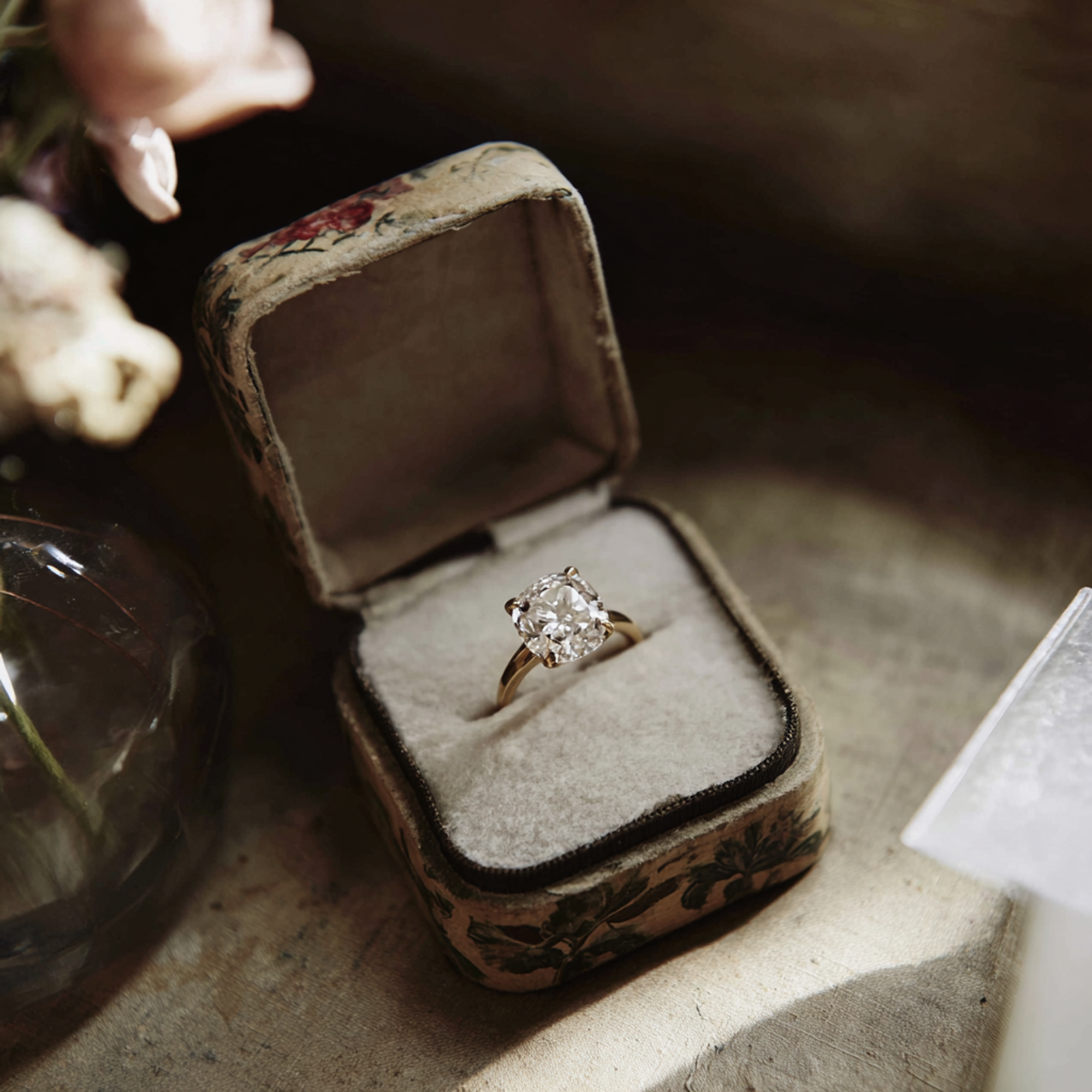
This lesson explains what wax models and 3D designs do in the custom ring process, and how they help test a design before casting and finishing
Why this matters
A wax model and a 3D design are linked, but they are not the same thing. GIA explains that jewellery can still be made through the traditional lost-wax route, where a design is carved in wax and then cast in metal, while modern CAD/CAM methods use digital design and 3D printing to create physical prototypes for casting. GIA also teaches that CAD work must meet real engineering and manufacturing requirements, not just look attractive on screen.
Learning goals
- Know the difference between a wax model and a 3D design
- Understand how a physical model helps check scale and proportions
- Recognise what can still change at the model stage
- Know what a wax or printed prototype cannot guarantee about the finished ring
Key ideas
What a wax model is
A wax model is a physical version of the ring made before the final metal piece exists. In the traditional process described by GIA, a jeweller carves the design in wax, surrounds it with investment material, then burns the wax away so molten metal can fill the empty space and form the ring.
What a 3D design is
A 3D design is the digital CAD model of the ring. GIA says CAD lets designers build jewellery in 3D, work to scale and proportion, and develop pieces within the limits of cost, time, size, style and manufacturing method. GIA also notes that CAM tools such as 3D printers can turn those digital designs into physical prototypes.
Why physical models are useful
A screen image can look convincing but still be misleading about real size. GIA says that by 3D printing CAD models and comparing the resin prototypes to the designs, students learn about scale, proportion, engineering and manufacturability. In practice, that makes a wax or printed model useful for checking the ring’s height, thickness, finger coverage and overall balance before expensive casting and setting begin.
What they can and cannot prove
A wax or printed prototype is a checking tool, not the finished ring. Because the final piece still has to be cast, polished, set and finished, a model can show shape and proportions better than a flat image, but it will not show the exact final polish, metal feel or fully set appearance. That is an inference from GIA’s description of prototypes as part of a longer manufacturing process.
When changes are easiest
The model stage is usually the safest moment to make changes. GIA notes that CAD makes it much easier to alter designs and create new variations than older hand-made model methods. In some production workflows, a master model can also be used to create rubber moulds that produce repeated wax replicas for casting, which helps consistency when a design is being reproduced.
Key terms
- Wax model — a physical pattern used before a ring is cast
- CAD — computer-aided design, a 3D digital model
- CAM — computer-aided manufacturing, such as 3D printing
- Prototype — a test version made before the final piece
- Casting — making the metal ring from a mould
- Manufacturability — whether a design can be made successfully in real materials