
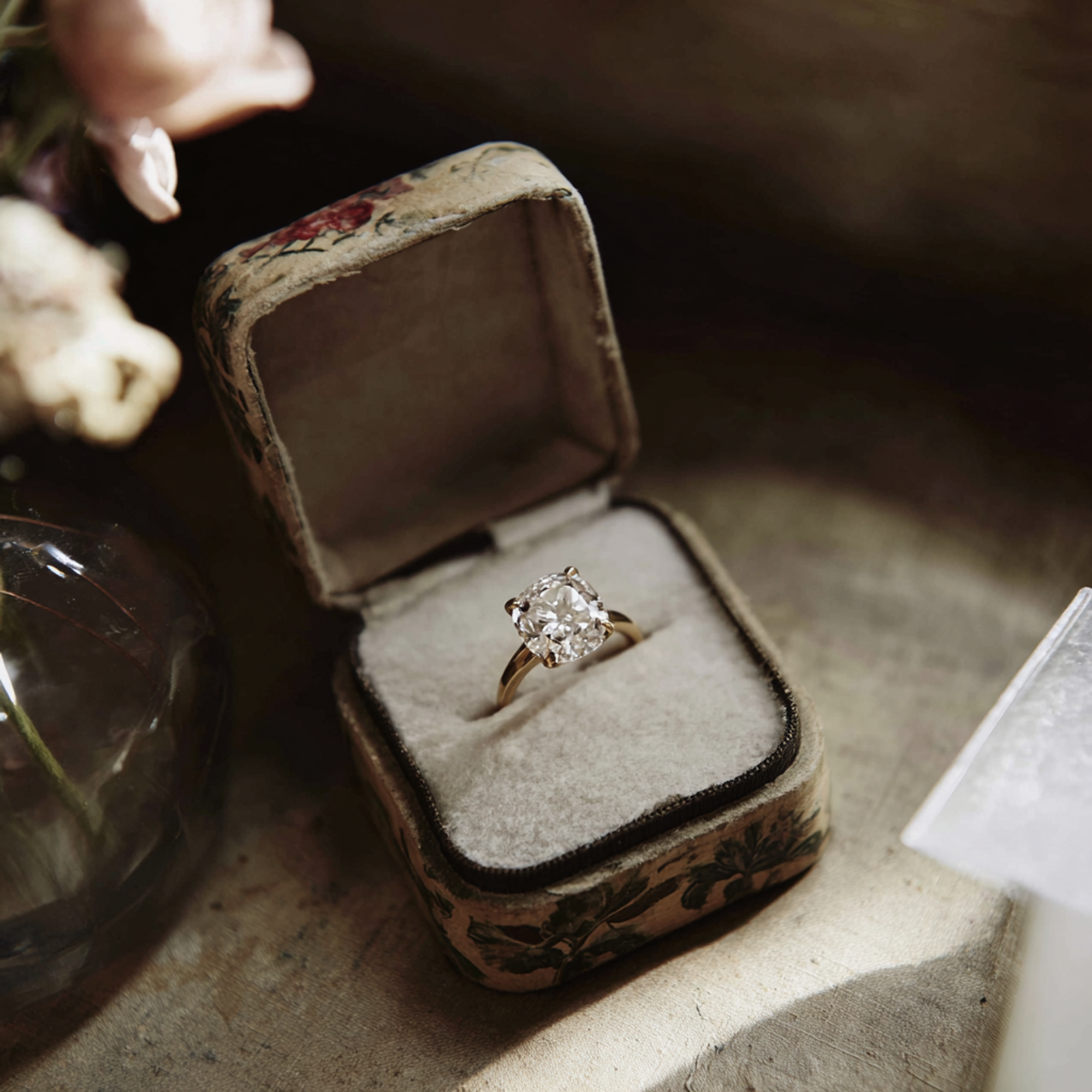
This lesson explains what diamond and gemstone certificates are, what information they give, and how they help with buying, insurance and long-term peace of mind.
Why this matters
A certificate can help you check what a stone is, how it was graded, and whether any treatment or laboratory-grown origin has been recorded. In practice, it reduces uncertainty, but it does not replace your own judgement or an insurance valuation. Major labs also let you verify report numbers online, which helps with record-keeping and fraud checks.[1]
Learning goals
- Know what people mean by a diamond or gemstone “certificate”.
- Tell the difference between a grading report and a valuation.
- Identify the main details a good report should include.
- Understand why reports matter for insurance and future resale.
Key ideas
“Certificate” usually means a lab report
Shops often say “certificate”, but many respected labs use the word report. A diamond grading report usually records the 4Cs: carat weight, colour, clarity and cut. It may also include measurements, proportions, a plotting diagram, fluorescence and a unique report number.[2]
Diamond reports and coloured-stone reports are not the same
For diamonds, grading is more standardised. For coloured gemstones, a report usually focuses on identity first: for example, whether the stone is ruby, sapphire or emerald. It may also state whether treatment was found, such as heating or clarity enhancement, and sometimes give an opinion on geographic origin if the lab can determine it.[3]
What a report can and cannot do
A report can support trust, but it is not a promise of beauty, price or future value. It also may be limited if the stone is already mounted in jewellery, because the setting can hide important features. That is why a ring report and a loose-stone report are not always equally detailed.[4]
Why it matters for insurance
Insurance usually depends on the value of your jewellery and the limits in your policy. A certificate helps identify the stone, but insurers may still want a separate valuation or for high-value items to be named individually on the policy.
Good practice for buyers
Check that the report number matches the stone or item, keep a digital copy, and use the lab’s online verification tool where available.[1] Also ask whether the stone is natural or laboratory-grown, and whether any treatment is permanent, common, or needs special care.[3]
Key terms
- Grading report — a lab document describing a stone’s tested features.
- 4Cs — carat, colour, clarity and cut.
- Treatment — a process used to change a gem’s look or durability.
- Origin — an opinion about where a gemstone was mined.
- Laboratory-grown — made by people, not formed naturally underground.
- Valuation — an estimate of money value, often for insurance.