
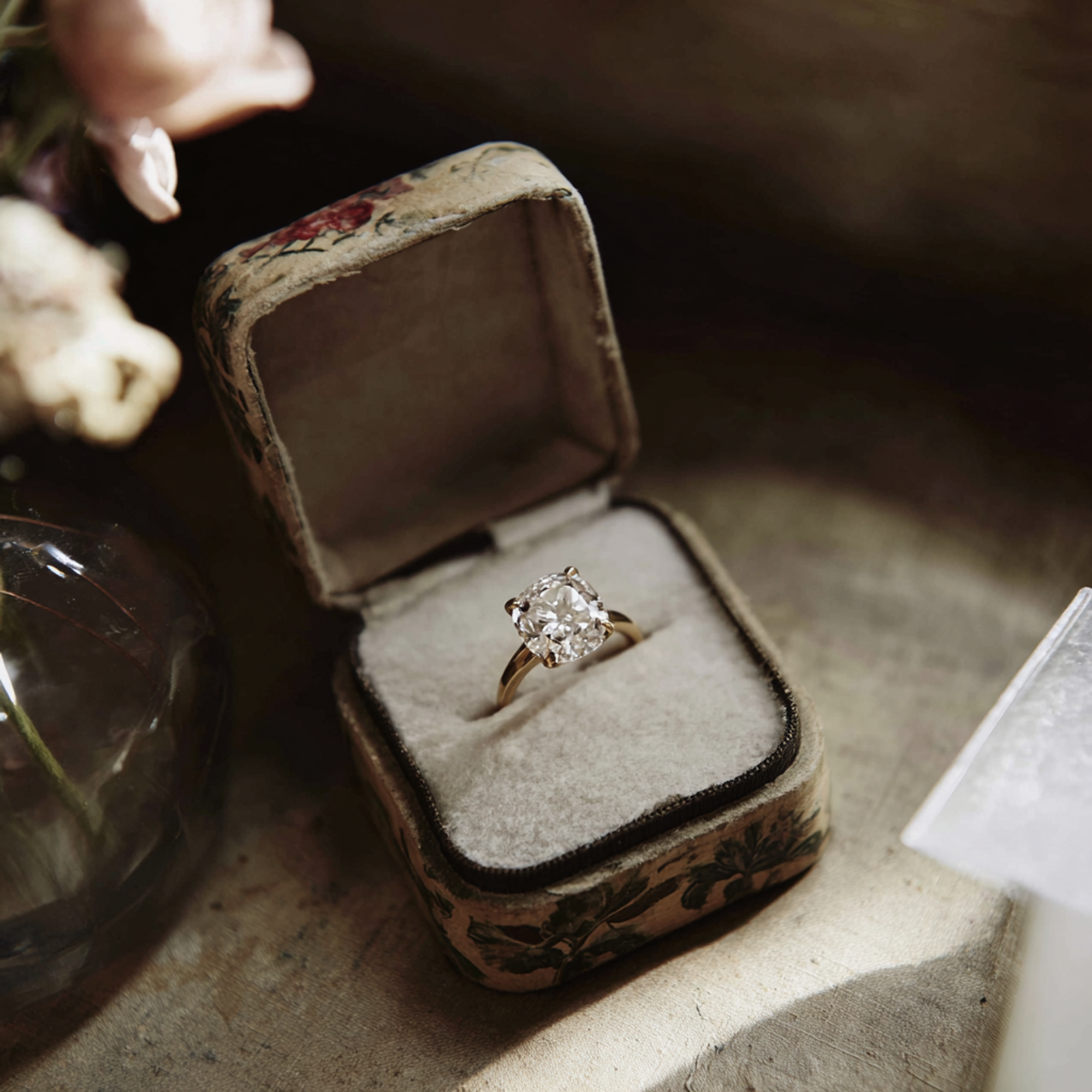
This lesson explains who usually owns a custom ring design in UK law, and why written terms matter if a customer wants rights beyond simply buying the finished ring.
Why this matters
People often assume that paying for a custom design means they automatically own the design itself. In UK law, that is not usually how it works. For commissioned copyright works, the creator is usually the first owner unless the contract says otherwise in writing, and for designs created on or after 1 October 2014 an independent designer usually owns the design right unless a contract says otherwise.[1,2]
That means a customer may pay for design work and manufacture without automatically receiving the copyright or design rights behind it. This is why good paperwork should say clearly whether the jeweller may reuse the design, whether the customer has exclusivity, and whether any rights are being transferred.[1,2]
Learning goals
- Know the difference between buying a ring and owning the design rights.
- Understand the main UK rule for commissioned copyright works.
- Understand the main UK rule for commissioned design rights.
- Identify the questions that should be settled in writing before work begins.
Key ideas
More than one right can matter
A custom ring design can involve different kinds of intellectual property. Original sketches, renderings and other artistic material can be protected by copyright automatically, and there is no UK register of copyright works.[3]
The appearance of the ring itself may also be protected by design law. A registered design protects the appearance of a product, such as shape, pattern or decoration, and can last for up to 25 years if renewed. Some unregistered design protection also arises automatically, but for shorter periods.[4,5]
The usual starting point
For copyright, the general UK rule is that the creator is the first owner. The IPO’s guidance on commissioned works says that when you ask another person or organisation to create a copyright work for you, the first legal owner is the person or organisation that created it, unless you agree otherwise in writing.[1]
For design rights, the current UK position is similar for independent designers. IPO guidance explains that if a self-employed or independent designer creates a design, they own the rights even if someone else commissioned it, unless a contract says otherwise. It also states that if you commission someone else to create a design, you do not own the right in the design unless a contract says so.[2]
Employees and freelance makers are treated differently
There is an important exception for employees. The IPO says that when a work is created by an employee in the course of employment, the employer is usually the first owner, subject to any agreement to the contrary.[1] So if a staff designer creates a ring design for a jewellery business as part of their job, the business will usually own those rights.
How rights can be changed
Ownership is not fixed forever. Copyright can be assigned to someone else, but the IPO states that a valid assignment must be in writing and signed by or on behalf of the person transferring it.[6] Registered design ownership can also be sold or transferred, and the IPO allows that change to be recorded on the design register.[7]
What buyers should ask for
A buyer who wants stronger control over a custom design should not rely on assumptions. Ask whether the design is exclusive, whether the jeweller may remake or adapt it, and whether any copyright or design rights are being assigned or only licensed. Keep dated sketches, emails and approvals, because proof of when a design was created can matter if there is a dispute.[5,6]
Key terms
- Copyright — a right protecting original creative works such as drawings and illustrations.
- Design right — a right protecting the design of a product.
- Registered design — a design recorded on the UK register for stronger formal protection.
- Unregistered design — automatic design protection without registration.
- Assignment — a legal transfer of ownership.
- Licence — permission to use a right without owning it.
- Commissioned work — work created after one person asks another to make it.