
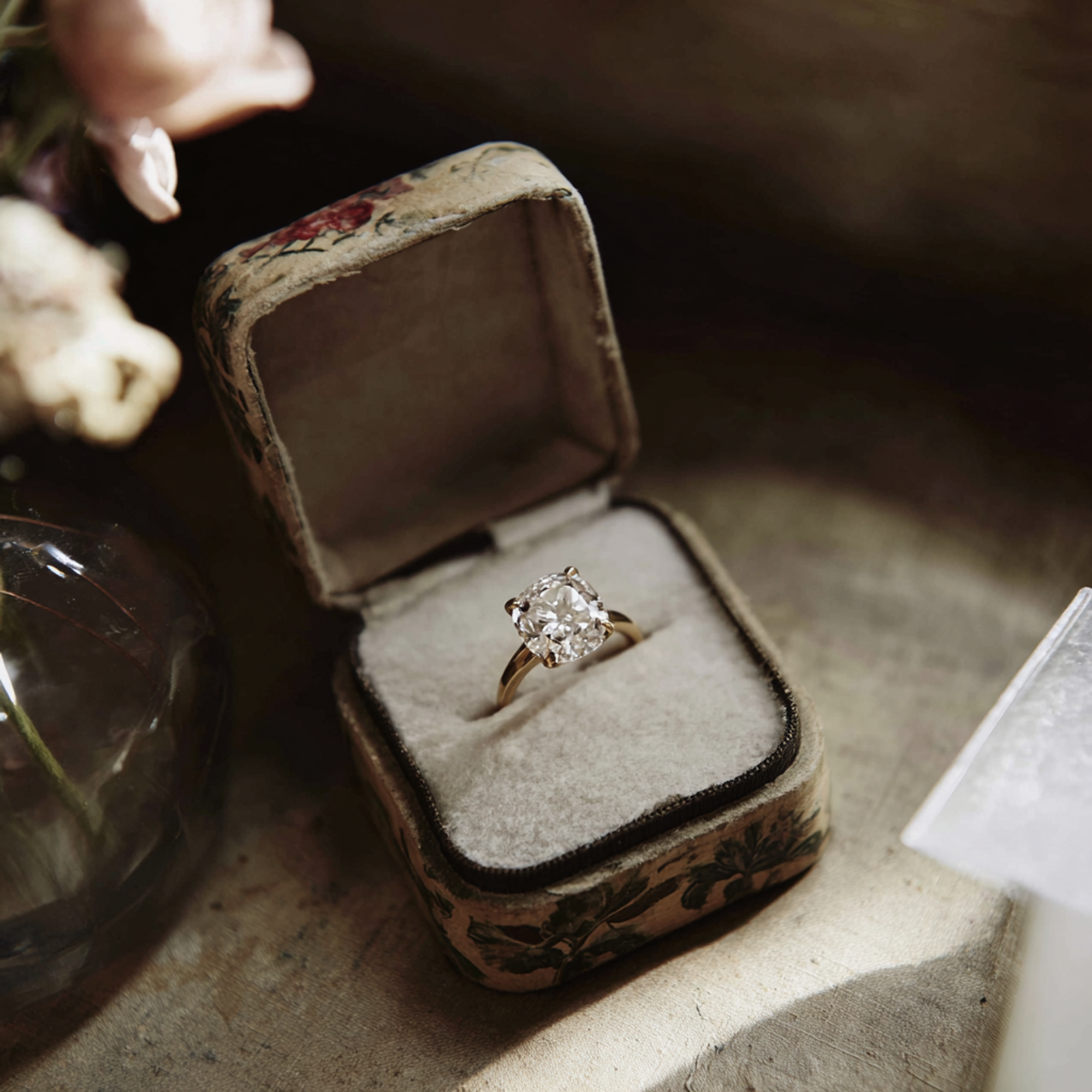
This lesson explains how to compare custom ring quotes fairly, so you can judge value, clarity and risk rather than headline price alone
Why this matters
A lower number is not always a better deal. Citizens Advice says a quote is a promise to do work at an agreed price, while an estimate is only a best guess, and Business Companion says consumer pricing information must be clear, unambiguous and inclusive of VAT.[1,2]
For distance sales, traders must also give consumers the total price including tax, any additional charges, arrangements for payment, delivery or performance, and details of any after-sales services or guarantees if they offer them.[3]
Learning goals
- Know the difference between a quote and an estimate
- Understand what details must match before two quotes can be compared fairly
- Recognise why stone paperwork and hallmarking affect value
- Identify which extras should be written into the price before you agree
Key ideas
Start by checking whether it is the same job
A useful comparison only works if both jewellers are pricing the same ring. GIA says buyers should think about the 4Cs, metal characteristics, setting styles, side stones and grading reports, not just the broad idea of “a diamond ring”.[4] In practice, compare the metal type and purity, the centre-stone shape and quality, any side stones, the band style, the finger size, and whether design revisions are included.
A quote is safer than a vague estimate
If one jeweller gives a fixed quote and another gives only a rough estimate, the lower figure may not be the more reliable one. Citizens Advice says a trader cannot normally charge more than a quote unless extra work is agreed or the original figure contained an obvious mistake.[1] That is why a written quote is much easier to compare than a verbal range.
Check the stone paperwork, not only the carat weight
GIA says a diamond grading report gives expert analysis based on colour, cut, clarity and carat weight, and can include a plotting diagram showing the diamond’s clarity characteristics.[5] So two quotes for a “1 carat diamond ring” are not automatically equal if the diamonds differ in cut, clarity, report type, or whether there is independent grading at all.
Look for included extras and hidden omissions
Business Companion says consumers should be told about delivery charges or other costs, payment and delivery arrangements, complaint-handling policy if there is one, and any after-sales assistance or guarantees.[3] For a custom ring, that means checking whether resizing, insured delivery, valuation, or aftercare are included or charged separately.
Do not forget UK compliance
For precious-metal jewellery in the UK, hallmarking is not just a decorative extra. The Royal Borough of Kensington and Chelsea’s trading standards guidance says that items over certain weight thresholds, when described as gold, silver, platinum or palladium, must have a hallmark when sold to the public.[6] A quote that looks cheaper may simply leave out a real compliance step or be pricing a different metal specification.
Key terms
- Quote — a fixed price for agreed work
- Estimate — a best guess of the likely price
- Specification — the exact details of what is being supplied
- 4Cs — colour, cut, clarity and carat weight
- Grading report — an independent document describing a diamond’s quality
- Hallmark — an official mark showing precious metal has been tested to the legal standard