
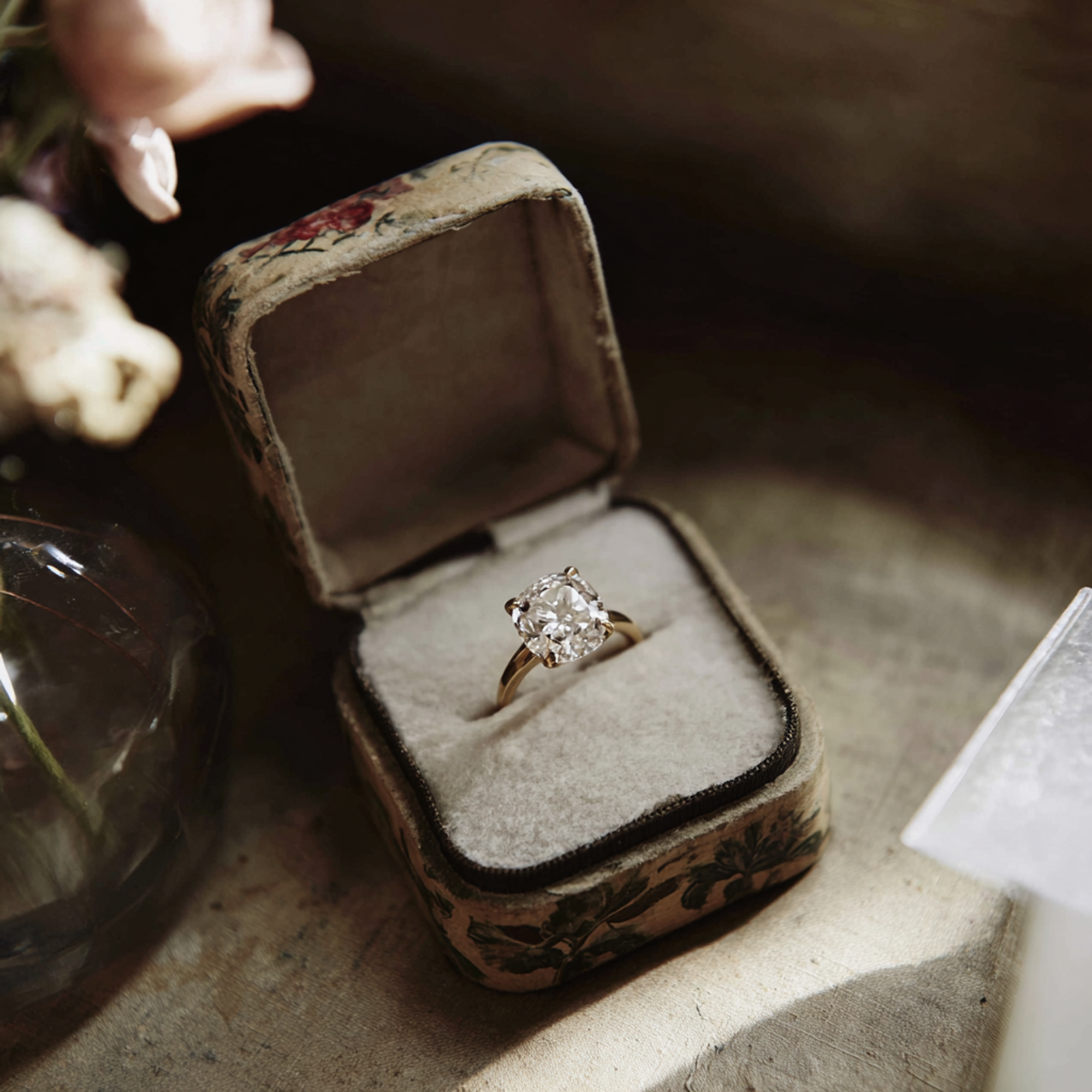
This lesson explains what a custom ring price usually includes, and why the total reflects much more than just the visible metal and stone
Why this matters
People often focus on the centre stone, but the final price of a custom ring usually combines several different things: the gemstone, the precious metal, design work, making time, setting, compliance and paperwork.[1] A useful way to think about price is not “What does the ring cost?” but “What am I actually paying for?”
That matters because some parts of the price are optional, while others are legal or practical necessities. In the UK, hallmarking is a legal requirement for most qualifying precious-metal jewellery described as gold, silver, platinum or palladium, and it applies to online sales as well as shop sales.[2] Hallmarking also has real service charges, so compliance is part of the cost of a finished ring, not just an invisible extra.[3]
Learning goals
- Know the main parts that make up the price of a custom ring
- Understand which costs are design choices and which are legal or practical requirements
- Recognise why grading reports and valuations are separate from the ring itself
- Explain how quality checks affect value and peace of mind
Key ideas
The stone is only one part of the price
For many custom rings, the centre stone is the biggest single cost, but it is not the only important one. GIA explains that price is affected by stone quality, metal choice, and the complexity of the design. Side stones, pavé, engraving, filigree and other detailed work can all increase cost, even when the main stone stays the same.[1]
This is why two rings with similar-looking centre stones can still be priced very differently. A simple solitaire in 14ct gold and a more detailed platinum design with extra stones and hand-finished details are not the same job.[1]
You are also paying for design and making
A custom ring includes skilled labour as well as materials. That labour may include consultation, sketches or CAD work, revisions, casting or fabrication, stone setting, finishing and polishing. Even when those steps are not listed one by one on a quote, they are part of what the customer is paying for.[1]
In practice, more changes usually mean more time. A ring that needs several rounds of design revision or a more complex setting is not simply “the same ring at a higher margin”; it is usually a larger piece of work.[1]
Some costs are about compliance, not style
In the UK, hallmarking is one of the clearest examples. GOV.UK says hallmarking protects consumers by certifying the precious metal content of the piece, and if a qualifying item is sold as gold, silver, platinum or palladium without a hallmark, the seller is breaking the law.[2]
Hallmarking also carries direct service costs. The London Assay Office price list, valid from 2 April 2025, shows packet and surcharge fees for hallmarking services, plus higher charges for priority services.[3] So part of the price of a custom ring may reflect legal compliance and handling, not just aesthetics.
Quality checks and paperwork have value
A better-quality purchase often includes independent checks and supporting documents. GIA states that a diamond grading report gives an expert analysis based on the 4Cs and includes identifying details such as a plotting diagram on some report types.[4] That kind of paperwork helps a buyer compare stones more accurately, but it is separate from the physical ring and separate from a valuation.[4]
If a valuation is needed for insurance, that is another service again. The Goldsmiths’ Company Assay Office says professional valuations include a detailed description and digital images, and that insurers increasingly require up-to-date valuations for high-value and specified items.[5]
A clear price should be honest and readable
Good pricing is not only about the number itself. The NAJ Pricing Code of Practice says prices for consumers should be displayed clearly, inclusive of VAT, and not be misleading.[6] That matters in jewellery because a low headline figure can be confusing if it leaves out important parts of the real job.
Key terms
- CAD — computer-aided design used to plan a ring
- Hallmarking — independent marking that confirms precious metal content
- Setting — the part of the ring that holds the stone
- Grading report — an expert document describing a diamond or gemstone
- Valuation — a document stating value for a specific purpose, often insurance
- Pavé — a style using many small stones set close together