
Lesson context
Why this matters
When choosing a stone for a custom ring, shape is one of the first decisions you will make – and it affects almost everything else. Shape influences how much a stone sparkles, how large it appears on the finger, which settings suit it, and how much it costs. Understanding the main shapes and how they work helps you choose one that genuinely suits your style and budget, rather than simply following trends.
Your learning plan
Learning goals
By the end of this lesson, you’ll be able to:
- Explain the difference between shape and cut style
- Describe the key difference between brilliant cuts and step cuts
- Name at least six common stone shapes and give a brief description of each
- Understand why round brilliant diamonds tend to cost more than other shapes
- Recognise how elongated shapes can appear larger for the same carat weight
Shape vs cut style
These two terms are easy to confuse. Shape refers to the outline of a stone when viewed from above – round, oval, square, and so on. Cut style refers to how the facets (flat, polished faces) are arranged inside that shape (1). Two stones with the same outline can look very different depending on their cut style, because facet arrangement controls how light behaves inside the stone.
The two main cut styles
Almost all shaped stones fall into one of two categories:
Brilliant cut – uses numerous small, triangular and kite-shaped facets designed to bounce light rapidly around the stone and back out through the top. The result is intense, lively sparkle (1). Round, oval, cushion, pear, and marquise are all brilliant cuts or variants of it.
Step cut – uses fewer, larger facets arranged in parallel rows, like steps descending from the top of the stone. Rather than intense sparkle, step cuts produce long, broad flashes of light and a clear, mirror-like quality sometimes called the "hall of mirrors" effect (2). Emerald and Asscher cuts are the most common step cuts. Because step cuts have open, transparent facets, inclusions and colour tints are more visible in them than in brilliant cuts – so higher clarity and colour grades matter more (2).
Common shapes
- Round brilliant – the most popular shape worldwide. Its 57 or 58 precisely arranged facets are designed specifically to maximise light return (1). It is also typically the most expensive shape per carat, because cutting it wastes more of the rough stone and demand is highest (3).
- Oval – an elongated version of the round brilliant with similar sparkle. Its shape can make fingers appear longer and the stone appear larger than a round of the same carat weight (1). Watch for the "bow-tie effect" – a dark shadow across the centre of some poorly proportioned ovals.
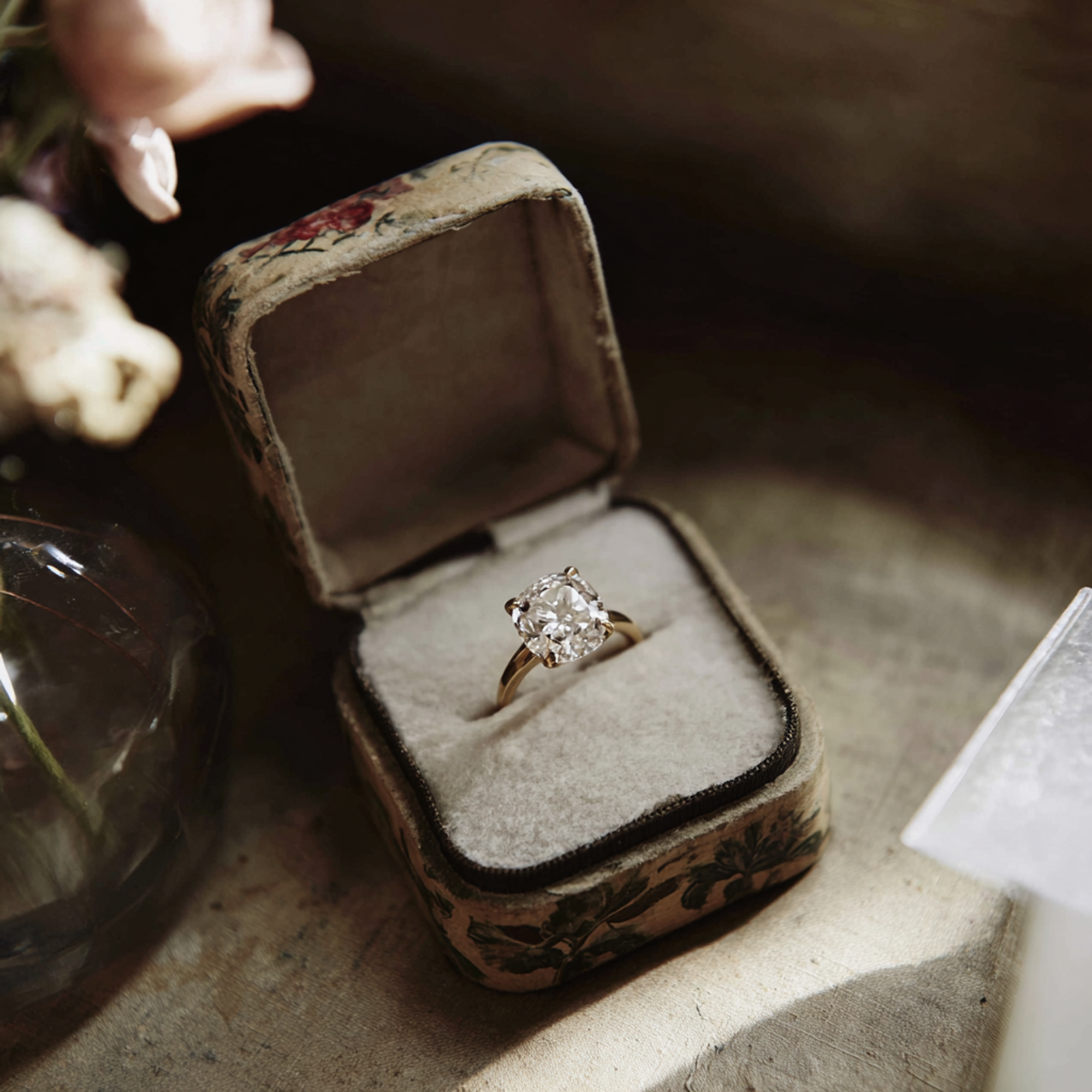
- Cushion – a square or rectangular shape with softly rounded corners. It has a vintage feel and produces a warm, romantic sparkle (1).
- Princess – a sharp-cornered square shape with brilliant-cut facets. Contemporary and angular in style, though the pointed corners can be more vulnerable to chipping if not well protected by the setting (1).
- Pear – a teardrop shape combining a rounded end with a point. The pointed end is typically worn facing the fingertips (1).
- Emerald – a rectangular step cut with trimmed corners. Known for its elegant, understated flash rather than intense sparkle (2).
- Asscher – a square step cut with deeply trimmed corners, giving it an almost octagonal outline. It has a geometric, Art Deco quality (2).
- Marquise – an elongated shape with pointed ends at both sides. Like the oval, it tends to appear larger per carat than a round stone (1).
Shape and price
Round brilliant diamonds typically cost more per carat than other shapes because cutting them uses more of the original rough diamond and consumer demand is consistently high (3). Fancy shapes – any shape other than round – generally preserve more of the rough stone during cutting and can cost notably less per carat for a comparable quality grade (3). Elongated shapes such as oval, pear, and marquise also spread their weight across a wider surface, making them appear larger face-up than a round stone of the same carat weight (1).
Lesson glossary
Key terms
- Shape
- The outline or silhouette of a stone when viewed from above
- Cut style
- How a stone's facets are arranged; the two main styles are brilliant and step
- Facet
- A flat, polished face on the surface of a cut gemstone
- Brilliant cut
- A cut style using many small, triangular facets designed to maximise sparkle and light return
- Step cut
- A cut style using fewer, larger parallel facets that produce broad flashes of light and a clear, transparent quality
- Fancy shape
- Any diamond shape other than round brilliant
- Hall of mirrors effect
- The visual impression created by step-cut stones, where broad reflections resemble a series of mirrors
- Bow-tie effect
- A dark, bow-tie-shaped shadow that can appear across the centre of poorly proportioned elongated stones such as ovals or pears
- Face-up size
- How large a stone appears when viewed from above in a setting, which is not always the same as its carat weight