
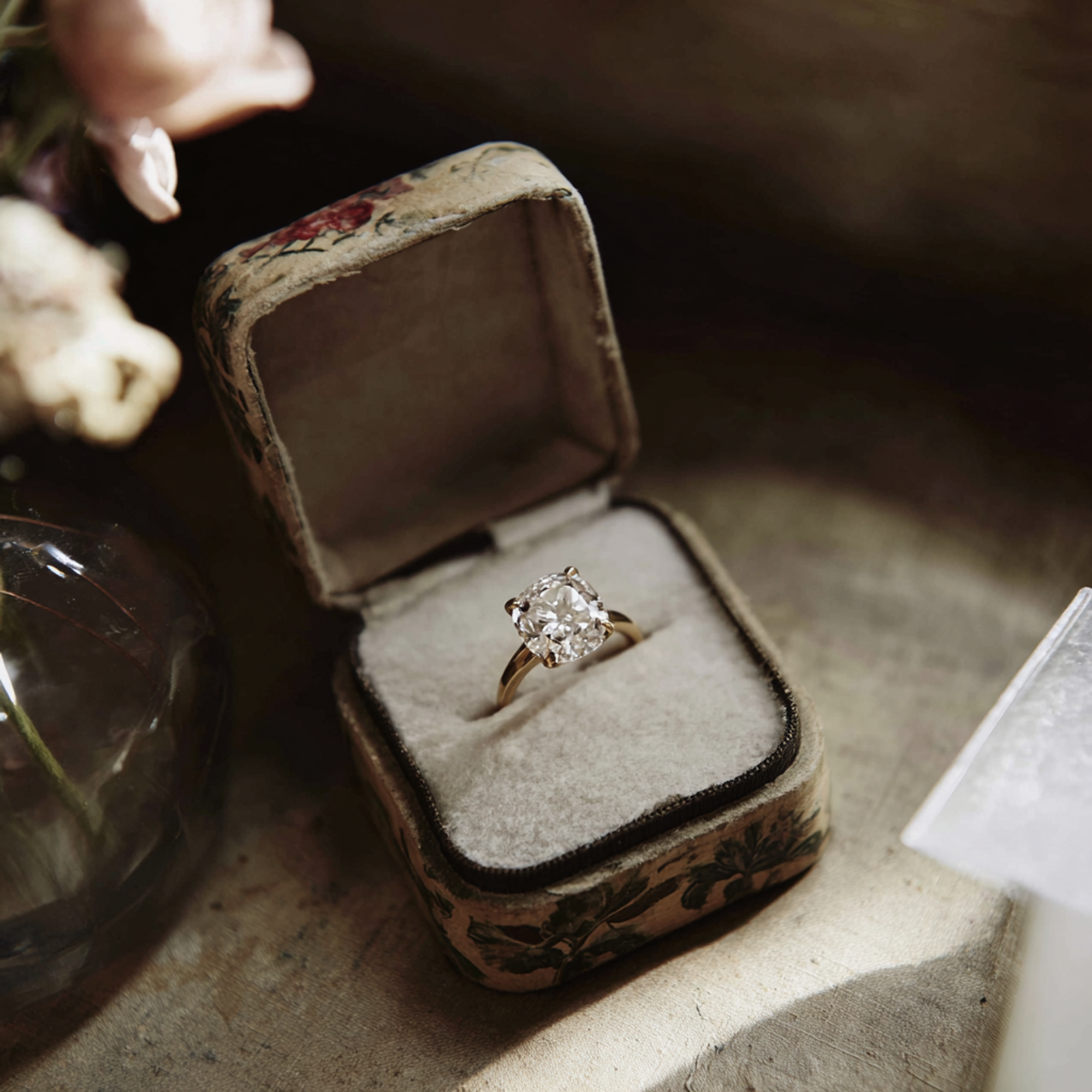
This lesson explains how to clean jewellery safely at home, when to avoid certain methods, and how everyday habits can help a custom ring last well over time.
Why this matters
Jewellery usually wears out through small everyday risks rather than one dramatic event: knocks, chemicals, heat, trapped dirt, and worn settings. UK jewellery guidance says you should remove jewellery for activities that may scratch or damage it, keep it away from chemicals such as chlorine, and store pieces separately so they do not rub against each other.[1] GIA also warns that household cleaners, perfume, lotion and other cosmetics can damage metals and some gems, and that many treated gemstones need special care.[2]
Learning goals
- Know the safest basic method for home jewellery cleaning.
- Understand why some gemstones need gentler care than others.
- Recognise when ultrasonic, steam or harsh chemicals are risky.
- Know how storage and regular checks help prevent loss and damage.
Key ideas
Start with the safest routine
For many pieces of fine jewellery, the safest home method is simple: warm water, a few drops of mild washing-up liquid, and a very soft brush, followed by careful drying with a lint-free cloth.[1] Gem-A adds a useful practical point: clean over a plastic bowl rather than a sink, so a loose stone cannot disappear down the drain or hit a hard surface.[3]
One method does not suit every stone
NAJ guidance explains that many coloured gemstones have been treated to improve appearance, and that these treatments can react badly with some cleaning products. It also notes that emeralds that have been oiled can be harmed by steam or ultrasonic cleaning.[1] GIA makes the same wider point: treatments can be affected by heat, solvents, steam and ultrasonic cleaners, so knowing whether a gem has been treated is part of knowing how to care for it.[2]
Pearls and opals need extra care
Pearls are soft and easily scratched. GIA says they can be damaged by chemicals including perfume, cosmetics and even perspiration, and that they should never be cleaned in an ultrasonic or steam cleaner. For routine care, wipe pearls with a very soft clean cloth after wearing them; for deeper cleaning, use warm soapy water and make sure the string is fully dry before wearing again.[4]
Opals are also more delicate than many people expect. GIA says the only safe way to clean opal is with warm, soapy water, and warns that high heat or sudden temperature changes can cause fracturing.[5]
Be cautious with machines and “quick fixes”
Home ultrasonic and steam cleaners are often advertised as easy solutions, but they are not safe for every item. NAJ advises against steam and ultrasonic cleaning for some treated coloured stones, and GIA notes that even with diamonds, harsher home-cleaning methods can loosen stones in their settings.[1,2] A cleaner sold as “for jewellery” is not automatically right for every gemstone.[1]
Daily habits matter as much as cleaning
Take rings off for sport, gardening, heavy lifting, cleaning and sleep if there is any risk of knocks or abrasion.[1] Store jewellery separately in a soft-lined box or wrapped in soft cloth, especially pearls, which scratch easily.[1,3] It is also sensible to check claws, clasps and settings regularly; Gem-A recommends inspecting settings while cleaning, and the NAJ advises regular professional checks for wear or damage.[1,3]
Key terms
- Ultrasonic cleaner — a machine that uses high-frequency vibration in liquid to remove dirt.
- Steam cleaner — a device that uses hot pressurised steam for cleaning.
- Treated gemstone — a gem altered to improve colour or clarity.
- Setting — the metal part that holds a gemstone in place.
- Lint-free cloth — a soft cloth that does not leave fibres behind.
- Closed-back setting — a setting where the back of the stone is enclosed, which can affect cleaning.