
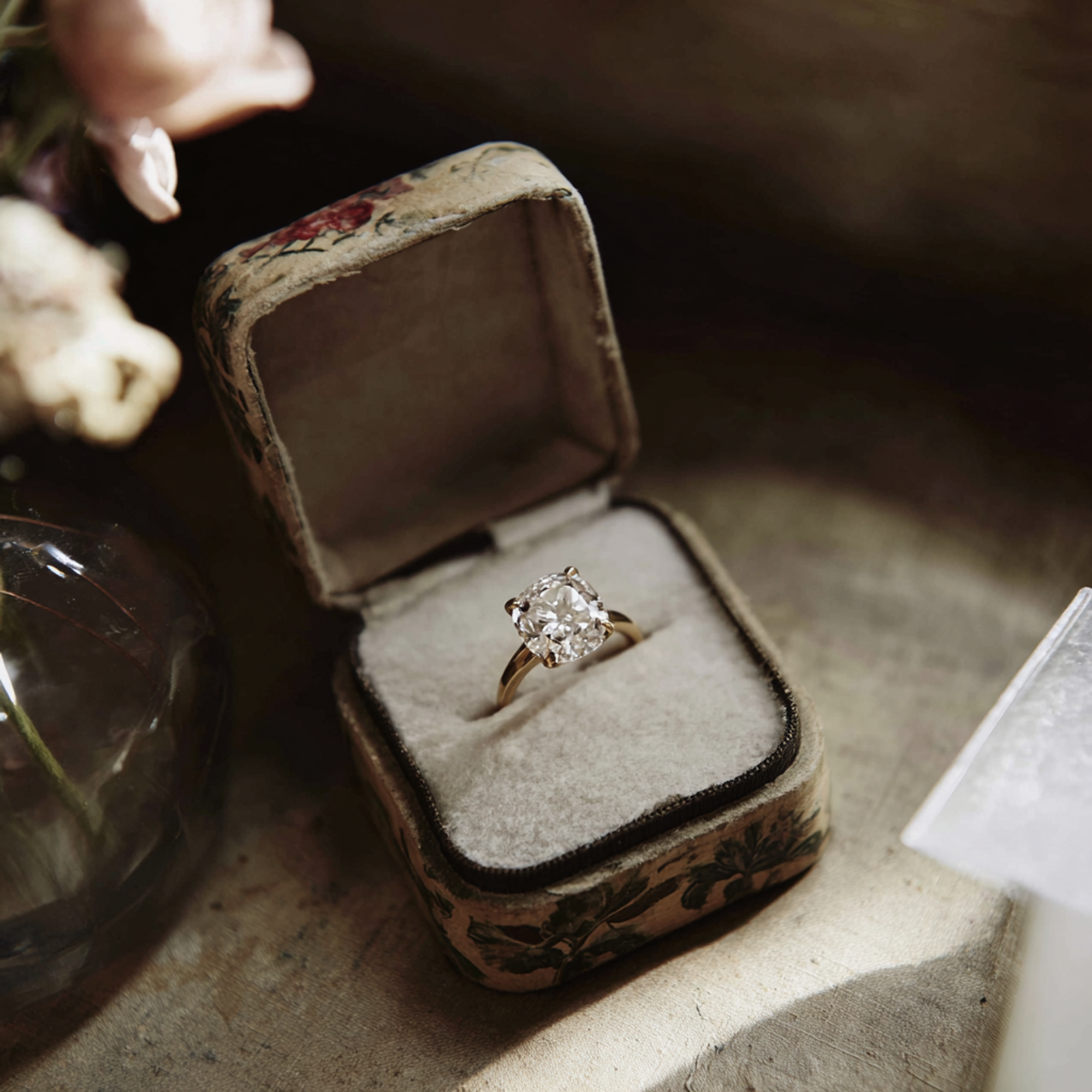
This lesson explains when a ring can be resized safely, when a different alteration is better, and which future changes owners should expect over time.
Why this matters
Ring size is not completely fixed. GIA says fingers swell and contract, measurements should be checked carefully, and wide rings can fit more tightly than narrow ones. It also notes that bridal sets wider than 4 or 5 mm need special consideration when worn together.[1]
That matters because resizing is part of long-term aftercare, not a sign that something has “gone wrong”. A custom ring may need adjustment later because of comfort, life changes, or the way the design sits on the hand.[1]
Learning goals
- Know why ring size can change over time.
- Understand when resizing is simple and when it is risky.
- Recognise how hallmarking can be affected by resizing work.
- Identify common future changes such as tightening, refinishing and re-rhodium plating.
Key ideas
Not every ring resizes in the same way
Resizing is usually simplest when the lower part of the band is plain metal. GIA’s sizing guidance also shows that some designs are poor candidates for ordinary sizing work. For example, if a mounted stone’s culet sticks down into the finger hole, GIA says sizing or even handling the ring is not advisable, and a change of setting, alteration or remount may be safer.[1]
Hallmarks can be affected
In UK hallmarking guidance, a hallmarked ring may be repaired or sized without Assay Office consent if the hallmark is not defaced, the added metal is the same precious metal, and the fineness is at least the same as the original. If the work involves a new shank and the hallmark is defaced, re-hallmarking becomes a separate process, and the ring should be sent to an Assay Office intact before defacement if re-hallmarking is wanted.[2]
Some designs are harder to change safely
Bands with stones in the shank need more caution. GIA warns that stretching a band containing stones can weaken the areas between or under them, loosen the stones in their channels, and even lead to stone loss. Openings under stones can also pull, tear or break during stretching.[3]
Future changes are normal
After purchase, future work may include tightening settings, polishing, refinishing, or re-rhodium plating on white gold. The NAJ says full eternity and micropavé rings should be inspected and tightened every 3 to 6 months, and it also notes that customers should be told white gold may need re-rhodium plating to keep it looking fresh.[4]
Good habits make later changes easier
Keep a note of the ring size, which finger it is for, and any special instructions. GIA says jewellers should record the size and any request to preserve special engraving. That kind of paperwork can make later resizing or alteration work more accurate and less risky.[1]
Key terms
- Resize — to make a ring larger or smaller.
- Shank — the band part of a ring.
- Culet — the point at the bottom of some cut gemstones.
- Fineness — the purity of a precious metal.
- Re-hallmarking — sending an item for a new hallmarking process after major work.
- Re-rhodium plating — applying a fresh rhodium finish, usually to white gold.