
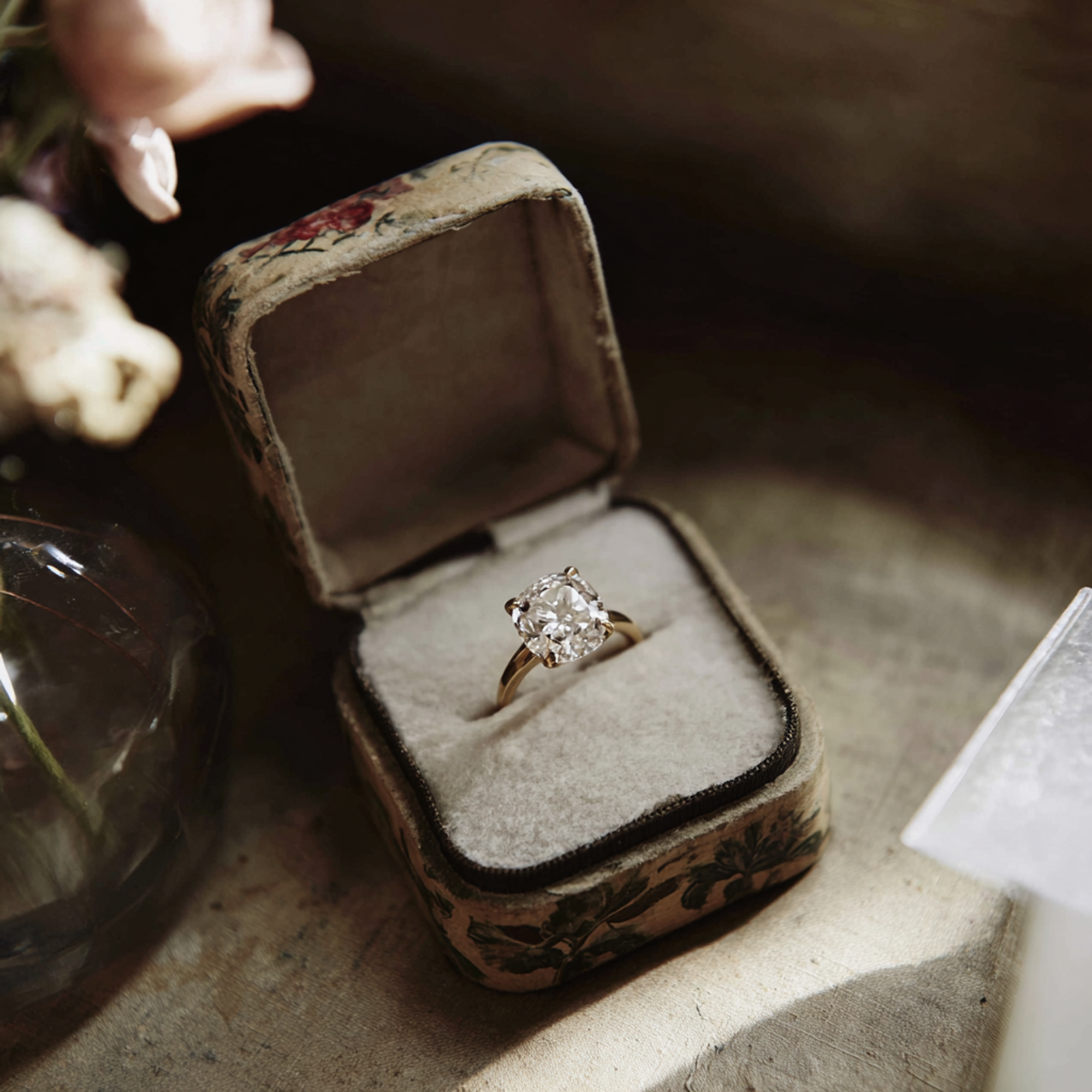
This lesson explains how stones stay secure in jewellery, what warning signs to watch for, and how simple aftercare can reduce the risk of stone loss.
Why this matters
Stone loss often begins with small signs of wear, not one dramatic accident. The National Association of Jewellers advises checking for worn, damaged or missing claws, loose stones and fractures in the metal, while GIA notes that a loose diamond can wear through a prong over time and that even a diamond can chip or break if hit in the right place.[1,2]
Learning goals
- Know the main signs that a stone may not be secure.
- Understand how daily wear can weaken settings over time.
- Recognise which designs may need more frequent checks.
- Know when to stop wearing a ring and take it to a jeweller.
Key ideas
Check settings regularly
A stone usually stays secure because the metal holding it is still tight, even and undamaged. Gem-A advises checking the security of gemstone settings while cleaning jewellery and says a magnifying glass can help you inspect claws and other settings more closely.[3]
The NAJ gives a useful checklist of warning signs: worn, damaged or missing claws, loose stones, fractures in metal, and other parts that no longer feel firm. If you notice any of these, stop wearing the piece until it has been checked.[1]
Everyday wear affects settings
Rings usually face more risk than pendants or earrings because hands are used constantly. The NAJ says jewellery should be removed for activities that could scratch, knock or damage it, and also for bed, cooking, cleaning and washing up.[1]
Its 2024 guidance note adds that delicate jewellery is not resistant to normal wear in the same way as heavier designs. It also warns that stones which overhang their settings are more likely to catch, break or fall out, and that thin rings are more prone to bending, misshaping and losing side stones over time.[4]
Cleaning can reveal problems early
Cleaning is helpful because dirt can hide wear around a setting. Gem-A says jewellery can be inspected at the same time as cleaning, and recommends using a plastic bowl for pieces that can safely be immersed, so a loose stone cannot fall down a drain or onto a hard sink. It also notes that closed-back settings should not be immersed.[3]
GIA’s bench guidance adds that loose gemstones can damage both the gem and the setting, and that regular inspection can catch the problem before too much damage is done.[5]
Some styles need more maintenance
Not all custom rings wear in the same way. The NAJ guidance note says full eternity rings and micropavé rings need extra care because of their design and should be inspected and tightened at least every three to six months.[4]
Act quickly after a knock
If a ring takes a hard knock, starts catching on fabric, or the stone seems to move, do not keep wearing it. Fast attention matters because a loose stone can damage the setting further and become harder to save.[2,5]
Key terms
- Claw — a small metal tip that holds a stone in place.
- Setting — the part of the jewellery that secures the stone.
- Micropavé — a style with many very small stones set close together.
- Full eternity ring — a ring with stones going all the way around the band.
- Loose stone — a stone that is no longer held tightly in its setting.
- Inspection — a careful check for wear, movement or damage.