
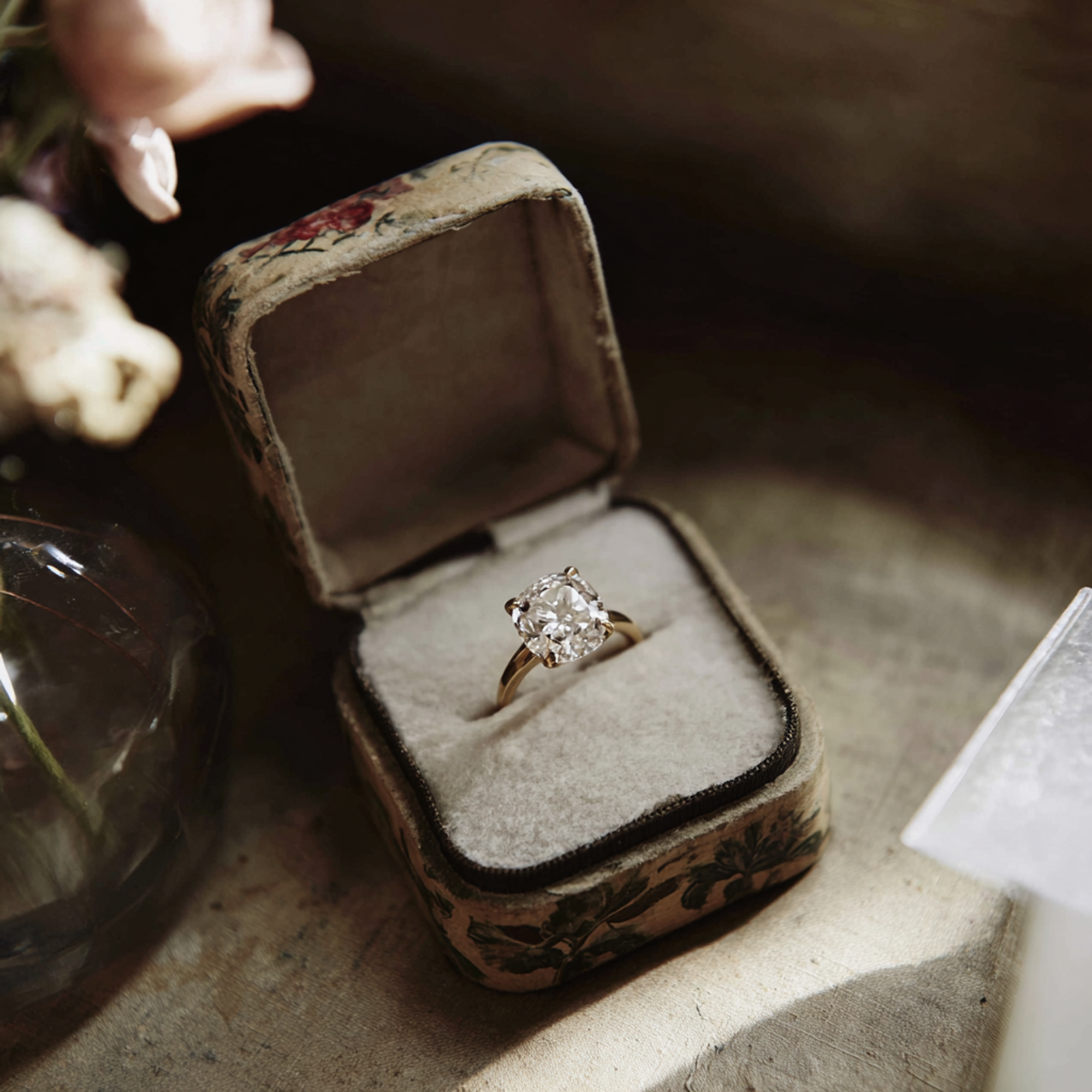
This lesson explains the most common ways a custom ring can be upgraded later, what checks should happen before any changes are made, and why paperwork should be updated afterwards
Why this matters
Many people want a ring that can evolve over time rather than be replaced completely. In practice, later upgrades often involve changing the setting, adding side stones or a halo, or reusing an existing stone in a new mount.[1] A redesign can be a good way to keep sentimental value while improving wearability or appearance, but it also needs careful checks on condition, fit and practicality.[2]
An upgrade can also affect paperwork. GIA says full diamond grading reports are issued only for loose diamonds, because a setting can hide or influence features such as colour, clarity and exact carat weight.[3] In the UK, major alterations can also affect hallmarking, so a ring may need fresh hallmark attention depending on how the work is done.[4]
Learning goals
- Know the main ways a ring can be upgraded later
- Understand why some upgrades are easier than others
- Recognise when a stone may need to be removed and checked before work starts
- Know why valuations, certificates and hallmarking may need updating after alterations
Key ideas
Common upgrade routes
A later upgrade does not always mean buying a completely new ring. One common option is to keep the centre stone and change the mounting around it. GIA’s consumer guidance gives examples such as adding a halo, adding side stones, changing the band style, or altering the metal colour to create a different look without losing the original centre stone.[1]
Another route is repurposing older jewellery. NAJ reporting on ring remodelling notes that inherited or earlier pieces are often redesigned into new engagement or wedding rings, so sentimental value is carried forward into something more wearable.[2]
The existing ring sets the limits
Not every ring is an easy candidate for upgrading. Before agreeing changes, a jeweller needs to assess the condition of the current setting, the thickness and shape of the band, and whether the stone can be removed and reset safely. GIA’s setting guidance shows how precise stone-setting work needs to be, especially with prongs and fitted mountings, which is why some redesigns are simple and others require a full remake rather than a minor alteration.[5]
This is especially important if the original ring is delicate, heavily stone-set, or already worn. In those cases, “upgrade” may really mean remaking the ring more safely rather than adding extra parts to an ageing structure.[2,5]
Stones and certificates may need new paperwork
If the centre diamond is being upgraded, regraded or moved into a new ring, paperwork matters. GIA says diamond grading reports are issued for unmounted diamonds, and a jeweller will have to remove a diamond from its setting for that service.[3,6]
For some coloured stones, mounted reporting is possible, but the service depends on the stone and the report type.[7] The practical point is simple: after a major change, old paperwork may no longer describe the finished ring accurately, even if it still describes the loose stone.
Hallmarks and valuations should be reviewed
In UK hallmarking guidance, some repairs or sizing work can be done without Assay Office consent if strict conditions are met, but additions, alterations or repairs to new hallmarked articles are controlled, and more extensive work can create hallmarking consequences.[4] That means a later upgrade is not only a design question but also a compliance question.
Insurance paperwork should also be refreshed. The Goldsmiths’ Company Assay Office says professional valuations include detailed descriptions and digital images for insurance purposes.[8] Once a ring has been upgraded, an old valuation may no longer match the item that is actually being worn.
Ask practical questions before agreeing the work
Before approving an upgrade, ask what will stay original, what will be newly made, whether the existing stones can safely be reused, and whether the ring will need fresh certification, re-hallmarking or a new valuation afterwards.[3,4,8] A good upgrade should improve the ring without creating confusion over identity, condition or insurance cover.
Key terms
- Upgrade — a later change that improves or alters a ring
- Remount — placing an existing stone into a new setting
- Halo — a border of smaller stones around a centre stone
- Reset — removing and setting a stone again
- Mounting — the metal structure that holds the stone
- Re-hallmarking — sending an altered item for a fresh hallmarking process
- Valuation — a professional assessment of value for a stated purpose, often insurance