
Coloured gemstone alternatives to diamonds

 8 min read
 Share this post


Diamonds are lovely. They’re also not compulsory.
If the idea of a “traditional” engagement ring feels a bit like wearing someone else’s coat, coloured gemstones can be a brilliant (and very personal) alternative. A blue sapphire, a vivid green emerald, or a moody garnet can say something about your partner’s style in a way a classic diamond sometimes doesn’t.
This guide is here to help you choose a coloured gemstone engagement ring that looks great and makes sense for everyday wear – because it’s all very romantic until you knock your hand on a doorframe carrying the weekly shop.
If you’re still at the “show me the colours” stage, you might want to start with our roundup of gemstone choices first. It’s a quick, no-faff list of different stones you can use for a non-diamond engagement ring – ideal for narrowing down what you actually like before you start thinking about durability, settings and care. Have a look at our guide to alternative gemstone colours for your engagement ring .
Why choose a coloured gemstone engagement ring instead of a diamond?
A coloured gemstone lets you build the ring around personality, not tradition.
Some people want a birthstone connection, a favourite colour, or a ring that doesn’t look like every other one on the Tube. A coloured gemstone engagement ring can feel more “them”, whether that’s timeless and elegant or quietly rebellious.
Budget can play a role too, because some coloured stones can offer a bigger visual impact for the same spend – especially if you’re focusing on design and craftsmanship rather than chasing a specific diamond spec. If you’re trying to set a sensible budget (without turning into an accountant about it), Boutee’s guide on how much you should spend on an engagement ring is a helpful reality check.

Pink Orange Sapphire Halo Ring by Lelya
What actually matters for a gemstone you’ll wear every day?
Hardness is important, but it’s not the whole story.
Gemstone durability is usually talked about in three bits: hardness (scratch resistance), toughness (resistance to chipping/cracking), and stability (how it handles heat, chemicals, and light). A stone can be fairly hard and still need care if it’s prone to fractures or has common treatments that don’t love harsh cleaning.
Settings matter too. If your partner is hands-on – gym, gardening, pottery, constant “I’ll just move this furniture myself" – a protective setting (like a bezel or halo) can make a big difference, whatever gemstone you choose.
Which coloured gemstones make the best alternatives to diamonds?
Here’s the practical shortlist – stones that are popular in engagement rings because they balance beauty with real-life durability.
| Gemstone | Mohs hardness (approx.) | Everyday-wear notes | Best for |
| Sapphire | 9 | Very durable; great toughness | Daily wear, heirloom rings |
| Ruby | 9 | Same family as sapphire; very durable | Daily wear, classic-with-colour |
| Spinel | 8 | Strong, underrated, lots of colours | Daily wear, unique looks |
| Emerald | 7.5–8 | Gorgeous but needs more care; often treated | Careful wear, statement pieces |
| Tourmaline | 7–7.5 | Lovely colours; a bit more “gentle” | Style-led rings, mindful wear |
| Garnet | 6.5–7.5 | Varies by type; can work well with care | Rich colour on a budget |
(Don’t worry if Mohs numbers feel a bit abstract – your jeweller can translate “7–7.5” into “maybe don’t wear it rock climbing”.)
Is sapphire a good choice for an engagement ring?
Sapphire is one of the best all-rounders for a non-diamond engagement ring.
It’s hard enough for daily wear, and it’s also known for strong toughness – meaning it’s less likely to chip with normal life knocks. If you want colour without feeling like you’re sacrificing practicality, sapphire is often the sweet spot.
Blue is the classic, but sapphires come in plenty of shades (including peach, teal, yellow and pink).

Pear Green Sapphire Engagement Ring, Gold Twig Ring by Caroline Brook
What about ruby for an engagement ring?
Ruby is basically sapphire’s dramatic sibling (same mineral family, different colour).
It’s another strong option for everyday wear, and it suits everything from vintage styles to sleek modern designs. If your partner loves bold colour but still wants a ring they can actually live in, ruby is a contender.

Natural Ruby & Diamond Halo Ring by Gemdaia
Is spinel a smart alternative if you want something different?
Spinel is the “why aren’t more people talking about this?” gemstone.
It’s durable, comes in a wide range of colours, and often looks striking in bespoke designs because it doesn’t scream “standard engagement ring”. If you want something distinctive but sensible for daily wear, spinel is worth asking a jeweller about.

Noctilucent Ring by Rachel Strange Jewellery
Is tourmaline good for an engagement ring?
Tourmaline can be a lovely choice if your priority is colour and individuality.
It comes in a huge range of shades (greens, pinks, bi-colour stones), and it suits modern, design-led rings. Because it’s not as hard as sapphire, it’s better for someone who’s reasonably careful with their hands – or for a ring design that protects the stone well.

Tourmaline Solitaire Ring by BKB London
Are garnets too soft for daily wear?
Not always – garnet depends on the type.
Some garnets are hardier than people assume, and they offer gorgeous colour at a more approachable price point. The key is pairing the stone with a protective setting and being realistic about lifestyle.
If garnet is on your shortlist, Boutee’s guide to garnet engagement rings is a great place to start (and it’s also very good at making garnet feel a bit less “December birthstone” and more “wow”).

Rhodolite Garnet and Diamond Ring by Jodie Gearing
Can you use emerald in an engagement ring without regretting it?
Yes – just choose with your eyes open.
Emeralds are beautiful, but they typically need more care than sapphire or ruby. Many emeralds have natural inclusions and are often clarity-enhanced (commonly with oils or resins), which can affect how you should clean and maintain them.
If your partner is gentle with jewellery and loves that rich green, emerald can be incredible. If they’re not, you can still get the look with clever design choices – like a protective setting, side stones, or even choosing a green sapphire as a “tougher cousin” option.

Emerald & Diamond Trilogy Ring by Bryony Wong
Do gemstone treatments matter and should you worry about them?
Treatments aren’t automatically "bad" – but you do want clear disclosure.
Some treatments are very common in the gemstone world, and they can affect value, care, and how the stone should be cleaned. For example, heat treatment is widely used for rubies and sapphires, and emeralds are often clarity-enhanced.
A simple rule: ask what treatments have been done and get it in writing, ideally backed by a recognised lab report for higher-value stones. It’s not being awkward; it’s being sensible.
If you want extra peace of mind, you can also look for jewellers who follow recognised trade standards around gemstone descriptions and disclosure.
What should UK buyers check before purchasing?
Two big ones: hallmarking and paperwork.
In the UK, precious metals described as gold, silver, platinum or palladium are covered by hallmarking rules, which help confirm metal purity. If you’re buying online (or even in person), knowing what to look for can save you a lot of hassle later.
Metal choice matters for colour too. Yellow gold can warm up greens and reds beautifully; platinum or white gold can make blues look crisp. If you’re torn, Boutee’s white gold vs platinum guide is a handy comparison, and their piece on c aring for your gold jewellery is useful once the ring is actually on a hand rather than in a bookmarked folder.
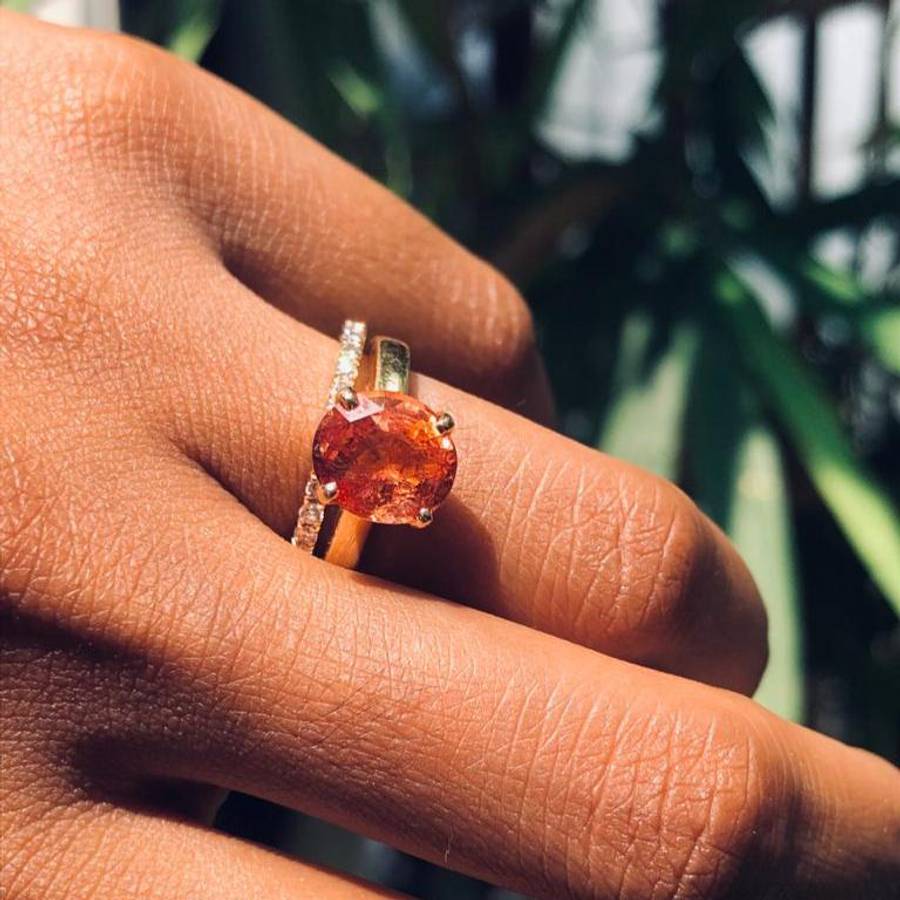
Padparadscha Solitaire Ring by Gemdaia
How do you keep a coloured gemstone ring looking good long-term?
Good habits beat panic cleaning.
A few basics go a long way: take the ring off for heavy lifting, avoid harsh chemicals, and get the setting checked periodically – especially if the ring has claws/prongs.
If you want a quick checklist of what not to do (we’ve all done the “clean it with whatever’s under the sink” thing), Boutee’s guide on what to avoid when wearing an engagement ring is worth a read.
What should you ask a jeweller before committing?
These questions keep things simple and protect your budget:
- What gemstone options suit daily wear for my partner’s lifestyle?
- What is the stone’s treatment history, and is there a lab report?
- How will the setting protect the stone (especially corners/edges)?
- What maintenance will the ring need (cleaning, claw checks, re-polishing)?
- Can you show stones in different lights (daylight, indoor, warm lighting)?
- What are the realistic trade-offs between size, colour, and durability?
A coloured gemstone engagement ring isn’t “settling” for something other than a diamond.
It’s choosing a ring that actually fits the person wearing it – style, lifestyle, and all.
And if you want help creating something bespoke without trawling the internet for hours, Boutee’s whole purpose is connecting you with independent jewellers who can bring your ideas to life (and explain the practical bits without making you feel like you’re sitting an exam).
Table of contents
-
 Why choose a coloured gemstone engagement ring instead of a diamond?
 - What actually matters for a gemstone you’ll wear every day?
- Which coloured gemstones make the best alternatives to diamonds?
- Is sapphire a good choice for an engagement ring?
- What about ruby for an engagement ring?
- Is spinel a smart alternative if you want something different?
- Is tourmaline good for an engagement ring?
- Are garnets too soft for daily wear?
- Can you use emerald in an engagement ring without regretting it?
- Do gemstone treatments matter and should you worry about them?
- What should UK buyers check before purchasing?
- How do you keep a coloured gemstone ring looking good long-term?
- What should you ask a jeweller before committing?
About the author
Ethan Ward
Co-founder
Ethan looks after the whole Boutee journey from first click to “yes”, making sure every person is matched with the right independent jeweller and never feels lost along the way. He’s also the champion of our maker community, supporting independent jewellers, building meaningful connections and helping the right connections spark.
Related posts
View all
Should you choose a halo engagement ring?
Explore halo styles (single, double, hidden), metal and gemstone options, UK hallmarking basics, and how to choose the right design.
8 min read 
Engagement Ring Settings: The Pros & Cons of Each
A clear, practical guide to the most popular engagement ring settings, explaining how each one looks, wears, and fits different lifestyles.
8 min read 