
Engagement Ring Settings: The Pros & Cons of Each

 8 min read
 Share this post


Engagement Ring Settings: Which One Is Right for You?
Choosing an engagement ring setting is one of those decisions that sounds simple until you start looking. Suddenly you’re knee-deep in prongs, halos, bezels and opinions from everyone who’s ever been engaged.
The setting affects how your ring looks, how it wears, how much maintenance it needs, and even how large your stone appears.
Let’s break down the most popular engagement ring settings, with honest pros and cons, so you can choose something that fits your style and your life.

What Is an Engagement Ring Setting, and Why Does It Matter?
An engagement ring setting is the metal framework that holds your diamond or gemstone in place. It determines the ring’s overall silhouette, how secure the stone is, how much light it receives, and how practical it is for everyday wear.
In other words: same stone, completely different ring.
If you’re designing a bespoke engagement ring, the setting is where function and personality really meet.
Solitaire
Is a Solitaire Setting Too Simple — or Perfectly Timeless?
A solitaire setting features a single centre stone, usually held in place by prongs or a minimal bezel.
Why people love it
- Lets the stone take centre stage
- Works beautifully with almost any diamond or gemstone shape
- Timeless and easy to pair with wedding bands
Things to consider
- If you want lots of sparkle or detail, it may feel understated
- The stone is more exposed, so durability depends on the exact prong design
A solitaire is like a crisp white shirt: effortless, elegant, and never out of style.
Because solitaire and prong settings expose so much of the stone, understanding the 4 Cs of diamonds becomes especially important — small differences in cut and clarity are far more visible.

Pavé
Is a Pavé Setting Practical for Everyday Wear?
A pavé setting uses tiny diamonds set closely along the band, creating continuous sparkle.
Why people love it
- Adds shimmer without overpowering the centre stone
- Makes the ring feel luxurious and detailed
- Photographs beautifully (Pinterest fans, take note)
Things to consider
- Small stones can loosen over time if knocked frequently
- Requires more care and occasional maintenance
If you love sparkle but still want a refined look, pavé is a popular middle ground.

Halo
Does a Halo Setting Really Make a Diamond Look Bigger?
Yes — and that’s exactly why halo settings are so popular.
A halo setting surrounds the centre stone with smaller diamonds, amplifying sparkle and visual size.
Why people love it
- Creates maximum brilliance
- Makes the centre stone appear larger
- Works well with vintage-inspired designs
Things to consider
- More intricate designs mean more cleaning
- Not ideal if you prefer very minimal styles
If you want drama without going up in carat size, a halo does a lot of the heavy lifting.
Also, if you’re leaning towards halo engagement rings , it’s worth exploring the different variations - from ultra-delicate vintage halos to bold, modern designs.

Bezel
Is a Bezel Setting Better for Active Lifestyles?
A bezel setting wraps metal fully or partially around the stone’s edge.
Why people love it
- Extremely secure and protective
- Sleek, modern appearance
- Ideal for active jobs or hands-on lifestyles
Things to consider
- Slightly less light reaches the stone
- Can make the stone look smaller if not well designed
Bezel settings are a favourite among people who want beauty without babying their ring.

Channel
Are Channel Settings Comfortable for Daily Wear?
Channel settings place stones flush between two metal walls, often along the band.
Why people love it
- Very secure and smooth against the skin
- Clean, contemporary look
- No snagging on clothes
Things to consider
- Resizing can be more complex
- Less sparkle from side stones compared to pavé
Channel settings are practical, polished, and wonderfully low-maintenance.
If you plan to wear your ring daily (and most people do), it’s worth thinking practically - our research on how often people really wear their engagement rings offers some eye-opening insights.

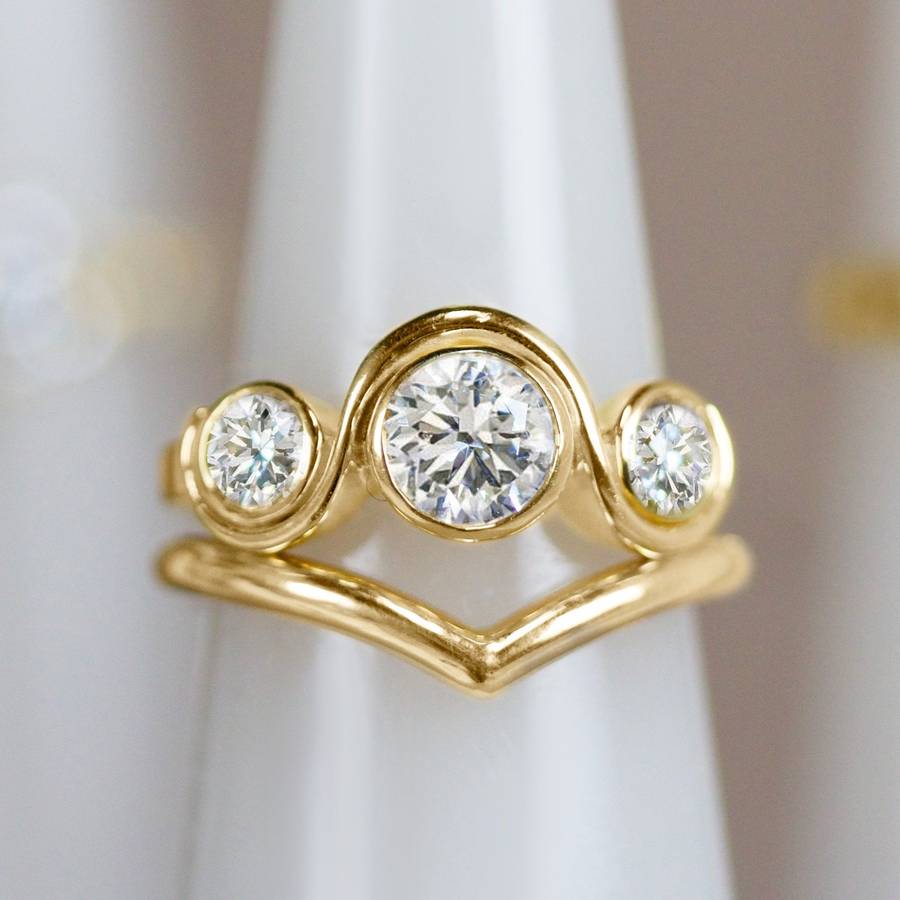
Three-Stone
What Does a Three-Stone Engagement Ring Symbolise?
Traditionally, a three-stone setting represents a couple’s past, present, and future.
Why people love it
- Deep symbolism
- Balanced, elegant design
- Allows for creative stone combinations
Things to consider
- More stones generally means a higher cost
- Can feel busier than a single-stone design
It’s a sentimental choice that still feels classic rather than trendy.
Five-Stone
Is a Five-Stone Ring Too Much for an Engagement Ring?
A five-stone setting features a row of diamonds or gemstones across the band.
Why people love it
- Serious sparkle
- Bold and eye-catching
- Often chosen for anniversary upgrades or alternative engagement rings
Things to consider
- Can feel elaborate for minimalist tastes
- Usually higher maintenance
If you love statement jewellery, “too much” probably isn’t in your vocabulary anyway.

Cluster
Are Cluster Engagement Rings a Clever Alternative to One Large Stone?
Cluster settings group smaller stones to create the appearance of a larger centrepiece.
Why people love it
- Often more budget-friendly
- Unique, vintage-inspired designs
- Great use of coloured gemstones
Things to consider
- More detailed cleaning required
- Less traditional appearance
Clusters are brilliant if you value character over convention.

Toi et Moi
What Is a Toi et Moi Ring, and Is It Too Unconventional?
A toi et moi (“you and me”) setting features two centre stones side by side.
Why people love it
- Deeply romantic symbolism
- Distinctive, artistic look
- Increasingly popular with modern couples
Things to consider
- Not a traditional engagement ring style
- Requires thoughtful design balance
If you like the idea of a ring that feels intentionally different, this is one to explore.
Cluster and toi et moi rings appeal to couples who want something a little unexpected - if that sounds like you, exploring non-traditional engagement ring styles can open up some inspiring alternatives.

How Do the Most Popular Engagement Ring Settings Compare?
| Setting Type | Best For | Main Advantage | Key Consideration |
| Solitaire | Timeless style | Focus on one stone | Less decorative |
| Pavé | Extra sparkle | Luxurious shimmer | Maintenance |
| Halo | Maximum impact | Stone looks larger | Cleaning |
| Prong | Brilliance | Light exposure | Snagging |
| Bezel | Active lifestyles | Security | Slightly less sparkle |
| Channel | Everyday wear | Smooth & secure | Resizing difficulty |
| Three-Stone | Symbolism | Meaningful design | Cost |
| Cluster | Budget & creativity | Visual impact | Cleaning |
| Toi et Moi | Unique couples | Romantic symbolism | Less traditional |
How Do You Choose the Right Engagement Ring Setting?
Start with real life, not just aesthetics.
Ask yourself:
- How hands-on is your lifestyle?
- Do you prefer subtle or statement jewellery?
- How much maintenance feels realistic?
- Do you want traditional, modern, or something in between?
A good independent jeweller will help you balance beauty, durability and budget — and often suggest small tweaks that make a big difference.
The setting works hand-in-hand with your stone and metal choice, so if you’re still weighing up yellow gold, white gold or platinum, it’s worth reading our guide on what metal is best for your engagement ring first.
And if budget is part of the decision (and it usually is), our guide to buying an engagement ring on a budget shows how thoughtful design choices — including the setting — can make a big difference.
FAQs
What is the best setting for an engagement ring?
The best setting for an engagement ring ultimately depends on personal style and lifestyle. Classic choices like the solitaire setting are popular for their elegance and ability to highlight the central stone. However, more intricate designs like the halo or pavé settings might appeal to those seeking additional sparkle and detail.
What are the different types of engagement ring designs?
Engagement ring designs vary widely, incorporating settings such as solitaire, halo, pavé, and three-stone, among others. Each design offers a unique aesthetic, from the simplicity and focus of a solitaire to the intricate detail of a milgrain or cluster setting. The choice of design can significantly influence the ring's overall appearance, making it crucial to consider personal preferences and lifestyles.
What setting shows off a diamond the best?
To maximise a diamond's brilliance and visibility, the prong setting is often considered the best. This setting allows the most light to enter the stone from all angles, enhancing its natural sparkle. However, settings like the halo can also amplify a diamond's presence by surrounding it with smaller stones to create a dazzling effect.
What is the most secure setting for a diamond ring?
The most secure setting for a diamond ring is generally considered to be the bezel setting, where the metal encases the stone's perimeter. This setting provides excellent protection against impacts, reducing the risk of the diamond chipping or falling out. For those with active lifestyles, the bezel setting offers peace of mind without sacrificing style.
Table of contents
-
 Engagement Ring Settings: Which One Is Right for You?
 - What Is an Engagement Ring Setting, and Why Does It Matter?
- Solitaire
- Pavé
- Halo
- Bezel
- Channel
- Three-Stone
- Five-Stone
- Cluster
- Toi et Moi
- How Do the Most Popular Engagement Ring Settings Compare?
- How Do You Choose the Right Engagement Ring Setting?
- FAQs
About the author
Ethan Ward
Co-founder
Ethan looks after the whole Boutee journey from first click to “yes”, making sure every person is matched with the right independent jeweller and never feels lost along the way. He’s also the champion of our maker community, supporting independent jewellers, building meaningful connections and helping the right connections spark.
Related posts
View all
Should you choose a halo engagement ring?
Explore halo styles (single, double, hidden), metal and gemstone options, UK hallmarking basics, and how to choose the right design.
8 min read 

Birthstones and Their Meanings
A month-by-month guide to birthstones, meanings, and engagement ring tips.
8 min read