
Embracing Marks and Scratches on your Engagement Ring

 6 min read
 Share this post


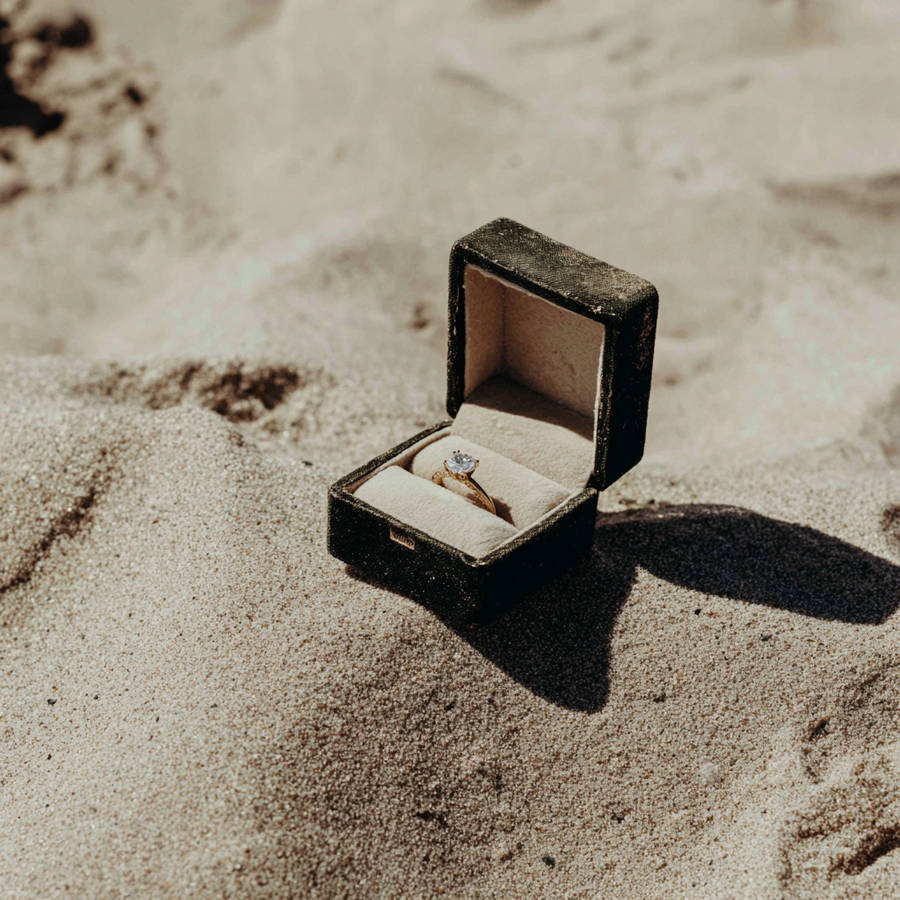
The first time you notice scratches on your engagement ring, it can feel a bit… rude. One minute it’s gleaming like it’s fresh from a photoshoot, the next there’s a tiny line on the band and your brain goes: Oh no. I’ve ruined it.
You haven’t. You’ve just started living with it.
Because an engagement ring isn’t a “special occasions only” thing. It’s the everyday symbol - the one that’s there for work emails, washing-up, hand-holding, moving house, and absent-mindedly tapping your mug while you think. Of course it changes a little.

Why do scratches on an engagement ring feel so personal?
An engagement ring carries a lot of meaning, so it’s normal to want it to stay perfect. A mark can feel like a threat to the moment you got engaged - like you’re watching that magic slip away.
But the ring isn’t losing meaning as it wears. The meaning is moving from “brand new promise” to “real life promise”. That shift is quieter, but it’s deeper.
Are gold engagement ring scratches actually “damage”?
Most marks on a ring band are surface wear, not structural damage. Gold (and other precious metals) will show fine scratches simply because they’re designed to be workable, wearable materials - not indestructible ones.
If you’re choosing a metal with day-to-day life in mind, this guide is useful .

What if the marks are the point?
Here’s the reframe that helps a lot of people: your ring is a witness.
A tiny scratch might be from the day you were packing boxes together, or the holiday where you couldn’t stop grinning at your hand, or just a normal Tuesday where life was happening and love was quietly present in the background. Those marks don’t cheapen the ring - they personalise it.
Think of it like a well-used cookbook. A pristine one looks lovely on a shelf. A stained, dog-eared one means someone’s actually feeding people they care about.
What does “patina” really mean (and why do heirlooms look so good)?
Over time, lots of tiny marks soften into an even finish called patina. It’s that mellow, “worn-in” look you often see on older rings - the sort that feels warm rather than shouty.
That’s why inherited pieces can feel so comforting. They’re proof that a ring can be knocked about by decades of real life and still be treasured. The wear isn’t a flaw; it’s the history.
If you’ve ever wondered what you’re seeing on the inside of an older ring, UK hallmarking is a nice rabbit hole .

If perfection is the trap, what’s the healthier goal?
A happier goal is “well-loved and well-looked-after”.
That doesn’t mean obsessing over every new line on the band. It means accepting that the ring will change and making sure it stays secure and comfortable to wear.
A good mental trick: take one nice photo of your ring when it’s freshly cleaned and sparkling. That way you’ve “saved” the pristine version - and you can stop trying to freeze time on your finger.
Can you keep it looking lovely without erasing its character?
Yes - and you don’t have to pick between “scratched” and “shiny”. The middle ground is simple: clean it gently, and only refresh the finish when you genuinely fancy it.
If your ring ever looks a bit dull, it’s often just everyday build-up (hand cream is a repeat offender). A gentle clean can bring the sparkle back without trying to turn the clock back to day one.
For a practical, industry-backed cleaning approach, NAJ’s jewellery care guide is genuinely helpful.
If you want extra reassurance about what to take off your ring for (without becoming precious about it), this is a good companion read .

Should you polish your engagement ring - or is that missing the point?
Polishing is a choice, not an obligation.
If the marks are bothering you, a jeweller can refinish the metal and bring back a brighter look. But it can help to see polishing for what it is: a reset button. It smooths away evidence of wear, which means the next scratch can feel oddly dramatic again.
Some people love a yearly refresh. Others prefer to let patina build because it feels more “them”. Neither is more correct - it’s just your relationship with the ring.
For anyone with pavé, channel settings, or more delicate detailing, it’s also worth understanding how your setting is built before doing lots of refinishing.
When should you stop embracing it and get it checked?
Scratches are usually cosmetic. Security issues aren’t.
It’s worth popping into a jeweller if you notice any of the following:
- a stone feels loose or makes a tiny clicking sound
- prongs/claws look lifted or snag on knitwear
- the band looks bent or out of shape
- there’s a visible crack in the metal
That’s not “being fussy”. That’s just protecting the part that actually matters: the stones staying put.
How do you actually let go of the fear of “ruining it”?
Letting go doesn’t happen because someone tells you to relax. It happens when you decide what you want the ring to represent.
- If you want it to represent a perfect object, you’ll always be managing it.
- If you want it to represent a lived life together, the marks stop feeling like threats and start feeling like proof.
Your ring wasn’t made to stay pristine. It was made to stay with you.

FAQs
Is it normal for engagement rings to get scratched?
Yes. Marks and scratches on an engagement ring are normal, particularly on gold, because daily wear leaves fine surface lines over time.
How do I stop worrying about scratches on my engagement ring?
It helps to treat scratches as signs of everyday life rather than damage. Patina is what happens when lots of tiny marks soften into an even finish - and many people end up loving that look.
Should I polish my engagement ring?
Only if you want to. Polishing can refresh the finish, but it’s not something you need to do to keep your ring meaningful.
Can diamonds get scratched?
Diamonds are extremely scratch-resistant, but they can still chip or fracture from a hard knock at the wrong angle. GIA’s explainer on hardness vs toughness is excellent.
Table of contents
-
 Why do scratches on an engagement ring feel so personal?
 - Are gold engagement ring scratches actually “damage”?
- What if the marks are the point?
- What does “patina” really mean (and why do heirlooms look so good)?
- If perfection is the trap, what’s the healthier goal?
- Can you keep it looking lovely without erasing its character?
- Should you polish your engagement ring - or is that missing the point?
- When should you stop embracing it and get it checked?
- How do you actually let go of the fear of “ruining it”?
- FAQs
About the author
Billy Ward
Co-founder
Billy co-founded Boutee to help couples skip the high-street hard sell and work directly with independent UK jewellers. He now leads product and partnerships, obsessing over how to make the bespoke ring journey as simple, transparent and stress-free as possible.
Related posts
View all
Caring for Your Gold Jewellery: A Practical Guide to Keeping It Beautiful for Years
Learn how to care for gold jewellery, prevent scratches and tarnish, and decide when to seek professional cleaning
6 min read 
Diamond FOMO After Choosing Another Gemstone? Here’s What It Really Means
Why diamond FOMO is normal - and what to do with it.
6 min read 
Thinking About a Simpler Engagement Ring? Here’s What to Know
A simpler second ring is not strange. Here’s how to think it through clearly and practically.
6 min read