
Caring for Your Gold Jewellery: A Practical Guide to Keeping It Beautiful for Years

 5 min read
 Share this post


Gold jewellery is made for real life - it’s meant to be worn and enjoyed.
And if you’re honest, you probably feel safer keeping your favourite ring on your finger than tucked somewhere “safe” that you’ll promptly forget about.
The goal isn’t to wrap your jewellery in bubble wrap. It’s simply to avoid the handful of situations that genuinely cause damage.

Can You Wear Gold Jewellery Every Day?
In most cases, yes - especially 9ct gold, which is durable and well suited to everyday life in the UK.
Why 9ct often works well for everyday wear: pure gold is naturally soft, so jewellery is made as an alloy (gold mixed with other metals) to improve durability. That’s why 9ct tends to cope well with day-to-day knocks. If you want help choosing the right metal read our guide on on choosing the best metal for you .
You don’t need to remove your ring to do the washing up or go on a run. For many people, it actually feels safer on their finger than left in a hotel bathroom somewhere.
Rather than treating jewellery as something that must constantly come off, it’s more about judgement. If you’re regularly swimming in chlorine, lifting heavy weights at the gym, doing heavy manual building work, or reaching for the bleach, that’s the time to put it somewhere save. The rest of the time, it’s perfectly fine to just wear it and enjoy it.
The Gemological Institute of America explains that repeated chlorine exposure can weaken gold alloys over time, but that refers to regular, prolonged contact - not everyday living.
Gold is made to be lived in. It just prefers not to be soaked in chemicals or repeatedly knocked about. And if you do pick up the odd tiny mark over time, that’s completely normal - it’s a sign it’s actually being worn, not stored. If you want a reassuring read on what’s “normal” and what isn’t, have a look at Embracing marks and scratches on your engagement ring .
Rule of thumb: if there’s a decent chance you’ll knock it hard, snag it, or soak it in chemicals, take it off. Otherwise, it’s usually safer on your hand than on the edge of a sink.
Is It Safer to Wear Jewellery Than Take It Off?
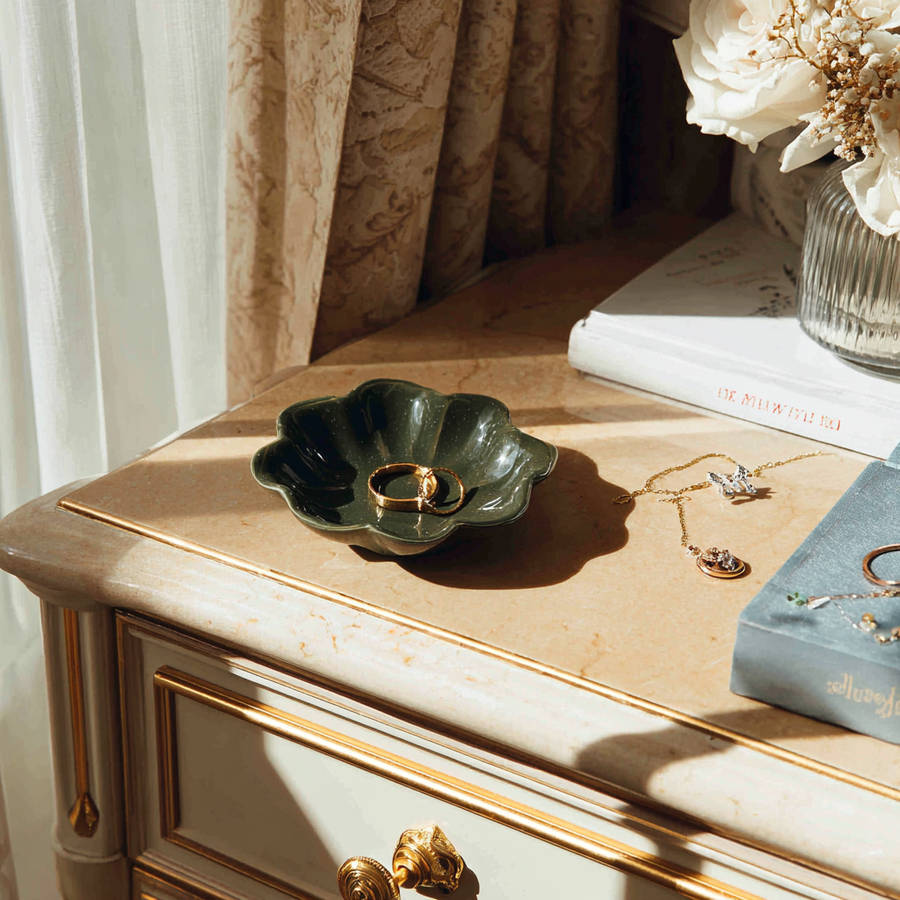
Often, yes. Jewellery is frequently lost when it’s removed “just for a minute” and placed on a sink, bedside table or hotel nightstand.
If you do remove jewellery:
- Put it in the same designated place every time
- Use a small dish or ring holder near sinks
- Store pieces separately in a soft-lined box
Our guide to building a timeless jewellery collection covers practical storage solutions that reduce both scratching and accidental loss.
When Is It Sensible to Take Gold Jewellery Off?
There are only a handful of situations where removing it genuinely helps - either to protect the jewellery or for safety.
It’s sensible to take gold jewellery off for:
- Swimming in chlorinated pools or hot tubs
- Contact sports (for safety as much as jewellery care)
- Weightlifting, gripping heavy gym bars, or manual building work where repeated pressure can dent or warp gold
- Cleaning with strong chemicals such as bleach
The National Association of Jewellers also advises limiting exposure to harsh chemicals to protect metals and settings ( https://www.naj.co.uk ).
For everyday office work, social occasions, errands and normal day-to-day life, your jewellery will be perfectly comfortable staying where it is.
How Much Cleaning Is Actually Necessary?
Less than you might think .Gold doesn’t suddenly deteriorate if you skip a cleaning session. Most of what dulls jewellery is gradual build-up - everyday things like hand cream, soap residue, natural skin oils and a bit of dust. Over time, that creates a film that softens the shine.
If you wear a piece daily, a gentle clean every month or so is usually enough to keep it looking bright. If it’s worn occasionally, it may only need cleaning a few times a year. You’re maintaining clarity, not rescuing damage.
A Simple Home Method
- Mix warm (not hot) water with a few drops of mild washing-up liquid
- Soak the jewellery for 10–15 minutes
- Using a soft-bristled toothbrush, lightly brush around settings and crevices (this is where build-up loves to hide). If you’re not sure what your setting is or where dirt tends to collect, Engagement ring settings: the pros & cons gives a helpful overview.
- Rinse under lukewarm water (with the sink plug in)
- Pat dry with a lint-free cloth
If the jewellery looks clean and bright, stop there. Over-cleaning isn’t necessary either.
If your piece has softer stones (like opal, turquoise or pearls), or an older setting, skip anything aggressive and consider a professional clean. The GIA has some great information on how to keep your stones sparkling

FAQs
Can I wear gold jewellery all the time?
In most cases, yes. Gold - particularly 9ct gold - is suitable for everyday wear. Just remove it for regular swimming, heavy lifting, or when using harsh chemicals.
Is it better to wear jewellery or store it?
Often, wearing it reduces the risk of misplacing it. If you remove it, always store it in the same safe place to avoid accidental loss.
How do I clean gold jewellery at home?
Use warm water and mild soap, soak briefly, brush gently and dry thoroughly. Avoid harsh chemicals.
Will chlorine damage gold jewellery?
Repeated exposure to chlorine can weaken gold alloys over time. Occasional contact isn’t usually catastrophic, but regular swimming while wearing gold is best avoided.
What About Wearing Gloves for Cleaning?
If you’re doing light household cleaning, a good pair of rubber gloves creates a protective barrier and significantly reduces chemical exposure.
However, if you’re using strong bleach-based products or cleaning for a prolonged period, it’s still safer to remove rings. Gloves can trap moisture or cleaning solution inside if they aren’t fitted properly, and that can sit against the metal.
It’s about reducing repeated exposure - not obsessing over every splash.
Table of contents
-
 Can You Wear Gold Jewellery Every Day?
 - Is It Safer to Wear Jewellery Than Take It Off?
- When Is It Sensible to Take Gold Jewellery Off?
- How Much Cleaning Is Actually Necessary?
- FAQs
About the author
Rachel Norris
Ring Specialist
Rachel is passionate about demystifying engagement rings. She writes practical guides that help people understand the process and feel confident taking the first step on a bespoke journey.
Related posts
View all
Diamond FOMO After Choosing Another Gemstone? Here’s What It Really Means
Why diamond FOMO is normal - and what to do with it.
5 min read 
10 Awkward Engagement Ring Questions People Secretly Google
Secretly Googling awkward engagement ring questions? This ones for you!
5 min read 
Embracing Marks and Scratches on your Engagement Ring
Learn what causes them, when to polish, how to clean safely, and when to see a jeweller.
5 min read