
Emerald Engagement Rings

 9 min read
 Share this post


Emerald engagement rings have a quiet confidence about them. They’re not trying to compete with diamonds on sparkle; they’re all about colour, character, and that deep green that looks brilliant in daylight and still interesting in moodier indoor lighting. If you want something classic but not predictable, emeralds are a very sensible kind of “different”.
They’re also not a gemstone you buy on autopilot. Emeralds tend to have natural inclusions (often called jardin, like a little garden inside the stone), and they’re usually treated to improve clarity. None of that is “bad” - it just means you’ll get the best ring if you know what to look for and choose a design that protects the stone.
Why do people choose emerald engagement rings?
For most people, it’s the colour. A good emerald has a richness that feels romantic without being twee, and it can look equally at home in a vintage-inspired ring or something clean and modern. Emeralds also suit a wide range of skin tones, which is handy when you’re trying rings on in a shop mirror under lighting that makes everyone look slightly unwell.
There’s also a meaning side to it if you like that sort of thing. Emeralds have long been associated with love, renewal, and good fortune — and historically they’ve been adored by royalty and collectors alike. You don’t need to be Cleopatra to pull one off, but it doesn’t hurt your confidence to know you’re in decent company.
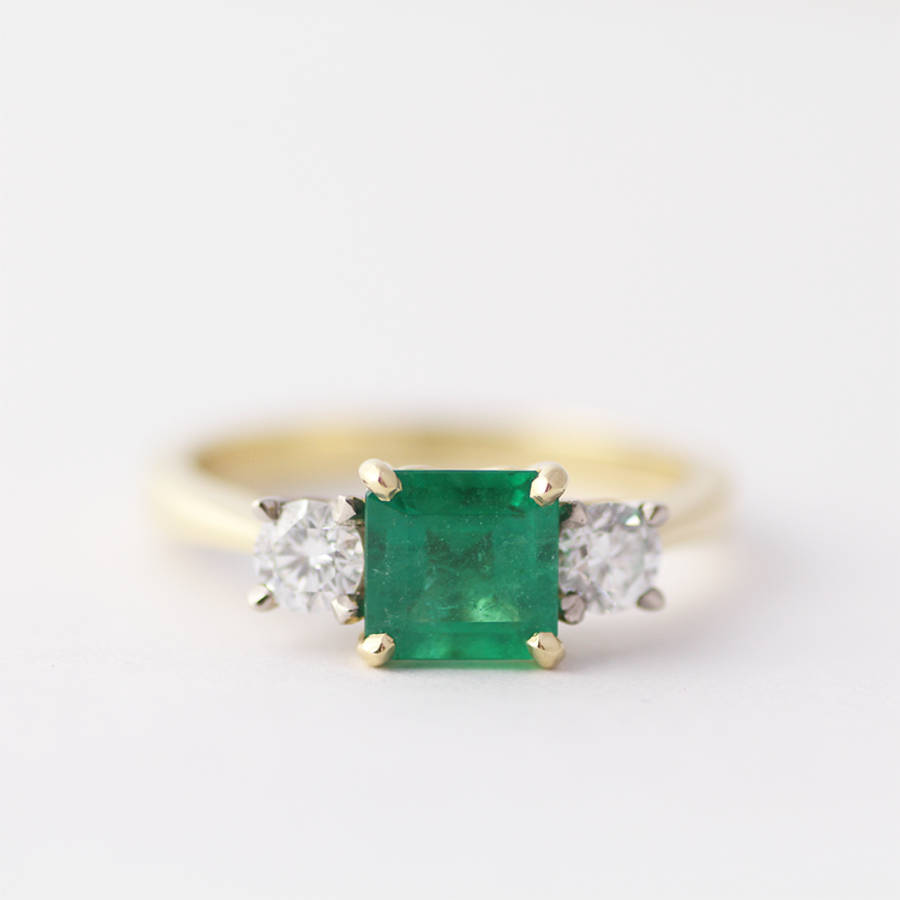
Are emerald engagement rings durable enough for everyday wear?
They can be, but emeralds don’t like being bashed about. On paper, emeralds are reasonably hard, yet they often have internal features that make them more vulnerable to knocks than you’d expect. In plain English: they’re not fragile, but they are a bit “handle with care”.
If you live in your jewellery and never take your ring off (gym, cleaning, moving furniture, opening stubborn jars…), you’ll want a protective setting and a design that doesn’t leave corners exposed. If you’re unsure what’s practical, our guide to settings is a good starting point.
How do you choose the right emerald?
Emeralds are one of those gems where “perfect” is a bit of a myth. The best-looking stone is usually the one with the strongest, most pleasing colour — not necessarily the one with the fewest inclusions. Think of it like finding a good olive oil: you want flavour (colour) first, then you worry about the finer details.
A quick tip: always view the emerald in a couple of lighting conditions. Some stones look fantastic under bright shop lights and then go a bit moody (or even dark) indoors – which is not what you want if you spend most of your time under British ceilings.

What colour emerald is best?
Colour is the headline act. The most sought-after emeralds are typically vivid green to slightly bluish-green, with good transparency so the colour looks lively rather than flat. If it leans too yellow, it can look a bit sharp; if it’s too dark, it can look inky in normal indoor light.
Try to look for even colour across the face of the stone. A little zoning can be normal, but you don’t want a centre that looks noticeably darker or paler than the rest unless that’s a look you genuinely love.
What clarity should you expect in an emerald?
Inclusions are common in natural emeralds, so the goal isn’t “flawless”. Instead, you want inclusions that don’t dominate the look of the stone, especially when viewed face-up. The ring should read as “gorgeous green” first, not “interesting crack network” (unless you’re a geologist, in which case… respect).
Because emeralds are often clarity-enhanced, it’s also worth asking what treatment the stone has had and whether it’s been disclosed in writing. It’s normal to have treatment - you just want transparency about it.
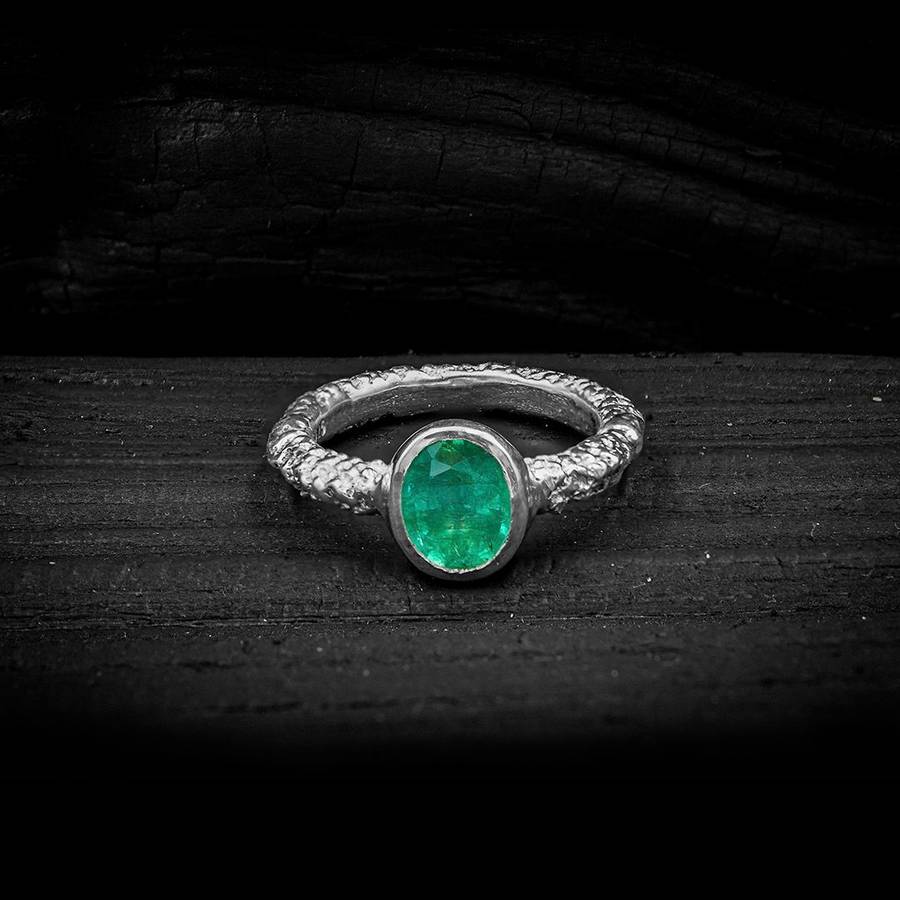
Does cut matter more with emerald engagement rings?
Yes, because cut affects how the colour shows and how resilient the stone feels. Emeralds are often cut in step cuts (including the classic emerald cut) because those long, clean facets can make colour look especially rich and elegant.
That said, step cuts can also make inclusions easier to see, so you’re balancing beauty with what’s happening inside the stone. If you want to explore different cuts (and what they do visually), this guide is helpful.
Where do emeralds come from?
Emeralds are mined in several places around the world, and origin is often mentioned because different regions can produce stones with slightly different “typical” looks. Colombia is the famous one, known for vivid greens, but Zambia and Brazil also produce beautiful emeralds that many people prefer once they see them in person.
The important bit is this: origin can influence price and story, but the individual stone matters more than the passport. If an emerald looks superb and suits your budget, it doesn’t need to win a geography quiz as well.

How do you choose a setting that protects an emerald?
If emeralds had a love language, it would be “secure settings”. You can absolutely set an emerald in a delicate design, but if it’s for everyday wear, you’ll usually be happier with something that offers protection around the edges and corners.
Bezel settings are brilliant for this because the metal wraps the edge of the stone. Halo settings can also work well, adding sparkle while creating a bit of a buffer zone. If you’re set on claws, a thoughtful design that protects the corners (especially on an emerald cut) makes a big difference. Take a look at our engagement ring settings guide for a practical run-through.
What metal looks best with an emerald engagement ring?
This one’s mostly taste, but there are some reliable patterns. Yellow gold tends to make emeralds feel warm, romantic, and a bit vintage. White gold and platinum give a crisp contrast that can make the green look cleaner and more modern. Rose gold can look surprisingly lovely too, especially if you like a softer, slightly less traditional feel.
If you’re torn, this metal guide can help you narrow it down without spiralling.

What about ethical sourcing for emeralds?
It’s completely fair to care about where your stone comes from. Coloured gemstone supply chains can be complicated, so the most useful thing you can do is ask clear questions and buy from jewellers who can explain their sourcing choices without getting vague or defensive.
Good questions include where the emerald was sourced, what treatments it has had, and whether there’s any documentation (especially for higher-value stones). If ethical considerations are high on your list, you might also like our ethical jewellery blog.
Should you consider lab-grown emeralds?
Lab-grown emeralds can be a very good option if you want a cleaner-looking stone, a more predictable appearance, and often better value for size. They’re still emerald in terms of what they are – just grown under controlled conditions rather than mined.
If budget is part of the decision (it usually is), this guide might be useful.

How do you care for an emerald engagement ring?
Emerald care is mostly about avoiding “over-helpful” cleaning. Because many emeralds are clarity-enhanced and can have internal features, harsh cleaning methods can be risky. At-home care is simple: warm water, mild soap, a soft brush, and a gentle pat dry.
Also, store your emerald ring separately from harder stones to avoid scratches, and get the setting checked occasionally so everything stays secure. If you want a practical list of what not to do day-to-day, this is worth a read .
Do you need to think about hallmarking in the UK?
Yes, especially if you’re buying gold, platinum, palladium, or silver. Hallmarking is one of those very British “quietly reassuring” systems that helps you know what you’re actually buying.
If hallmarking feels mysterious (it’s basically tiny stamps and bigger peace of mind), our hallmarking guide will help.
FAQs
Is it OK to use an emerald as an engagement ring?
Emeralds are an excellent choice for engagement rings, offering unique beauty and a rich history. They are evaluated on colour, clarity, cut, and carat, similar to diamonds, but require careful handling due to their relative softness. Emeralds are meaningful, with their green colour symbolising growth and renewal, making them a distinctive and sentimental choice for an engagement ring.
How do I choose an emerald engagement ring?
When choosing an emerald engagement ring, prioritise the gemstone's colour, seeking vibrant hues with good saturation and medium tone. While natural inclusions are common, opt for an emerald with fewer clarity issues. Consider the emerald cut, which enhances colour and minimises inclusions, and be aware of common treatments like oil or polymer fillers used to enhance the stone's appearance.
What are the rules for wearing an emerald ring?
Emeralds require careful handling due to their fragility; avoid exposing them to harsh chemicals and extreme temperatures. Use protective ring settings like bezel or halo to safeguard against chips or fractures. Emerald rings should be removed during activities that might cause damage to the stone.
What not to do with an emerald ring?
To maintain an emerald ring, avoid rough handling and exposure to extreme heat or harsh chemicals. Do not use ultrasonic cleaners, as emeralds can fracture due to their natural inclusions. Store emerald rings separately to prevent scratches from harder stones.
What is the disadvantage of wearing emerald?
Emeralds are less hard and more prone to scratches and damage compared to other gemstones. They commonly contain inclusions, making them susceptible to damage during wear. Treatments for colour and clarity enhancement may affect their long-term durability and require special care.
Table of contents
-
 Why do people choose emerald engagement rings?
 - Are emerald engagement rings durable enough for everyday wear?
- How do you choose the right emerald?
- What colour emerald is best?
- What clarity should you expect in an emerald?
- Does cut matter more with emerald engagement rings?
- Where do emeralds come from?
- How do you choose a setting that protects an emerald?
- What metal looks best with an emerald engagement ring?
- What about ethical sourcing for emeralds?
- Should you consider lab-grown emeralds?
- How do you care for an emerald engagement ring?
- Do you need to think about hallmarking in the UK?
- FAQs
About the author
Ethan Ward
Co-founder
Ethan looks after the whole Boutee journey from first click to “yes”, making sure every person is matched with the right independent jeweller and never feels lost along the way. He’s also the champion of our maker community, supporting independent jewellers, building meaningful connections and helping the right connections spark.
Related posts
View all
Should you choose a halo engagement ring?
Explore halo styles (single, double, hidden), metal and gemstone options, UK hallmarking basics, and how to choose the right design.
9 min read 
Engagement Ring Settings: The Pros & Cons of Each
A clear, practical guide to the most popular engagement ring settings, explaining how each one looks, wears, and fits different lifestyles.
9 min read 