
Quick Guide: Moonstone Engagement Rings

 6 min read
 Share this post


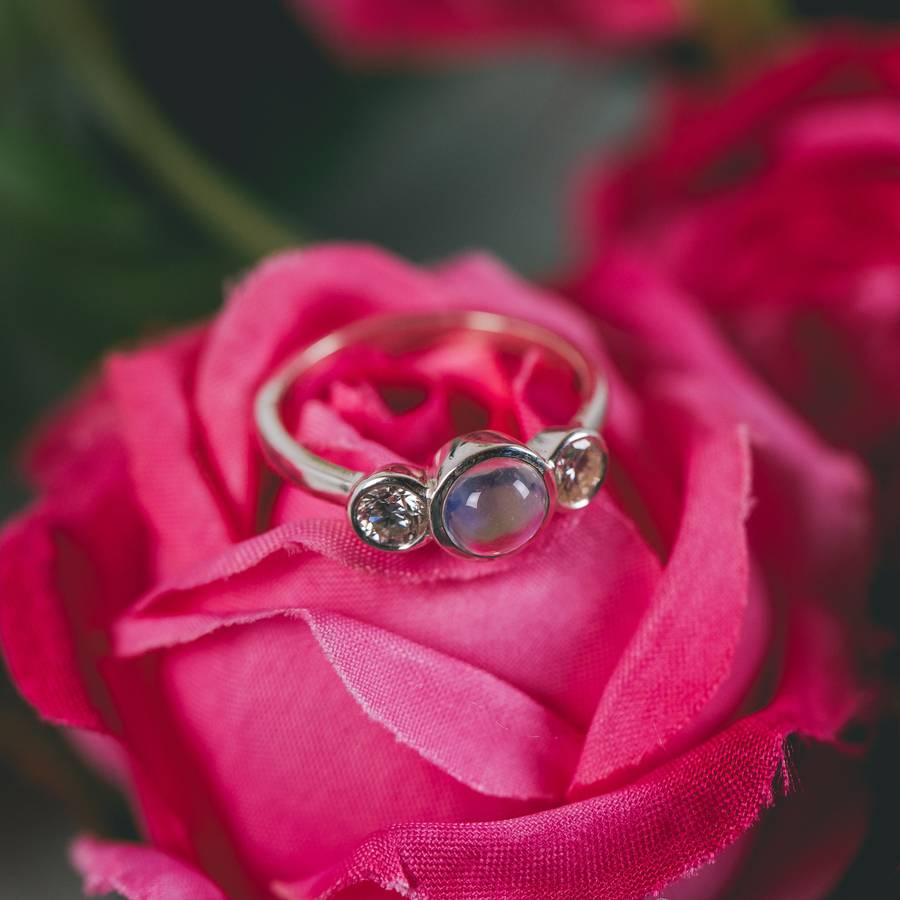
Moonstone engagement rings have a certain quiet drama about them.
They don’t shout “Look at me!” like a big diamond can – they glow, like candlelight on a rainy evening.
If you’re drawn to moonstone, you’re probably after something a bit different (and a bit more romantic) than the usual high-street sparkle.
What makes moonstone look like it’s glowing from within?
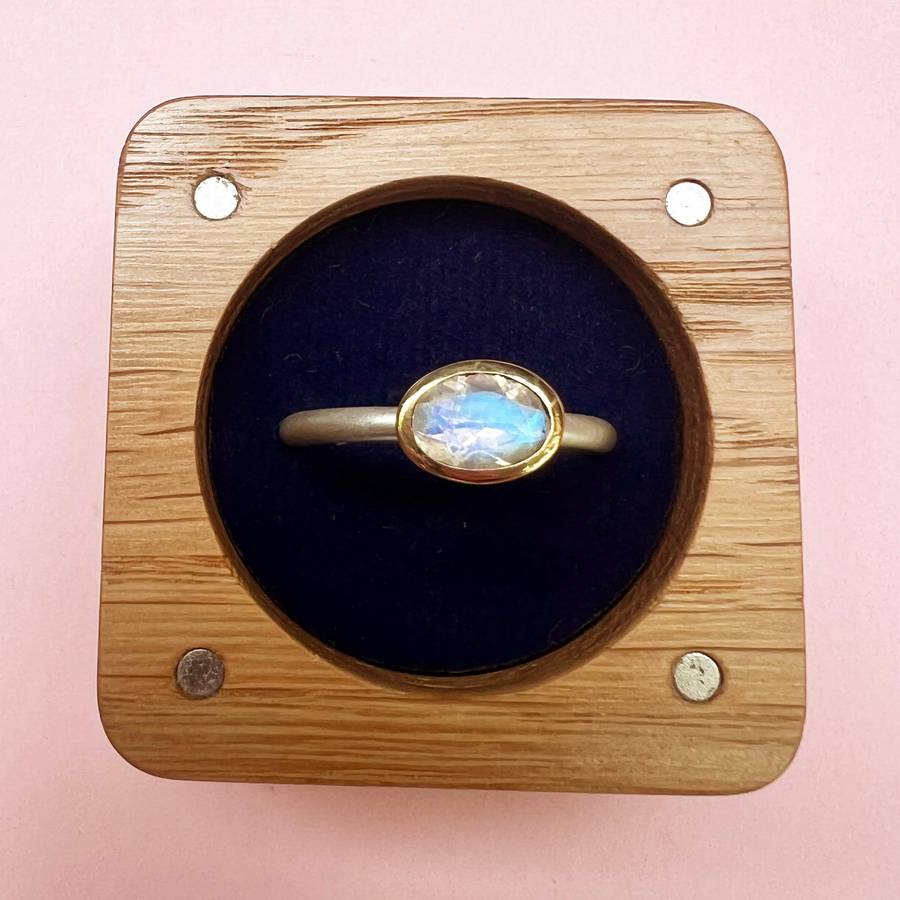
Moonstone is part of the feldspar family, and its signature look comes from a phenomenon called adularescence.
That’s the soft, floating sheen that seems to drift under the surface as you move the stone – a bit like moonlight behind thin clouds.
If you’d like the gem-nerdy version (in a good way), the Gemological Institute of America explains how moonstone forms and why the cabochon cut shows that glow best.
Is a moonstone engagement ring durable enough for everyday wear?
Moonstone is not the toughest stone in the jewellery box.
It sits around 6–6.5 on the Mohs hardness scale, which means it can scratch and scuff more easily than sapphires or diamonds – especially in a ring that gets knocked about daily.
Moonstone also has natural “cleavage” planes (weak points in the crystal), so a sharp knock can chip it.
GIA’s care notes are refreshingly blunt: moonstone is more often used in pendants and earrings than rings because rings take a beating.
None of this is a deal-breaker, by the way. It just means a moonstone engagement ring suits someone who’s happy to be a little mindful – like taking it off for the gym, gardening, DIY, or anything involving gravel, prams, or flat-pack furniture.
If you want a good “rules of thumb” list, our guide to what not to do with your ring is genuinely useful!
What setting style protects a moonstone best?
If moonstone is your centre stone, your setting does a lot of heavy lifting.
A more protective design can dramatically reduce chips and scratches – without making the ring look clunky.
If you’re not sure what all the setting names mean (bezel, prong, halo, etc.), this explainer makes it much easier to picture.

Comparison table: best settings for moonstone engagement rings
| Setting style | Why it works for moonstone | Best for |
| Bezel | Metal rim protects the stone’s edge from knocks | Everyday wear, clumsy hands (affectionate) |
| Half-bezel | More protection than prongs, still airy | A modern look with some safety |
| Halo | Surrounding stones/metal can “buffer” side impacts | Extra sparkle + added protection |
| Low-profile prongs + gallery rail | Keeps the stone lower and more supported | Classic styles with a practical tweak |
How do you choose a good moonstone for an engagement ring?
The big thing to look for is the quality of the sheen.
A strong, well-centred glow that moves cleanly across the stone is usually what people mean when they say “That one looks magical”.
Many moonstones are naturally a bit misty or milky. That can be part of the charm – but you still want a stone that looks lively rather than dull.
Cut is important because adularescence is directional, meaning it shows best at certain angles. Gem-A has a great explanation of why moonstone “lights up” when viewed and lit from the right direction.
If you’re comparing stones, ask to see a short video in daylight. Moonstone can look completely different under warm indoor lighting versus natural light (and you’ll live with it in both).
Is “rainbow moonstone” actually moonstone?
Here’s one that catches people out: rainbow moonstone is usually labradorite, not classic moonstone – it’s a closely related feldspar with a more multicolour flash.
The trade still sells it as “rainbow moonstone”, so it’s not automatically a scam, but it’s worth knowing what you’re buying. GIA has a simple, clear FAQ on it.
If you want the softer, misty “moon glow”, look for classic moonstone (often with a blue sheen).
If you want more colour play, rainbow moonstone can be gorgeous – just make sure it’s being described honestly.

What does a moonstone engagement ring symbolise?
Moonstone has a long history of being associated with moonlight, intuition, and love.
A lot of the symbolism you’ll see today comes from folklore and modern crystal traditions, rather than anything you need to “believe” for the ring to be meaningful.
If you like your romance with a side of fun facts, moonstone is also recognised as one of June’s birthstones.
If you’re choosing by meaning, our birthstone guide is a handy rabbit hole.
How do you care for a moonstone engagement ring?
Moonstone really benefits from “gentle care” rather than aggressive cleaning.
Warm soapy water and a soft brush is the safest route – and it’s best to avoid high heat, sudden temperature changes, and ultrasonic cleaners. The GIA spells out the practical care advice.
If you’re choosing your metal too, it helps to know how different alloys behave over time (especially if you’re pairing a soft gemstone with a harder-wearing band).
This guide breaks down your metal options clearly.

Are moonstone engagement rings more budget-friendly?
Often, yes – especially compared to a like-for-like diamond centre stone.
But price still depends on the quality of the moonstone, the setting style, the metal, and whether you’re adding side stones.
If you’re trying to keep things sensible (without making it look sensible), our budget guide has practical ways to prioritise what matters:
What should you ask before you buy?
A moonstone engagement ring is one of those purchases where a few good questions save you a lot of future sighing.
Ask your jeweller:
- Whether the stone is classic moonstone or “rainbow moonstone” (labradorite)
- How the stone will sit (high vs low profile) and what protection the setting offers
- What aftercare and maintenance they recommend for long-term wear
- Whether the ring can be resized safely without stressing the stone
If you’re shopping in the UK, it’s also worth brushing up on hallmarking so you know what you’re paying for.
FAQ
Is moonstone okay for an engagement ring?
Yes, moonstone can be a beautiful and meaningful choice for an engagement ring due to its unique appearance and romantic symbolism. However, since it is a softer stone, extra care should be taken to protect it from damage over time.
Can I propose with a moonstone?
Absolutely, moonstone is a lovely choice for a proposal ring, especially for those seeking something unique and full of symbolism. Its connection to love, protection, and the moon makes it a sentimental option for such a special moment.
Is moonstone more expensive than diamond?
No, moonstone is generally much more affordable than diamonds. While moonstone has its own beauty and appeal, it doesn’t command the same high price as diamonds due to its abundance and lower hardness.
Can you wear moonstone rings every day?
You can wear a moonstone ring daily, but because moonstone is a softer stone, it’s more prone to scratches and damage. It's important to choose a protective setting and handle the ring with care to ensure its longevity.
Table of contents
-
 What makes moonstone look like it’s glowing from within?
 - Is a moonstone engagement ring durable enough for everyday wear?
- What setting style protects a moonstone best?
- How do you choose a good moonstone for an engagement ring?
- Is “rainbow moonstone” actually moonstone?
- What does a moonstone engagement ring symbolise?
- How do you care for a moonstone engagement ring?
- Are moonstone engagement rings more budget-friendly?
- What should you ask before you buy?
- FAQ
About the author
Ethan Ward
Co-founder
Ethan looks after the whole Boutee journey from first click to “yes”, making sure every person is matched with the right independent jeweller and never feels lost along the way. He’s also the champion of our maker community, supporting independent jewellers, building meaningful connections and helping the right connections spark.
Related posts
View all
Should you choose a halo engagement ring?
Explore halo styles (single, double, hidden), metal and gemstone options, UK hallmarking basics, and how to choose the right design.
6 min read 
Engagement Ring Settings: The Pros & Cons of Each
A clear, practical guide to the most popular engagement ring settings, explaining how each one looks, wears, and fits different lifestyles.
6 min read 