
Why Do People Propose on One Knee? History, Meaning & Modern Etiquette

 6 min read
 Share this post


Proposing marriage is one of those moments where time does a funny thing: everything slows down, your mouth goes dry, and you suddenly become deeply aware of what your hands are doing.
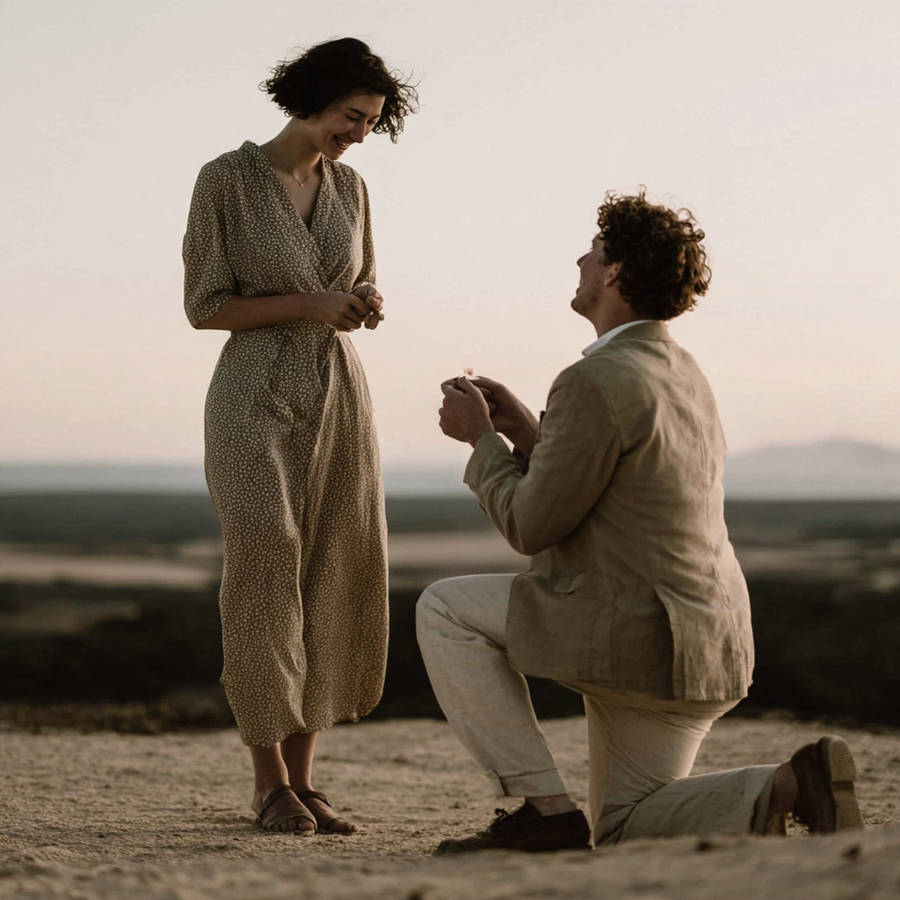
And for many people, those hands end up holding a ring… while you’re proposing on one knee.
But why? Who started it? And do you have to do it - especially if your knees creak like an old staircase?
Let’s unpack the history of proposing on one knee, what it’s meant over time, and how to make the moment feel right for you (whether you kneel, bow, sit, or simply blurt it out over a cup of tea).

A knight receiving a swan-crested helmet from a lady. Art from a book about Alexander the Great, written in 1338
Where did proposing on one knee actually come from?
There isn’t one single “inventor” of the one-knee proposal.
But the gesture makes a lot more sense when you look at medieval Europe, where kneeling was part of formal displays of loyalty and respect.
In feudal society, the ceremony of homage involved a vassal kneeling before a lord as a symbolic act of submission and commitment.
That doesn’t mean medieval couples were all doing romantic knee-drops in castles.
But it does show how kneeling became a recognised “body language” for serious vows, devotion, and honour - ideas that later got pulled into romantic storytelling and courtship traditions.
What does kneeling symbolise in a proposal today?
In modern proposals, kneeling usually lands as a mix of:
- Respect (you’re treating the moment as significant)
- Humility (you’re making yourself a bit vulnerable)
- Commitment (you’re not casually asking; you’re choosing)
Across cultures and religions, kneeling has long been associated with reverence and humility. The Encyclopedia Britannica notes how kneeling became an expression of humility in symbolic/religious contexts.
And in Christian liturgy , kneeling can also function as an act of reverence in worship—again reinforcing the idea that kneeling often signals “this matters.”
So when someone proposes on one knee today, it’s less “I am your obedient knight” and more:
“I’m taking this seriously, and I’m choosing you.”
Why one knee, not two?
This is the bit people love to debate. Historically, one-knee kneeling is common in formal gestures because it’s stable but not fully prostrate—you can stand quickly, and you’re still “present” in the moment.
In other words: it’s ceremonial and practical.
Also: two knees on damp grass is a bold choice in Britain.
Is proposing on one knee still expected in the UK?
Plenty of people still do it—because it’s instantly recognisable and it photographs well.
But “expected” is doing a lot of work there.
Modern proposal etiquette is really about what suits your relationship: some couples adore tradition; others would rather keep it low-key; others plan it together, some book a photographer!
If you’re worried about getting the “performance” right, it might help to remember what many couples actually care about: feeling seen, understood, and not railroaded into someone else’s idea of romance.
What if kneeling isn’t comfortable (or just isn’t you)?
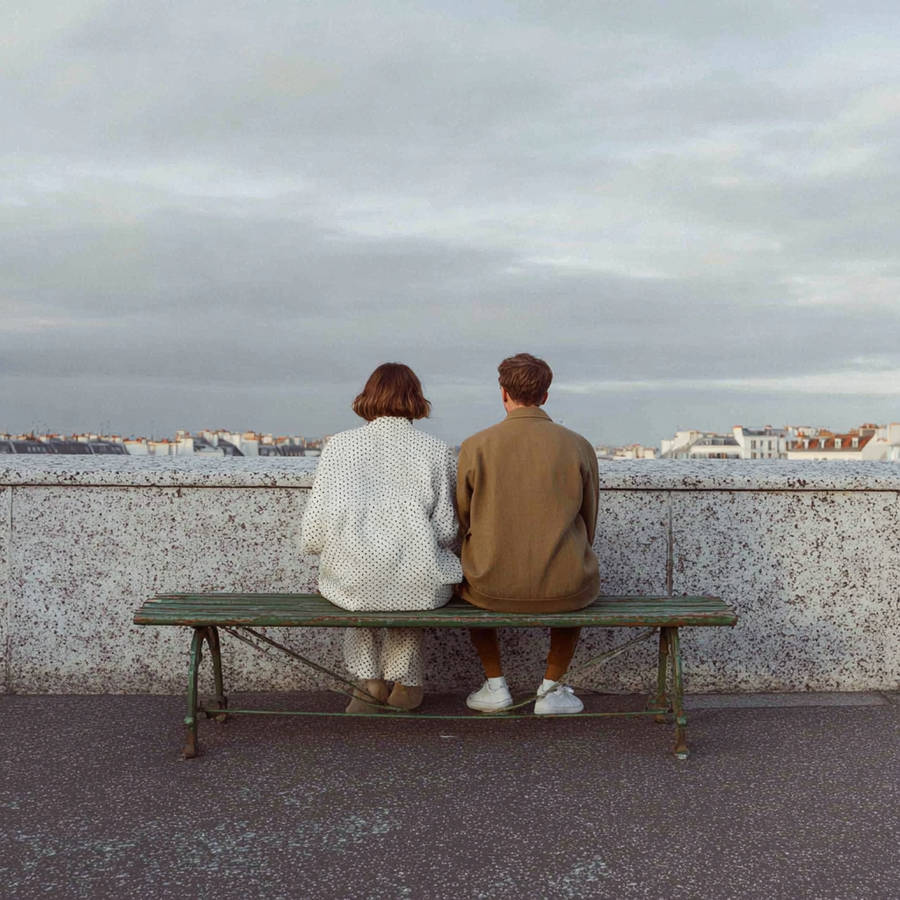
If kneeling will hurt, feel awkward, or make you self-conscious, you’ve got options that keep the same meaning:
- Sit together somewhere meaningful and ask quietly.
- Stand face-to-face and hold both hands (simple, intimate, very effective).
- Write it down (letter/card) and ask afterwards.
- Do the “walk-and-talk” proposal: a calm question on a favourite route, no audience required.

How do proposal gestures vary around the world?
Even if the “one knee” proposal is common in the UK and US, the idea of showing respect during big moments is global - it just looks different.
Here are a few examples:
| Place | Common gesture | What it communicates |
| Japan | A respectful bow is a widely understood sign of respect in everyday life and formal situations | Courtesy, gratitude, sincerity |
| India (Hindu weddings) | Garlands are exchanged in a ritual called varamala/jayamala (often during wedding ceremonies) | Acceptance, mutual union |
| Scandinavia & beyond | Often less “grand gesture”, more mutual decision (varies widely) | Equality, partnership-first |
The point: the format changes, but the emotional message - respect, intention, commitment - stays familiar.

How can you make the moment feel meaningful (even before the ring)?
A proposal lands best when it feels personal.
That might mean choosing the right words (because “err… so… anyway…” is not everyone’s dream script). If you want help with that, Boutee has a guide on what to say when you propose to your partner .
And if you’re planning a location moment, a UK-specific shortlist can save you hours of doom-scrolling. Here’s one with dozens of ideas —from cities to cliff edges.
Finally, if you’re in ring territory already, it helps to understand practical choices (like settings) so the ring fits real life, not just Pinterest.
What should you do if you’re ring shopping while planning the proposal?
If you’re shopping for a ring and trying to keep the proposal a surprise, you’re not alone.
A lot of people start with inspiration (Pinterest, Instagram, saving screenshots), then hit the classic wall: too many options, not enough confidence.
Boutee is built for exactly that “overwhelmed but excited” stage—matching you with independent jewellers and helping you move from vague ideas to a ring that actually suits your partner.
Boutee has dozens of Britain’s top jewellers and uses its platform to improve matching as more people use it.
And yes—people do search for “affordable bespoke” because the “bespoke = wildly expensive” assumption is very real.

King George VI knighting British General Oliver Leese in Italy, 1944
FAQs about proposing on one knee
What is the origin of getting on one knee to propose?
It’s strongly associated with older formal gestures of devotion and loyalty—particularly medieval homage , where kneeling symbolised commitment and submission to a vow.
What does proposing on one knee mean?
Today, it’s usually read as respect, seriousness, and vulnerability—making the moment feel intentional and heartfelt, rather than casual.
Is proposing on one knee a religious tradition?
Not specifically. Kneeling is used in many religious contexts to show reverence, but proposals themselves aren’t prescribed by most religious texts.
Do women (or non-traditional partners) propose on one knee too?
Absolutely. The gesture isn’t gendered—if it feels right for you, it’s yours to use.
Do you have to kneel to propose “properly”?
No. A proposal is “proper” when it respects your partner and reflects your relationship—knees optional.
Table of contents
-
 Where did proposing on one knee actually come from?
 - What does kneeling symbolise in a proposal today?
- Why one knee, not two?
- Is proposing on one knee still expected in the UK?
- What if kneeling isn’t comfortable (or just isn’t you)?
- How do proposal gestures vary around the world?
- How can you make the moment feel meaningful (even before the ring)?
- What should you do if you’re ring shopping while planning the proposal?
- FAQs about proposing on one knee
About the author
Billy Ward
Co-founder
Billy co-founded Boutee to help couples skip the high-street hard sell and work directly with independent UK jewellers. He now leads product and partnerships, obsessing over how to make the bespoke ring journey as simple, transparent and stress-free as possible.
Related posts
View all
When to Propose: 22 Signs You’re Ready
Here are 22 down-to-earth signs you’re genuinely ready - plus practical tips on rings, timing, and planning a proposal.
6 min read 
Placeholder Rings for Proposals: Are They a Good Idea?
When they work, what to watch for, and how to choose one without regret.
6 min read 
34 Beautiful Places to Propose in the UK
From romantic castles to scenic cliffs, plan your perfect engagement with our guide.
6 min read