
The 4Cs of Diamonds: A Quick Guide to Cut, Colour, Clarity & Carat

 7 min read
 Share this post


Buying a diamond can feel a bit like ordering coffee in London for the first time: you think you’re asking for something simple, and suddenly you’re choosing between six options you didn’t know existed.
The good news? The diamond world mostly speaks one shared language: the 4Cs - Cut, Colour, Clarity and Carat. These are the universal standards used to describe a diamond’s quality and value. The even better news? You don’t need to become a gemmologist to use them confidently.
This guide breaks the 4Cs down in plain English, with practical “what should I actually do?” tips.

How the 4Cs fit into the bespoke process (so you don’t feel like you need to “source” anything)
If you’re working with an independent jeweller, you typically don’t need to hunt down diamonds yourself. You share what you want (style, budget, priorities), then your jeweller sources a shortlist of suitable stones, and you choose your favourite - usually with supporting paperwork (like a GIA report) so you can compare options confidently.
The GIA (Gemological Institute of America) is one of the world’s best-known independent gem labs. A GIA diamond report is a standardised certificate that records a diamond’s 4Cs
What are the 4Cs of diamonds (and why do they matter)?
The 4Cs are the four main factors that influence how a diamond looks and how it’s priced:
- Cut = how well it handles light (sparkle)
- Colour = how colourless it appears (for white diamonds)
- Clarity = how many natural features it has (most are tiny)
- Carat = how much it weighs (often linked to “size”, but not perfectly)
A diamond’s value is usually a blend of all four - not just one headline number.
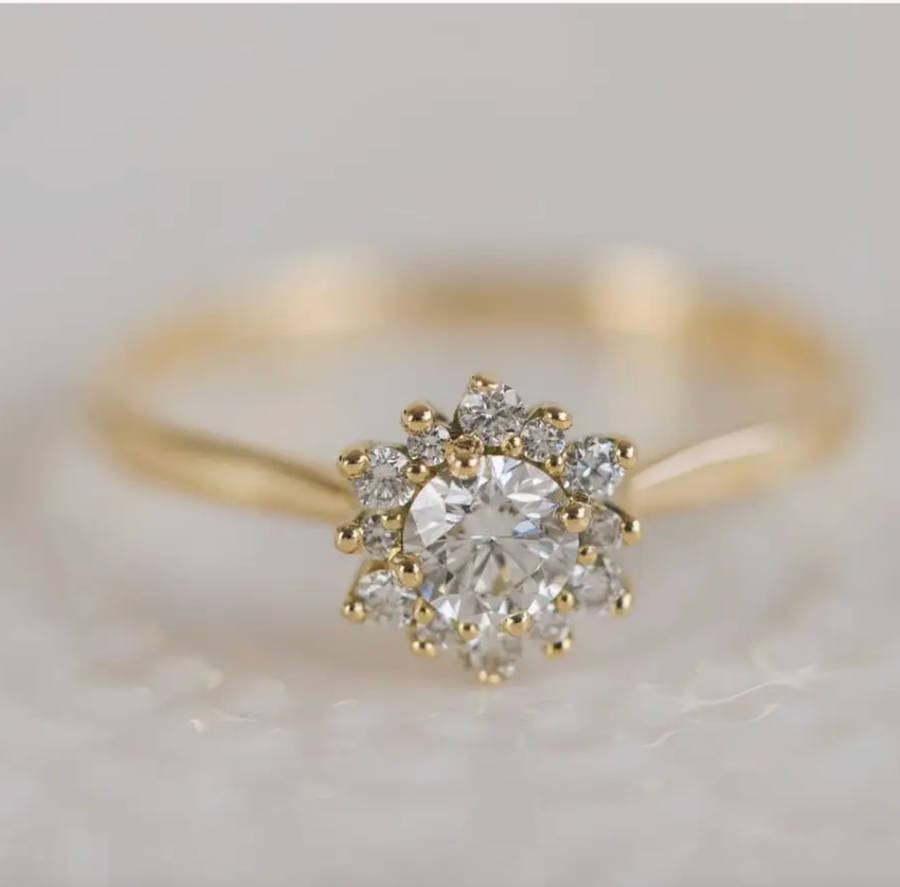
Modern cluster diamond engagement ring by Jodie Gearing
What does “cut” really mean (and why is it usually the biggest deal)?
Cut doesn’t mean “shape” (round, oval, emerald etc.). It means craftsmanship: how well the diamond’s angles and facets are made to reflect and return light. A beautifully cut diamond looks bright and lively; a poorly cut one can look… a bit tired, even if it’s big and “perfect” on paper.
If you want the most sparkle for your money, prioritise cut first. GIA cut grades run from Excellent down to Poor (for round brilliants).
What to aim for:
- Round brilliant: try for Excellent or Very Good cut if budget allows.
- Fancy shapes (oval, pear, emerald etc.): there often isn’t a single universal cut grade in the same way, so ask to see videos and compare stones side-by-side.
And yes — round brilliants tend to cost more than other shapes, so choosing an oval/pear/cushion can be a smart way to stretch budget while still getting a lively stone.
How does the diamond colour scale work (and what looks “white” day-to-day)?
For most white diamonds, “colour” actually means lack of colour. The industry standard scale runs from D (colourless) down to Z (light yellow/brown) and many diamonds in the G-J range look white to the naked eye, especially once set, and often represent better value than chasing D-F.
Setting and shape also makes a difference:
- Yellow or rose gold can make a slightly warmer diamond look “whiter” by contrast.
- Platinum/white gold tends to show warmth more, so people sometimes choose a slightly higher colour grade.
- elongated stones (oval, pear, marquise) can reveal colour more easily than rounds, so colour choice becomes a touch more important there.

Diamond Moi et Toi Ring by Brony Wong
What does clarity mean (and do you need “flawless”)?
Clarity describes natural characteristics inside the diamond (inclusions) and on the surface (blemishes). The widely used GIA scale ranges from Flawless (FL) down to Included (I), graded under 10x magnification.
Here’s the honest truth: most people can’t tell the difference between VVS and VS without a magnifying glass - but they can tell the difference in price. (GIA even notes most diamonds sit around the VS and SI categories.)
Practical tip: aim for “eye-clean” (no visible inclusions to the naked eye). Often, that’s a well-chosen VS2 or SI1 - depending on the individual stone. Your jeweller should confirm this with you, in normal lighting, not just showroom spotlights.
What is carat weight (and why isn’t it the same as “size”)?
Carat is weight. 1 carat = 200 milligrams (0.2 grams).
Two diamonds can weigh the same but look different sizes because:
- a deeper stone carries weight underneath (but doesn’t face up bigger),
- shape affects “spread” (ovals and marquises often look larger for their weight),
- and cut proportions matter.
Little money-saving trick: prices jump at “milestone” weights (like 1.00ct). A 0.90–0.99ct diamond can look very similar on the hand, often for noticeably less.

How do you balance the 4Cs when you’ve got an actual budget?
If you’re buying for an engagement ring, you’re usually balancing sparkle, durability, and what looks good on the hand. Here's A simple “good-better-best” cheat sheet
| Priority | What to do | Where to compromise (if needed) |
| Maximum sparkle | Put budget into cut first (especially for round brilliants) | Go slightly lower on colour/clarity as long as it’s eye-clean |
| Looks bigger | Consider oval/pear/marquise for more finger coverage | Be mindful of colour (elongated shapes can show warmth) |
| Best value | Stay around G–J colour and eye-clean clarity | Avoid paying for “perfect on paper” features you won’t see |
And don’t forget the ring itself: the setting and metal massively influence how a diamond presents. If you’re weighing styles, this guide on ring settings is handy: And for metal choice we have this guide.
What should you ask for before you buy?
1) Can I see the certificate?
Always ask for a grading report from a reputable lab (commonly GIA or IGI). It’s the clearest way to confirm the 4Cs have been assessed consistently.
And whilst thinking about the certification of your diamong, because you’re buying jewellery in the UK, it’s also worth knowing that hallmarking is a legal requirement for precious metals above certain weight exemptions — the UK Government explains it clearly here .
2) Is it natural or lab-grown?
It sounds obvious, but it’s worth asking directly. In jewellery trade terminology guidance, the word “diamond” used on its own typically refers to a natural diamond. Lab-grown diamonds should be described clearly as “laboratory-grown” (or “synthetic”) so there’s no confusion.
Quick check: ask the jeweller, “Is this natural or lab-grown?” and then ask to see the diamond’s grading report so it’s confirmed in writing.
3) What about ethical sourcing?
If ethical sourcing matters to you (it does for many couples), ask what the jeweller can tell you about provenance and responsible supply chains. The Kimberley Process is the long-running international scheme aimed at reducing conflict diamonds, and it’s useful context - even if it’s not the only ethical consideration people weigh today. If you want a deeper dive, Boutee’s guide to ethical jewellery is a good starting point.

FAQs
Which “C” is most important?
For most people who want a diamond to look bright and lively, cut has the biggest visual impact. mond shape sparkles the most? A well-cut round brilliant is designed for maximum light return and is the classic “most sparkle” choice.
What clarity should I choose?
Aim for eye-clean rather than chasing “flawless”. Many diamonds in the VS/SI range can look beautiful without paying for microscopic perfection.
Are lab-grown diamonds graded the same way?
Not always. Since October 2025, GIA uses Premium/Standard terminology for lab-grown quality assessment, while IGI says it continues to use the 4Cs
Table of contents
-
 What are the 4Cs of diamonds (and why do they matter)?
 - What does “cut” really mean (and why is it usually the biggest deal)?
- How does the diamond colour scale work (and what looks “white” day-to-day)?
- What does clarity mean (and do you need “flawless”)?
- What is carat weight (and why isn’t it the same as “size”)?
- How do you balance the 4Cs when you’ve got an actual budget?
- What should you ask for before you buy?
- FAQs
About the author
Rachel Norris
Ring Specialist
Rachel is passionate about demystifying engagement rings. She writes practical guides that help people understand the process and feel confident taking the first step on a bespoke journey.
Related posts
View all
What determines the price of an engagement ring?
A clear guide to what drives engagement ring prices and how you can make it more affordable.
7 min read 
Buying an Engagement Ring on a Budget (Without It Feeling “Budget”)
From lab-grown diamonds and moissanite to metal choices, settings, hallmarking, and bespoke options that won’t sting.
7 min read 
How Much Does A Custom Engagement Ring Cost in the UK?
Custom engagement ring costs explained, with smart ways to save.
7 min read