
Are Pavé Engagement Ring Settings Worth It?

 9 min read
 Share this post


A pavé engagement ring is one of those designs that manages to look refined, sparkly and quietly luxurious all at once. If you like the idea of a ring with a bit more shimmer than a plain solitaire, but do not want something overly fussy, pavé often hits the sweet spot. It gives the band extra life, helps the overall design feel more detailed, and can make a centre stone look more impressive without immediately launching you into “second mortgage” territory. If you want a broader overview of styles first, Boutee’s guide to engagement ring settings: the pros & cons is a useful companion read.
What is a pavé setting?
A pavé setting uses lots of very small accent stones set closely together so the surface looks almost paved with gems. In engagement rings, those little stones are usually melee diamonds. According to GIA’s guide to melee diamonds , melee diamonds are small stones often used to add sparkle and brilliance, while GIA’s guide to side stone settings explains that pavé is a type of bead setting where the stone sits in a recessed hole and is held in place by small beads of metal. In plain English: lots of tiny stones, very little visible metal, and a band that seems to glitter from every angle.
Pavé usually appears along the shoulders of the ring, across the top half of the band, around a halo, or all three if the designer was feeling ambitious. If you are comparing looks, it is worth browsing halo engagement rings as well, because halo and pavé often appeal to the same sort of buyer: someone who likes plenty of sparkle, but still wants the ring to feel elegant rather than shouty.

Noa Aqua Ring by Will Odell Designs
Why do people choose pavé?
The obvious answer is sparkle. A row of small diamonds catches light from lots of different angles, so pavé can make a ring look brighter and more detailed without relying entirely on a larger centre stone. GIA notes that melee diamonds are often used generously in engagement ring designs because they are less expensive than large centre stones and add brightness and scintillation to the overall look. That is a large part of pavé’s appeal: it gives you a richer-looking ring without putting every penny into one stone. If you are thinking about value as much as style, Boutee’s guides on how much should I spend on an engagement ring and a quick guide to the 4C’s of diamonds fit neatly here.
It can also make the centre stone look more impressive. GIA notes that side stones and pavé details can add extra sparkle and even make the main diamond appear larger. That is one reason pavé remains such a popular choice: it adds visual impact without necessarily demanding a much bigger centre stone. Handy, really, because most people are after romance, not a financial crisis.
What are the pros of a pavé setting?
One of the biggest advantages is that pavé adds detail without changing the whole personality of the ring. A plain solitaire can feel classic and clean, but a pavé band can make it feel softer, more decorative and more finished. It is still the same basic ring idea, just with better lighting.
Another plus is flexibility. Pavé works with all sorts of designs, from a simple round solitaire to vintage-inspired settings, halos and delicate bands. It can also suit different metals, which is worth keeping in mind if you are still deciding between yellow gold, white gold or platinum. If that part is still a blur, Boutee’s what metal is best for your engagement ring and white gold vs platinum: understanding the differences are worth reading alongside this. GIA’s metal guides also note that metal choice affects both the look and the practicality of an engagement ring.
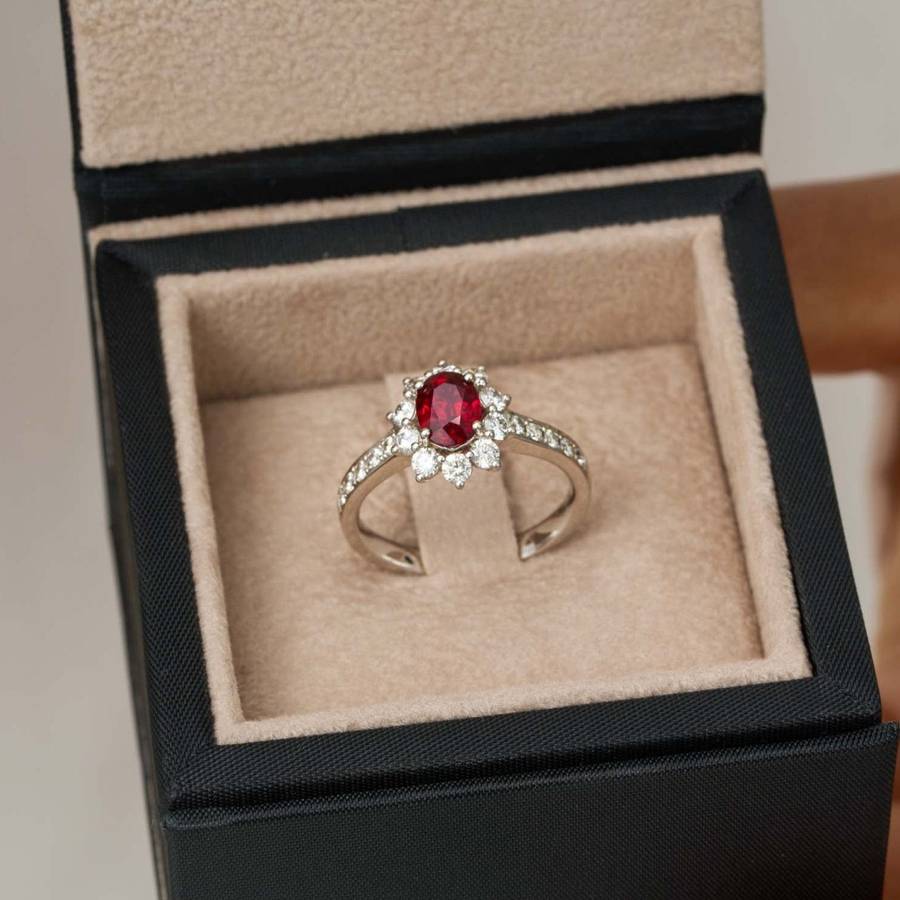
Natural Ruby & Diamond Halo Ring by Gemdaia
What are the cons?
Pavé is not usually the most low-maintenance option. Because the design relies on many tiny stones held by many tiny points of metal, there is simply more that can loosen, wear or catch over time than there is on a plain band. Jewelers Mutual’s guide to jewellery inspections explains that regular inspections help catch loose stones, worn prongs and hidden issues before they become bigger problems, which is particularly relevant for a detail-heavy style like pavé.
Pavé can also be less forgiving if you are very hard on your hands. According to GIA’s side stone settings guide , channel settings protect stones by keeping them inside metal walls and are considered a good option for daily wear and active people. Pavé gives you more exposed sparkle, which is lovely, but it does mean a bit less built-in protection. So if your day involves weightlifting, gardening, climbing, or accidental collisions with every door frame in the house, pavé may need more thought.
Does pavé affect the sturdiness of the band?
Sometimes, yes.
A pavé band is not automatically weak, but it does use parts of the shank to hold lots of small stones rather than leaving them as uninterrupted plain metal. On a very slim band, that can make the ring feel less robust than a thicker plain band or a more protected sidestone style. The design, metal choice and quality of the setting work matter enormously here. A well-made pavé ring can be perfectly suitable for daily wear, but a very thin pavé band is not the same beast as a solid plain one. GIA’s guidance on side-stone settings and everyday-wear metals both point back to the same principle: the more exposed the detail, the more sensible the design needs to be.
Metal choice matters as well. Jewelers Mutual’s comparison of platinum and white gold notes that platinum is denser and more durable, while white gold is lighter and usually more affordable but often needs rhodium plating to keep its bright white finish. So if you love pavé and want the band to feel as sturdy as possible, it is worth also reading Boutee’s the gold market and what it means for your engagement ring before making the final call.

Black Pearl French set diamond eternity by Charles Alexander Jewellery
Does pavé add to the cost?
Usually, yes — but often in a sensible way.
Pavé adds cost because you are paying for extra stones and for extra labour. The stones may be small, but there are a lot of them, and good pavé takes careful bench work. GIA notes that melee diamonds are often used because they are less expensive than larger stones, which helps explain why pavé can be a cost-effective way to boost sparkle, but that does not mean the setting itself is cheap to execute well. In short, pavé can be good value visually, but it is not a bargain-bin shortcut. It is more “clever use of sparkle” than “cheap trick”.
What pavé styles are there?
All one colour
The classic version is a single-colour pavé band, usually white diamonds all the way through. It is neat, cohesive and timeless. If you want the ring to look elegant for decades rather than particularly trend-driven for twelve minutes, all-one-colour pavé is usually the safe choice.
Alternating colours
This is where things get more interesting. Alternating white diamonds with coloured stones can make the ring feel more individual without tipping into chaos. GIA’s guide to coloured gemstone engagement rings notes that coloured gemstone rings can be beautiful and distinctive, but durability matters, so if you want alternating colours in pavé, stick to stones that are suitable for regular wear. That also makes Boutee’s alternative gemstone colours for your engagement ring a very natural read here.

18ct Gold, Demantoid Garnet & Diamond Molten Ring by Erin Cox Jewellery
Micro-pavé
Micro-pavé uses especially tiny stones packed very closely together for a finer, more delicate shimmer. It can look stunning, but it also leaves less room for sloppy workmanship. The smaller and more detailed the setting, the more important it is that the stones sit evenly and securely.
Half pavé vs full pavé
Half pavé usually means the stones sit across the visible top half of the band. Full pavé, sometimes edging into eternity territory, runs much further around the shank. Full pavé gives you more sparkle, but it can also make resizing trickier and creates more places where wear can show up over time.
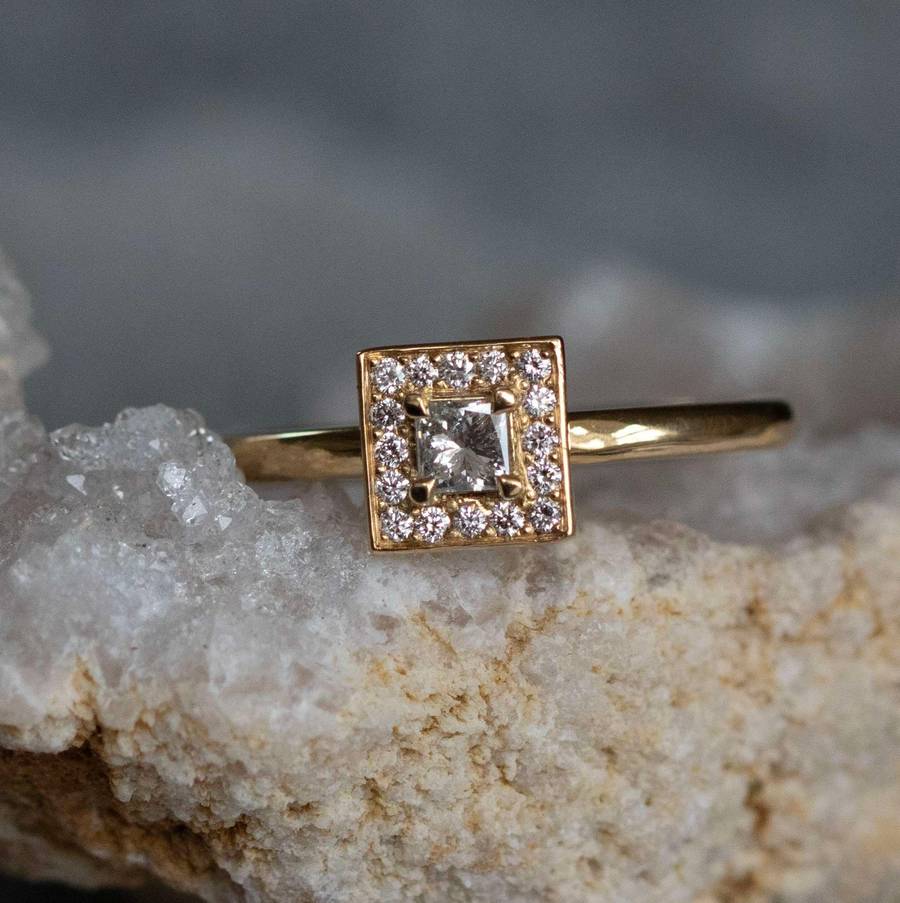
Salt and Pepper Princess Cut Halo Ring by Sarah Hickey Jewellery
What should you check when you pick up the ring?
- First, check whether the pavé stones sit evenly. Look at the ring from above and from the side. The line of stones should look consistent, with no stone sitting obviously higher, lower or tilted compared with its neighbours. If one stone looks wonky, ask about it before you leave. That is not being difficult. That is having eyes.
- Second, ask the jeweller to confirm the stones are secure and, ideally, inspect the ring under magnification in front of you. Jewelers Mutual’s inspection guide is very clear that loose stones and worn settings are exactly the sort of thing professional inspections are meant to catch. Brand-new does not always mean perfect, especially with intricate setting work.
- Third, check how the pavé feels. A well-finished pavé ring should not feel rough or snaggy. If it catches on fabric or feels sharp along the edges, ask the jeweller to inspect the finish before you take it home.
- Fourth, ask about resizing and aftercare. Pavé bands can be more awkward to resize than plain ones, especially if stones run a long way around the band, so it is worth understanding the limits up front rather than discovering them later after a small panic and a large invoice.
How should you care for a pavé engagement ring?
A pavé ring rewards a bit of common sense. Jewelers Mutual’s care advice recommends removing engagement rings for activities that can cause knocks, chemical exposure or accidental loss, and its inspection guidance recommends regular professional checks to catch problems early. For pavé, that is especially relevant because a tiny loose accent stone can go missing long before you notice it has been plotting its escape. Boutee’s what to avoid when wearing an engagement ring fits perfectly here as well.
At home, mild soap, warm water and a soft toothbrush are generally the safest basics for cleaning, but regular professional checks are still wise. If you are wearing the ring every day, a little maintenance is far less annoying than replacing missing stones later.

Nexus Ring by EDXÚ
So, are pavé settings worth it?
Yes, for the right person.
If you want more sparkle, more detail and a ring that feels a bit more special from every angle, pavé can absolutely be worth it. If you want the toughest, most low-fuss band possible, there are sturdier settings out there. The sweet spot is usually a well-made pavé design in a sensible band width, paired with a metal that suits your lifestyle and a jeweller who is honest about maintenance. That is not unromantic. It is just romance with a bit of grown-up judgement attached.
Table of contents
-
 What is a pavé setting?
 - Why do people choose pavé?
- What are the pros of a pavé setting?
- What are the cons?
- Does pavé affect the sturdiness of the band?
- Does pavé add to the cost?
- What pavé styles are there?
- What should you check when you pick up the ring?
- How should you care for a pavé engagement ring?
- So, are pavé settings worth it?
About the author
Ethan Ward
Co-founder
Ethan looks after the whole Boutee journey from first click to “yes”, making sure every person is matched with the right independent jeweller and never feels lost along the way. He’s also the champion of our maker community, supporting independent jewellers, building meaningful connections and helping the right connections spark.
Related posts
View all
Should you choose a halo engagement ring?
Explore halo styles (single, double, hidden), metal and gemstone options, UK hallmarking basics, and how to choose the right design.
9 min read 
Engagement Ring Settings: The Pros & Cons of Each
A clear, practical guide to the most popular engagement ring settings, explaining how each one looks, wears, and fits different lifestyles.
9 min read 