
Should You Remove Your Engagement Ring for Nappy Changes?

 7 min read
 Share this post


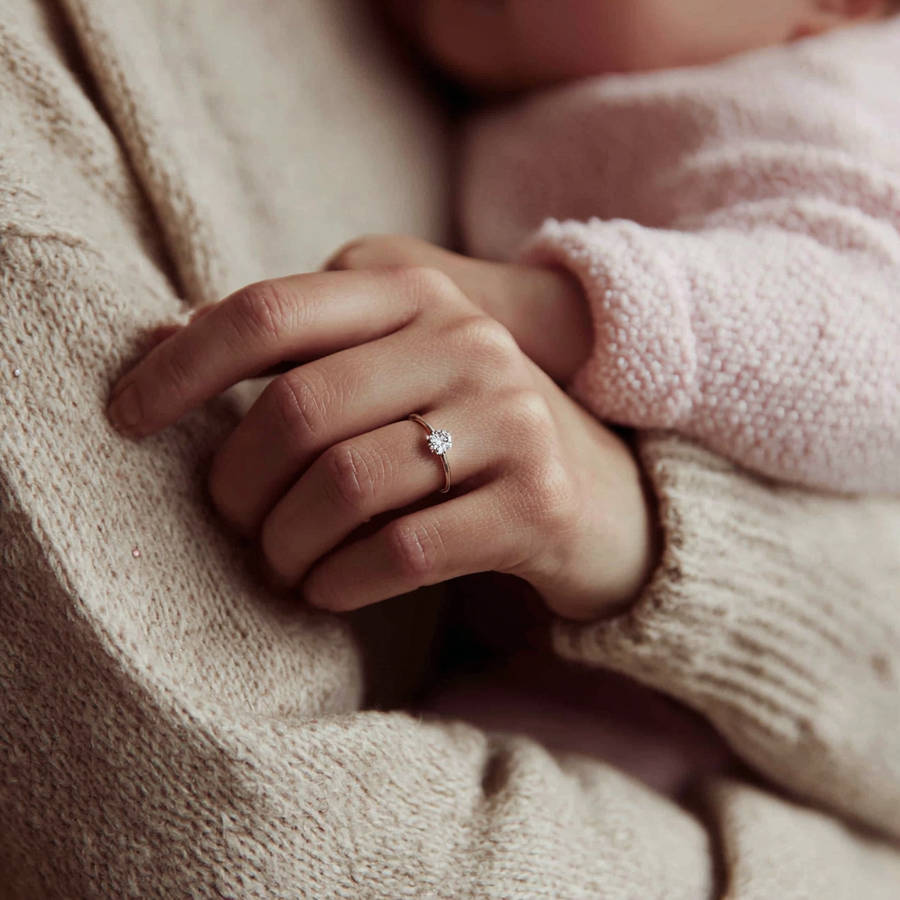
Welcoming a new baby sometimes feels like your entire life has been tipped upside down. Suddenly you’re doing ten nappy changes a day, washing your hands constantly and sleeping in snatches. When you finally slip on your engagement ring, it may feel like the last thing you want is to dunk it in a pot of Sudocrem.
The good news is that for most parents, removing your engagement ring for every nappy change is unnecessary. However, there are sensible exceptions and habits that can keep both your jewellery and your baby safe.

Either wear your engagement ring through the nappy change or place it somewhere safe and deliberate - just don’t leave it “for a second” on the side
The main risk is losing the ring
When you are tired, rushing, out of the house, dealing with wipes, spare clothes and a wriggling baby, your engagement ring is much easier to misplace than you might think.
Taking it off “just for a second” can lead to it being left on the side of a sink, dropped into a changing bag, wrapped in a tissue, or forgotten in a public bathroom.
A good rule is this: either wear it, or put it somewhere safe and deliberate. Try not to create lots of in-between moments.
If you are still deciding how often you want to wear your ring day to day, Boutee’s guide to how often people really wear their engagement rings is a useful read.
Is it unhygienic to keep your ring on?
A 2016 study of healthcare workers in Texas found that jeweled rings can harbour harmful bacteria.
After a nappy change, the most important thing is thorough handwashing. The NHS has clear guidance on the best way to wash your hands , and that matters far more than repeatedly removing your ring.
In neonatal units the advice is explicit: remove all jewellery other than a plain wedding band and wash your hands before touching your baby. At home, you can usually keep your engagement ring on, provided you wash around it with soap and dry under the band. Antibacterial hand gel does not replace proper handwashing, but it’s useful after you’ve already cleaned your hands.

New parenthood turns everyday routines upside down, but your ring habits can stay simple: wear it, clean it, or store it safely.
What about poo nappies?
For an ordinary nappy change, most parents can keep their ring on and wash their hands afterwards.
For a serious blowout, it is reasonable to take a different approach. You might choose to wear gloves, remove your ring beforehand if you are at home, or simply clean the ring properly afterwards.
The key is not to make removal automatic every single time. Make it intentional.
A useful routine might look like this:
| Situation | Keep the ring on? | What to do |
| Wet nappy | Usually yes | Wash hands well afterwards |
| Normal dirty nappy | Usually yes | Wash hands and clean around the ring |
| Major blowout | Maybe | Use gloves, or remove the ring only if you have a safe place for it |
| Public changing room | Usually yes | Avoid taking it off where it could be forgotten |
| At home with creams or lotions | Maybe not | Consider putting it in a ring dish first |
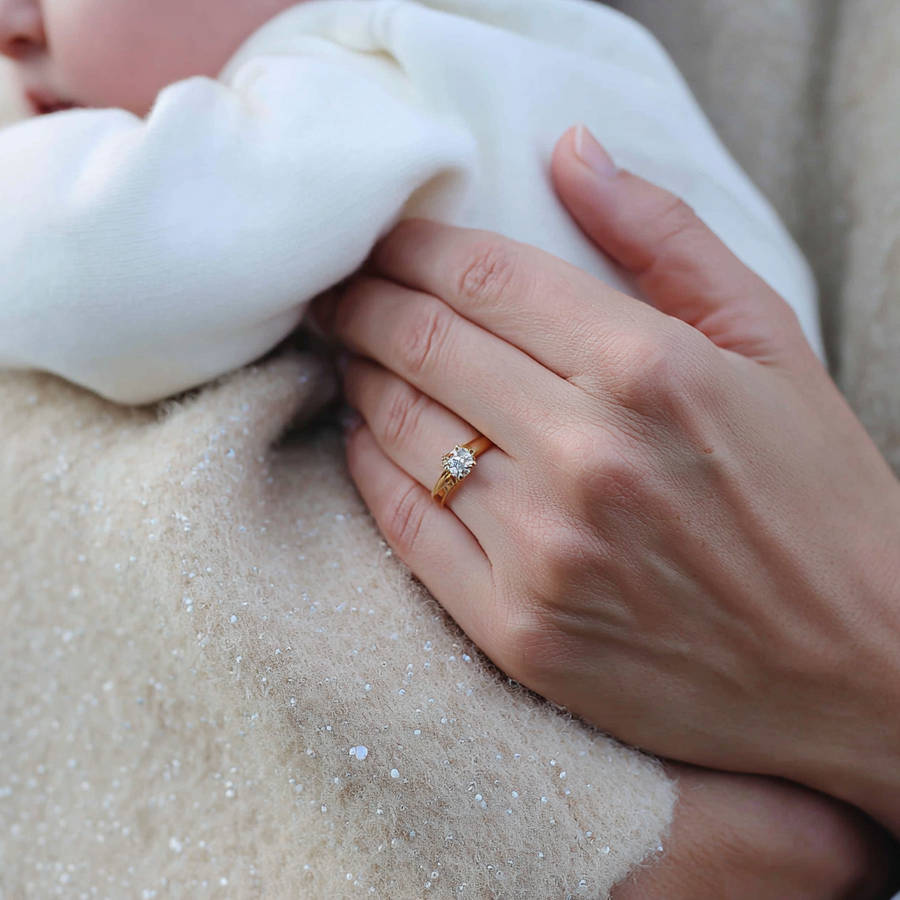
Around babies, a practical ring routine matters more than perfection - especially when cuddles, creams and tiny grabbing hands are part of daily life.
Could your engagement ring scratch the baby?
This depends on the ring.
A low-set ring with smooth edges is usually easier to wear around a baby than a high-set ring with pointed stones or prominent claws. Bezel settings can be especially practical because the stone is surrounded by metal rather than held by exposed prongs.
If your ring has a marquise, pear, high solitaire, sharp corners or raised claws, you may need to be more aware of how your hand moves during feeding, dressing, baths and cuddles.
This just means you may decide to wear it less during the most hands-on months, or swap to a plain band at home.
For more on practical ring design, Boutee’s guide to engagement ring settings and their pros and cons explains how different settings behave in everyday life.
The tasks that matter more than nappy changes
Nappy changes get a lot of attention because they feel messy. But other everyday baby tasks can be harder on your ring.
You may want to remove your engagement ring for:
- Applying baby lotion, nappy cream or sunscreen. Creams can build up under stones and around settings, making a ring look dull. Sunscreen is especially good at clinging to jewellery.
- Bath time. Baths can make hands slippery, and soaps can leave residue. There is also more risk of knocking your ring against the bath, taps or tiles.
- Cleaning bottles, dishes or the house. Washing-up liquid, cleaning sprays and repeated soaking are not ideal for many rings. Some chemicals can affect certain metals and stones.
- Gardening. Soil, grit and pressure on the setting can be rough on jewellery. It is also easy to lose a ring in a glove or flowerbed.
- Heavy lifting or gym work. Weights and pressure can bend a band or damage a setting. This is one of the clearest times to take your ring off.
Boutee has a fuller guide on what to avoid when wearing an engagement ring , which is helpful if you are new to wearing fine jewellery.
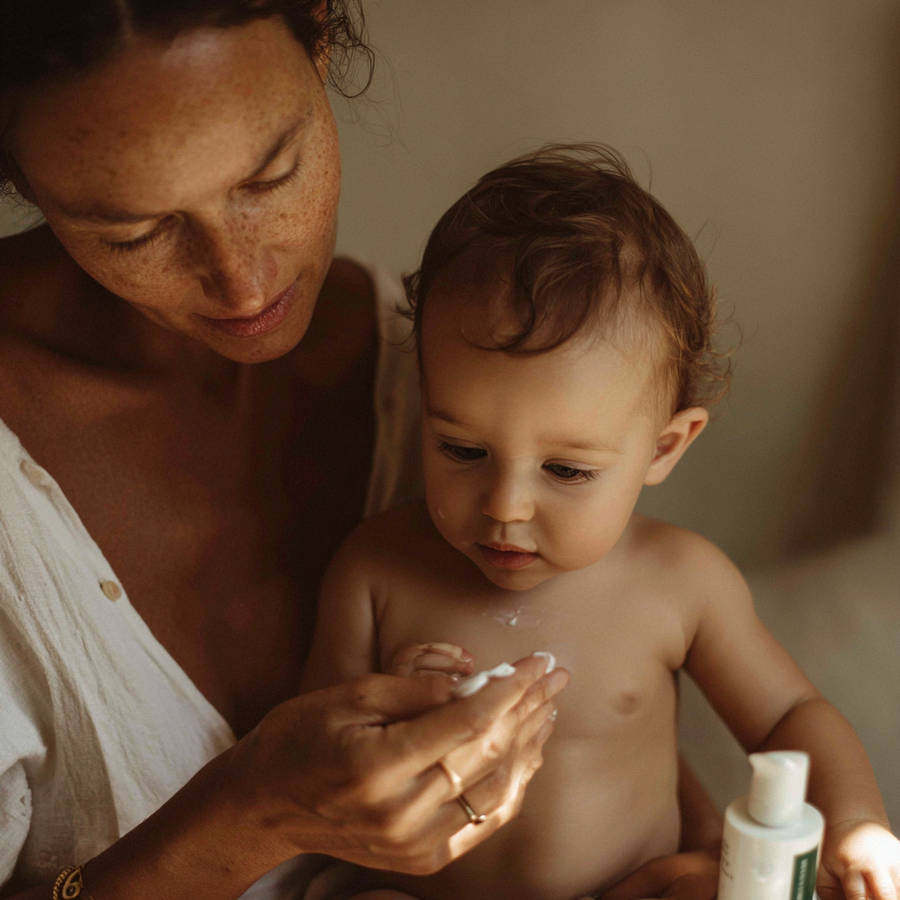
Baby lotion, sunscreen and creams can build up around your engagement ring, so this is one of the times it’s worth taking it off first.
Create a ring routine before you need one
The safest ring habits are boring and consistent.
Have one or two proper places where your ring is allowed to go. A ring dish beside your bed, a jewellery box, or a specific zipped pocket in your bag is much better than “somewhere safe” that changes every day.
Avoid putting your ring:
- On the edge of a sink
- In a tissue
- Loose in a changing bag
- In your pocket
- On top of a nappy caddy
- Anywhere near a bin
If you need to remove your ring while out, a small zipped pouch or a necklace designed to hold rings can help. The important thing is to use the same system every time.
How to clean your ring as a new parent
For many engagement rings, gentle cleaning at home is enough.
Use warm water, a little mild washing-up liquid and a soft baby toothbrush. Brush gently around the setting, especially underneath the stone where build-up gathers. Rinse carefully and dry with a soft, lint-free cloth.

A plain band can be a sensible everyday swap during the early baby months, especially when creams, baths and constant handwashing are part of life.
Should you just wear a plain band for a while?
Some parents prefer to wear only a wedding band, silicone ring or simple placeholder ring during the early baby months. That can be a perfectly sensible choice if:
- Your ring is high-set or catches on fabric
- Your baby grabs at jewellery
- You are washing your hands constantly
- You use lots of creams and lotions
- Your fingers swell or change size after pregnancy
- You feel anxious wearing your ring at home
There is no rule that your engagement ring has to be worn every day, all day, in every season of life. Jewellery should fit your real routine, not the other way round.

If your engagement ring is practical, secure and comfortable, there’s no need to stop wearing it - just make handwashing and safe storage part of the routine.
FAQs
Should I remove my engagement ring for every nappy change?
Usually, no. For most nappy changes, it is safer and simpler to keep your ring on and wash your hands thoroughly afterwards. Taking it off repeatedly increases the chance of losing it.
What if my ring gets dirty?
Clean it gently with warm water, mild washing-up liquid and a soft toothbrush. Pay attention to the underside of the stone and any small details in the setting.
Can an engagement ring scratch a baby?
It can, depending on the design. Low-set rings, bezel settings and smooth bands are usually easier around babies. High settings, sharp stone shapes and raised claws need more care.
Should I wear gloves for dirty nappies?
You can, especially for very messy changes. Gloves are often easier than removing your ring, particularly when you are away from home.
Is hand sanitiser safe for engagement rings?
Occasional use is usually not a problem for many durable rings, but repeated exposure can leave residue and may not suit all gemstones or finishes. Washing with soap and water is often better when available.
When should I definitely take my ring off?
Consider removing it for applying lotions or sunscreen, bath time, cleaning with chemicals, gardening, swimming, heavy lifting and any task where the ring could catch, bend or become very dirty.
What should I do if I am worried about losing it?
Create a strict routine. Use the same ring dish, jewellery box or zipped pouch every time. Do not place your ring on sinks, tissues, pockets or changing tables.
Table of contents
-
 The main risk is losing the ring
 - Is it unhygienic to keep your ring on?
- What about poo nappies?
- Could your engagement ring scratch the baby?
- The tasks that matter more than nappy changes
- Create a ring routine before you need one
- How to clean your ring as a new parent
- Should you just wear a plain band for a while?
- FAQs
About the author
Billy Ward
Co-founder
Billy co-founded Boutee to help couples skip the high-street hard sell and work directly with independent UK jewellers. He now leads product and partnerships, obsessing over how to make the bespoke ring journey as simple, transparent and stress-free as possible.
Related posts
View all
Caring for Your Gold Jewellery: A Practical Guide to Keeping It Beautiful for Years
Learn how to care for gold jewellery, prevent scratches and tarnish, and decide when to seek professional cleaning
7 min read 
Diamond FOMO After Choosing Another Gemstone? Here’s What It Really Means
Why diamond FOMO is normal - and what to do with it.
7 min read 
10 Awkward Engagement Ring Questions People Secretly Google
Secretly Googling awkward engagement ring questions? This ones for you!
7 min read