
How to Choose an Engagement Ring When You Don’t Know What You Want

 8 min read
 Share this post



Choosing an engagement ring can feel surprisingly hard.
You might know you like yellow gold. You might have saved a few radiant cuts. You might want something a little different, but not so unusual that it stops feeling timeless. Then you try rings on, and nothing quite lands.
A good engagement ring should feel personal, comfortable and wearable. It does not need to follow a trend, impress anyone else, or tick every box on paper.
Start with how the ring should feel
Before choosing a stone shape or setting, think about the kind of jewellery you already like wearing.
This matters because the best engagement ring usually feels like an extension of your everyday style. Vogue makes a similar point : trends can be useful inspiration, but the ring should suit the person wearing it, not just what is popular at the time.
Modern engagement rings are also less tied to old rules . Many couples now choose rings that reflect personal style, values and how the design might evolve with wedding bands or future jewellery.
Boutee’s guide to whether it is weird to pick your own engagement ring is helpful if you are wondering how involved you should be in the process. The simple answer is: as involved as feels right for you both.
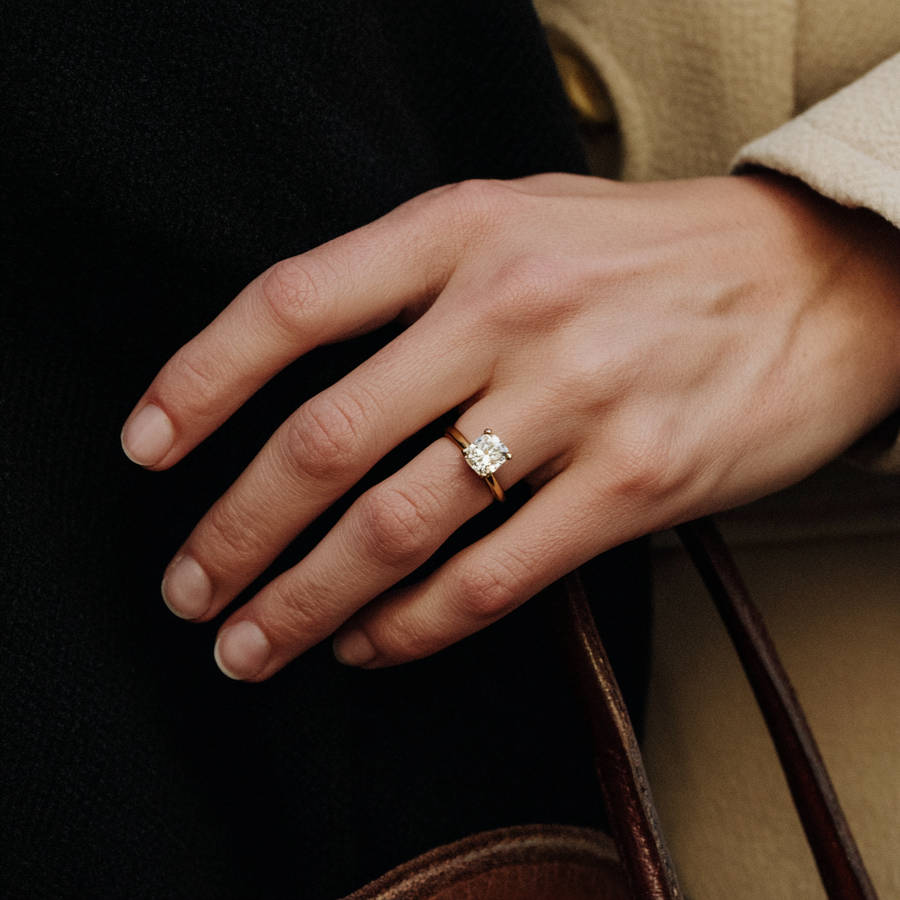
Trying engagement rings on in person helps you judge whether the shape, size and band feel right on your own hand.
Try rings on more than once
Looking online is useful, but it will only take you so far.
A ring can look perfect in a photo and feel wrong on your hand. A style you dismissed online might be the one that suits your proportions best. That is especially true with band width, setting height and stone size.
Try on as many styles as you need, because seeing rings on your own hand helps you judge shape, size, setting height and band comfort. Many people change their minds once they start trying rings on in person.
One appointment may not be enough. Treat the first visit as research, not a final decision.
It can also help to try rings on alone before making any decisions with your partner. Boutee’s article on trying on engagement rings by yourself explains why this can make the process feel calmer and less pressured.
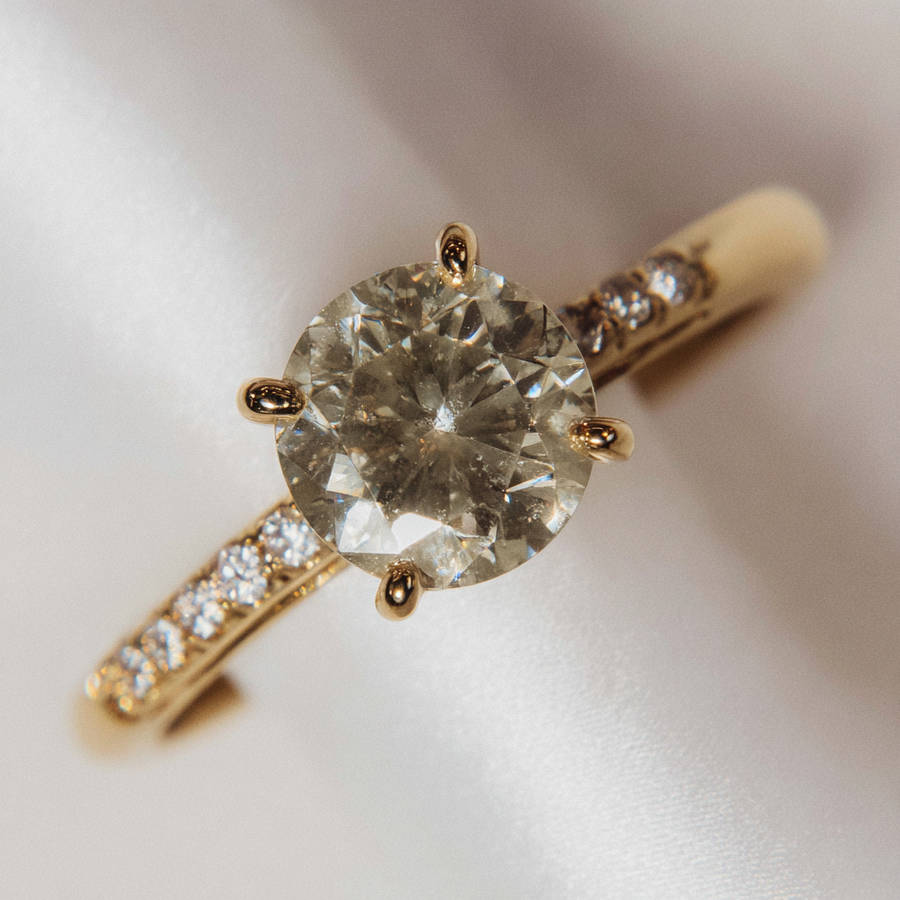
Small setting details, from claw shape to side stones, can completely change how an engagement ring feels.
Narrow the decision in the right order
When every ring feels like a possibility, break the decision down. Start with the bigger choices first:
- Stone shape
- Ring arrangement
- Band style
- Setting height
- Smaller details
This keeps you from getting stuck on prongs, baskets or hidden halos before you know the overall look you want.
1. Choose a stone shape
The stone shape sets the tone of the whole ring.
A round brilliant tends to feel classic and sparkly. An oval can make the finger appear longer and often looks larger than a round stone of the same carat weight. Emerald cuts feel more linear and understated , with step-cut facets that highlight clarity. Cushion cuts have softer corners and a more romantic feel.
If you already like radiant cuts, try shapes around that family too: elongated cushion, emerald, oval and asscher. Sometimes the right ring is close to your original idea, but not exactly the same.
Boutee’s guide to gemstone cuts is useful if you want to compare the feel of different shapes before your next appointment.
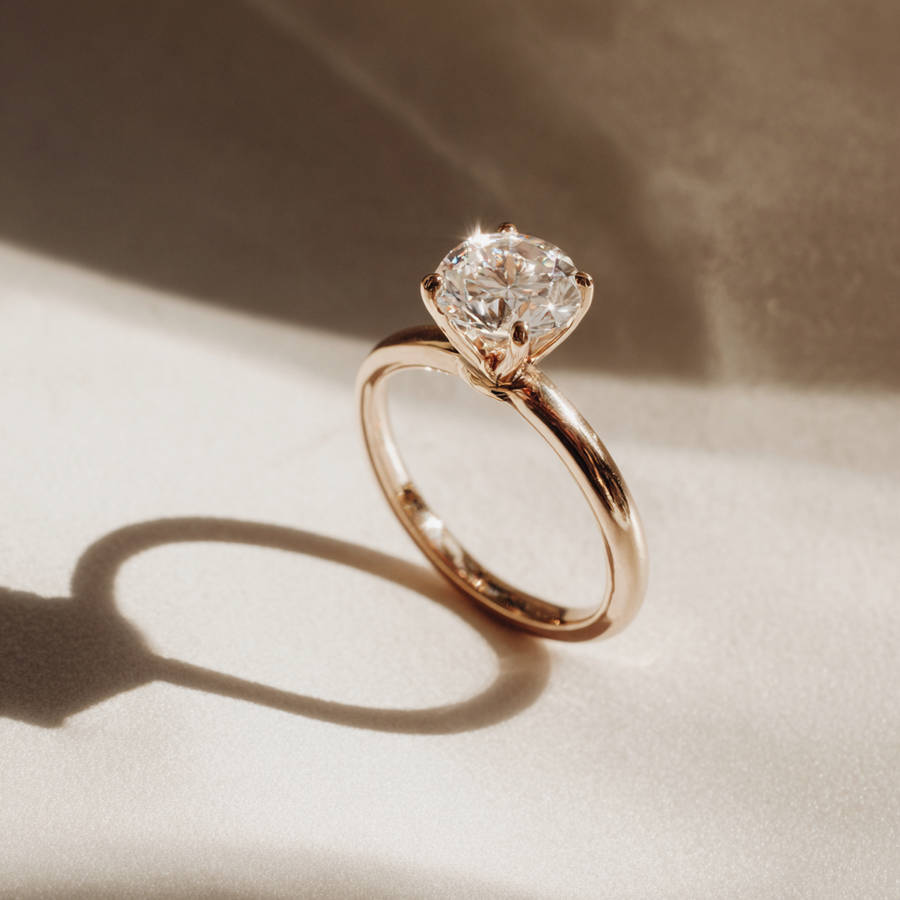
Setting height matters, especially if you want a ring that feels comfortable enough for everyday wear.
2. Decide on the arrangement
Once you have a sense of shape, look at the overall structure.
A solitaire is simple and classic. A trilogy ring can add balance across the finger. A bezel setting feels clean and protective. A hidden halo adds detail without changing the top view too much. An east-west setting can make a familiar stone shape feel more unusual.
Three-stone rings are often described as representing the past, present and future, but they are also practical from a design point of view. Side stones can make a ring feel more balanced on certain hands.
Boutee’s guide to engagement ring settings is a good next read if you are comparing solitaires, halos, bezels and other settings.
3. Pay close attention to the band
Band width can completely change how a ring feels.
A thick gold band might look beautiful online but feel too heavy on your hand. That does not mean you need to abandon the idea. You could try:
- a slightly slimmer band
- a tapered band
- a knife-edge band
- a softly rounded profile
- a split shank
- a textured finish
Chunkier and more substantial settings are being talked about in 2026 trend guides , partly because they feel bold and durable. But a trend only matters if it suits your hand and your daily life.
For help choosing between yellow gold, white gold, rose gold and platinum, Boutee’s guide to the best metal for your engagement ring is a useful place to start.

Use inspiration to spot patterns in your taste, whether that means yellow gold, classic sparkle or something a little bolder.
Use inspiration, then stop scrolling
Saving ring photos is helpful at the beginning. It becomes less helpful when every new image makes you doubt the last one.
Create a small folder or board and save anything you genuinely like. After a week or two, look for patterns.
You may notice that nearly everything you saved is yellow gold. Or elongated. Or bezel set. Or vintage-inspired. Those repeated choices are more useful than any single “perfect” photo.
Once you have a direction, narrow the pool. Choose one or two jewellers whose work you like, then focus on what they can make. Too much choice can make every option feel temporary.
Boutee’s guide to where to find engagement ring design inspiration can help you gather ideas without getting overwhelmed.
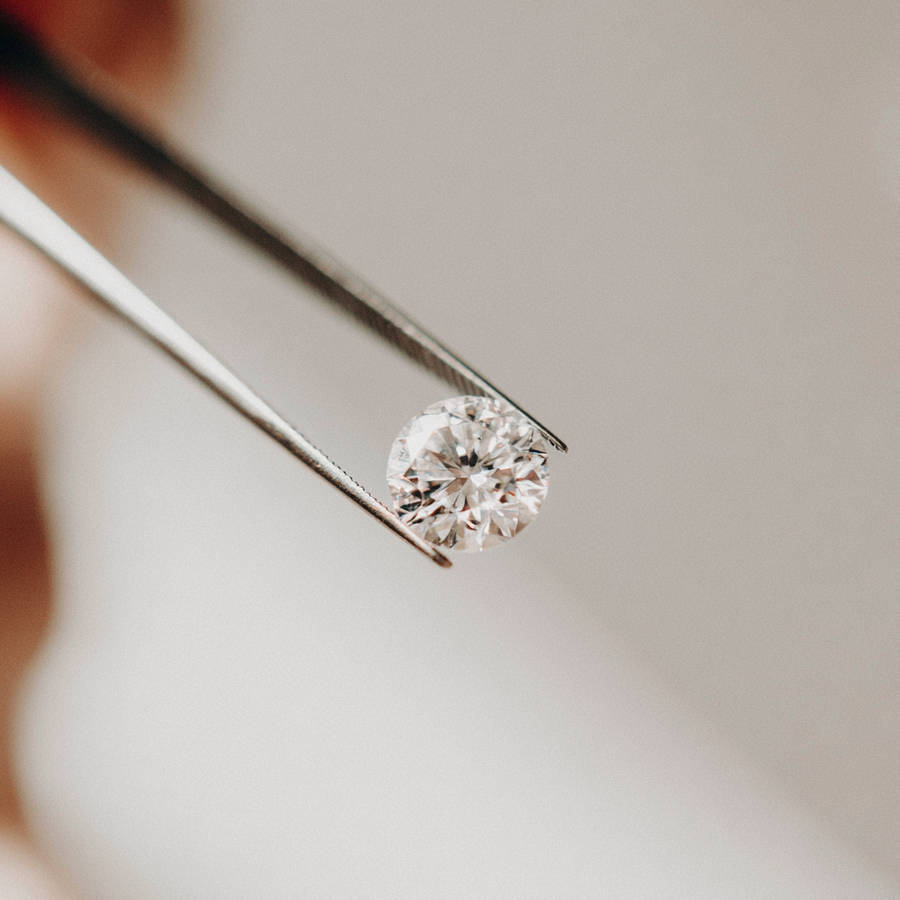
The four Cs are useful, but the right stone is the one that suits your style, priorities and budget.
Think about materials and values
Choosing a ring is not only about looks.
Some people care most about sparkle. Others care about origin, sustainability, budget or using a local independent jeweller. These are all valid priorities.
Lab-grown diamonds are increasingly popular because they have the same physical properties as mined diamonds, often at a lower price point, with a more transparent origin. If you prefer a mined diamond or gemstone, ask the jeweller what they can tell you about sourcing. Many people now want to understand where their stone and metal come from.
The “four Cs” still matter, but they are not the whole decision. Colour, cut, clarity and carat can help you compare stones, but a stone does not need to be perfect on paper to make a beautiful ring.
Custom can help, but only once you have a brief
A custom engagement ring is a good option if you want something personal. It is less helpful if you begin with no boundaries at all.
Before starting a bespoke design, try to narrow your brief to a few clear points.
For example:
“I like elongated stones, yellow gold and a slim band. I want something slightly unusual, but not too chunky. I’d like it to feel comfortable enough for everyday wear.”
That gives the jeweller enough direction while still leaving room for ideas.
Custom rings also take time. Start the search two to three months before the proposal. Remember to plan ahead so theress enough time to refine the design properly before work begins.
Boutee’s guide to how much a custom engagement ring costs in the UK is useful if you are weighing up budget, design and timescale.

A good jewellery appointment should help you ask better questions and narrow your choices without pressure.
Ask better questions at appointments
A good jewellery appointment should help you learn, not pressure you into a decision.
Try asking:
- What proportions suit my hand?
- Could I see this with a slimmer band?
- Would this sit well with a wedding ring?
- Is this setting practical for everyday wear?
- What would you change if I wanted it to feel softer?
- Can you show me something I might not have picked myself?
Sometimes the most useful ring is not the one you buy. It is the one that teaches you what you do not want.

Online inspiration is helpful at the start, but the best decisions come when you stop scrolling and focus on what feels right.
Know when to stop looking
There may not be one dramatic moment where every other ring disappears.
A good sign is simpler than that. You keep thinking about the same design. It feels comfortable. It suits your hand. It works with your everyday style. You can imagine wearing it beyond the engagement period.
That is enough.
You are not trying to find the objectively best engagement ring. You are trying to find the ring that feels right for you.
FAQ
Is it normal not to know what engagement ring I want?
Yes. Many people only work out their preferences after trying rings on. Photos help, but they do not show how a ring will feel on your own hand.
How many times should I try on engagement rings?
There is no set number. Try rings on until you understand what shapes, settings and band widths feel best. In-person try-ons are especially useful for judging comfort and proportion.
What should I do if the ring I liked online does not suit me?
Work out what you liked about it. It might be the stone shape, metal, setting, band width or overall mood. Then ask a jeweller to show you similar options with adjusted proportions.
Should I follow engagement ring trends?
Use trends as inspiration, not instructions. Vogue’s guide is clear that trends can help, but the ring should suit the wearer’s own style.
Is a custom engagement ring a good idea if I am indecisive?
It can be, but it helps to narrow your brief first. Decide on your preferred metal, stone shape, band feel and overall style before starting the custom design process.
Table of contents
-
 Start with how the ring should feel
 - Try rings on more than once
- Narrow the decision in the right order
- Use inspiration, then stop scrolling
- Think about materials and values
- Custom can help, but only once you have a brief
- Ask better questions at appointments
- Know when to stop looking
- FAQ
About the author
Billy Ward
Co-founder
Billy co-founded Boutee to help couples skip the high-street hard sell and work directly with independent UK jewellers. He now leads product and partnerships, obsessing over how to make the bespoke ring journey as simple, transparent and stress-free as possible.
Related posts
View all
Should you choose a halo engagement ring?
Explore halo styles (single, double, hidden), metal and gemstone options, UK hallmarking basics, and how to choose the right design.
8 min read 
Engagement Ring Settings: The Pros & Cons of Each
A clear, practical guide to the most popular engagement ring settings, explaining how each one looks, wears, and fits different lifestyles.
8 min read 